Flexible Warehousing Solutions for Uncertain Arrival Volumes

Uncertain arrival volumes require flexible warehousing solutions that commit to more than available floor space. When delayed containers arrive together, airfreight delivery windows shift or a construction site postpones equipment acceptance, the constraint may be receiving labor, dock access or outbound transport rather than storage capacity.
For logistics directors and procurement teams, the decision is therefore contractual and operational: how much capacity should be reserved, which activities must scale and what happens when arrivals exceed the agreed range? The right arrangement protects delivery commitments without turning a temporary inventory buffer into a permanent fixed-cost burden. It should also allow you to buy a standalone warehousing service or connect it to broader freight execution, depending on the actual bottleneck.
Size flexible warehousing solutions against arrival scenarios
Start with an arrival-and-release model, not an average monthly pallet count. Monthly averages conceal the concentrated receiving demand created by vessel bunching, production recovery or synchronized supplier shipments.
Build three scenarios: expected flow, a credible arrival surge and a delayed-release case. Each should identify daily receipts, inventory on hand, cargo restrictions and confirmed outbound capacity. Model correlated disruptions together, such as late vessel arrivals coinciding with a customer shutdown.
For example, assume a facility starts with 600 pallets, receives 900 and dispatches 400 during the planning interval. Closing inventory becomes 1,100 pallets. That does not prove the operation can handle the workload: it must still receive 900 pallets and dispatch 400 within the required windows.
Evaluate flexible warehousing solutions against both storage capacity and processing capacity. Track pallet positions or usable floor area separately from unloading appointments, receiving hours, inspection capacity and dispatch slots. Quarantined, damaged or unreleased freight still occupies physical space even when it is unavailable for shipment.
Pro-Tip: Ask providers to quote the same surge scenario, including arrival dates, cargo dimensions, receiving windows and release assumptions. Otherwise, seemingly comparable prices may purchase very different operating commitments.
Choose a capacity model that matches the uncertainty
A short agreement is not automatically flexible. A provider can offer month-to-month storage while retaining restrictive minimums, limited receiving hours or no obligation to accept peak arrivals.
Capacity model | Best operational fit | Terms to verify |
Shared-user warehousing | Recurring freight with fluctuating inventory and compatible handling requirements | Reserved capacity, shared labor allocation and peak-period priority |
On-demand overflow | Defined disruption, temporary project staging or short-duration inventory displacement | Acceptance lead time, receiving limits, minimum billing and exit charges |
Dedicated contract space | Sustained base volume, specialized controls or predictable release programs | Minimum commitment, expansion rights, staffing obligations and termination provisions |
Reserved base plus surge option | Stable core inventory with uncertain arrival concentration | Option activation notice, surge ceiling, acceptance conditions and incremental rates |
A hybrid arrangement can reserve the capacity needed every week while pricing additional space and labor separately. However, an option to request space is not the same as an enforceable commitment to provide it.
The strongest flexible warehousing solutions make these distinctions explicit. If the provider cannot guarantee the full surge, identify the committed portion and prequalify a secondary facility before freight is dispatched. For cargo requiring segregated space or tightly governed release authority, assess whether dedicated warehousing for controlled-release programs is a better fit than shared overflow.
Test the arrangement across each freight interface
Warehouse flexibility has value only when cargo can enter and leave the facility on schedule. Test the handoffs below separately, with named owners and documented acceptance conditions.
Ocean freight: FCL and LCL arrival concentration
For FCL cargo, model container availability rather than vessel ETA alone. Confirm whether the receiving plan supports floor-loaded or palletized freight, 20-, 40- or 45-foot equipment where applicable and any reefer unloading requirements. Temperature-sensitive freight needs a verified transfer plan, not merely access to a refrigerated container.
For LCL, distinguish authorized CFS deconsolidation from ordinary warehouse receiving. Confirm customs release status and the point at which cargo becomes available for collection. For buyer’s consolidations, connect supplier readiness and origin cutoffs to destination receiving capacity so consolidation savings do not create an unmanageable arrival batch.
Air freight: US imports and US exports
For US air imports, coordinate foreign-origin pickup, international uplift, customs clearance arrangements and airport transfer with the delivery appointment. NFO or AOG urgency does not eliminate receiving constraints. Where storage is necessary, high-value components and cold-chain shipments need documented security, temperature monitoring and custody controls through final-mile delivery.
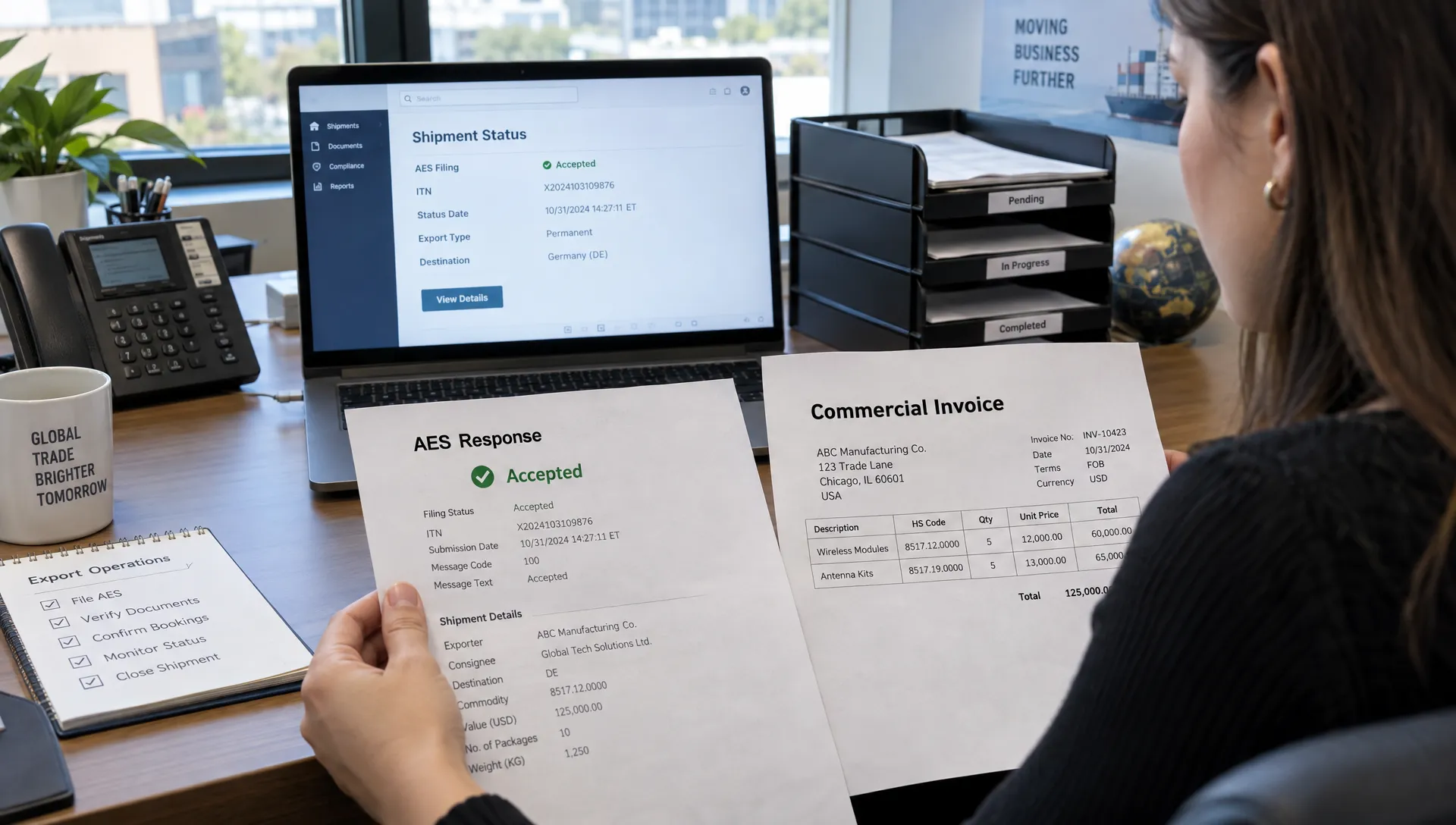
For US air exports, align factory or warehouse pickup with TSA-compliant IAC security arrangements, required screening, applicable EEI/AES filings and export controls. Confirm consolidation or charter cutoffs and destination delivery requirements before staging freight.
For both directions, flexible warehousing solutions should protect a specific handoff or release requirement. Do not insert storage into a viable direct movement merely because space is available. Emergency airfreight should bypass unnecessary dwell whenever consignee readiness and regulatory release permit.
Port drayage: receiving capacity must match gate execution
A terminal pickup appointment is not useful if the warehouse cannot unload the container. Link terminal availability, customs release, trucking dispatch and warehouse appointments before authorizing pickup.
Track terminal free time and equipment return deadlines separately. Demurrage and detention exposure depends on the applicable tariff or contract and the actual movement, not simply on whether overflow space has been booked.
Require an exception process for late gate exits, missed appointments, chassis constraints and rejected loads. A backup warehouse may reduce one delay while adding miles, another lift or an empty-return problem. Evaluate the complete recovery move before redirecting the driver.
Cross-dock and storage: distinguish transfer work from inventory
Cross-docking is appropriate when outbound transport is ready and cargo needs transfer rather than extended storage. Buffer warehousing is appropriate when releases depend on allocation, installation readiness or customer appointments.
Price these workflows separately. A 3-to-2 container-to-trailer consolidation, for example, is only feasible when cargo cube, weight, loading configuration and road limits support it. It also requires enough staging space and coordinated outbound equipment.
Ask whether flexible warehousing solutions reserve floor space for transfer activity as well as stored inventory. Filling every available position can eliminate the staging area needed to keep freight moving. Specify when a planned cross-dock shipment becomes billable storage and who authorizes that change.
Project cargo and heavy haul: reserve handling capability
For transformers, power skids or manufacturing equipment, square footage is an incomplete capacity measure. Verify door clearances, floor or yard bearing capacity, lifting arrangements, engineered support requirements and weather protection before acceptance.
Coordinate storage release with route surveys, superload permits where required, heavy-haul equipment and job-site readiness. A warehouse booking does not guarantee that a suitable crane or trailer will be available when the site finally requests delivery.
For long-dwell equipment, document preservation responsibilities and inspection intervals. For irregular loads, reserve the outbound handling method at the same time as the receiving method. Otherwise, cargo can be accepted successfully but become expensive to retrieve.
Compare total event cost, not the storage rate
A low pallet rate can be outweighed by additional handling, overtime or transport. Compare the cost of completing the same arrival-and-release scenario, including minimum charges and the cost of leaving the arrangement.
The following is an illustrative procurement comparison, not market pricing or a SHIPIT quotation. Both offers cover the same assumed 60-day event, with 1,200 inbound and 1,200 outbound pallets and equivalent handling requirements.
Cost component | Offer A | Offer B |
Storage, including minimum commitments | $18,000 | $27,000 |
Receiving and dispatch handling | $31,000 | $18,000 |
Setup and integration | $2,500 | $3,500 |
Surge labor and overtime | $6,000 | $2,500 |
Incremental transport and rehandling | $8,000 | $3,000 |
Exit and inventory reconciliation | $2,000 | $1,000 |
Total event cost | $67,500 | $55,000 |
In this example, Offer B has the higher storage charge but the lower total cost. Neither offer is preferable until its capacity and service commitments are validated.
When comparing flexible warehousing solutions, request the billing basis for each activity: pallet, carton, weight, floor area, labor hour or equipment hour. Confirm storage-period rounding, partial-month treatment, minimum invoices and charges for inspections, rejected appointments or inventory transfers. Keep uncertain accessorial exposure separate from the committed price rather than treating it as zero.
Put surge capacity and service levels into the agreement
Define what the provider must accept
Document committed storage capacity, daily receiving limits, dispatch capacity and activation notice. Specify whether a capacity reservation includes labor and equipment or only space. Define the dates covered, escalation contacts and what happens if the provider cannot honor an accepted booking.
Cargo acceptance rules should cover dimensions, weight, packaging condition, declared value, hazardous classifications and temperature requirements. Bonded, regulated or specialized storage must be verified facility by facility. Do not infer authorization from a provider’s general service description.
A useful agreement for flexible warehousing solutions also identifies substitution rights. If freight may be moved to another facility, require approval rules, equivalent handling controls, cost allocation and inventory traceability. Unrestricted relocation can undermine the transport assumptions used to select the original location.
Measure service from an agreed starting event
Define the receiving clock precisely. Does it start at gate arrival, scheduled appointment, unloading completion or receipt of complete documents? Separate physical receipt from inventory becoming available for release.
Specify inventory accuracy using an agreed unit and denominator, such as SKU-location records or counted units. Establish dispatch cutoffs, release authorization requirements, discrepancy reporting deadlines and claims procedures. For system handoffs, distinguish physical location, customs status and commercial release status. These controls should remain consistent when overflow facilities are activated; the principles behind container-level inventory accuracy are especially relevant when one inbound shipment is split across locations.
Review liability limits, exclusions and declared-value provisions against the cargo exposure. Warehouse liability is not a substitute for cargo insurance. Assign responsibility for coverage during unloading, storage, rehandling and onward transport.
Pro-Tip: Put surge commitments and exception charges in the signed schedule of services. An account manager’s assurance of “priority access” is difficult to enforce if the contract makes all capacity subject to availability.
Implement with triggers, a pilot and an exit plan
Set activation and deactivation thresholds
Use triggers that combine projected occupancy with receiving demand. Examples include containers becoming available within the same three-day window, inventory exceeding an agreed threshold or a confirmed site delay extending expected dwell.
Set deactivation conditions too. Otherwise, temporary capacity can remain active after the disruption has passed, accumulating minimum charges and fragmented inventory. Assign one person authority to activate space and another clearly defined process for releasing the commitment.
Test the interfaces before the surge
Pilot a representative shipment through booking, receiving, inventory reporting, release and invoice reconciliation. Include one controlled exception, such as a damaged pallet or changed delivery date, to verify escalation and authorization.
Require a working minimum data set before go-live: shipment reference, cargo dimensions, handling restrictions, customs status, expected arrival and release authority. API or EDI integration may support recurring volume, but it should not delay a controlled temporary operation when a validated alternative can meet the reporting requirement.
Use flexible warehousing solutions as a managed contingency, not an undefined overflow instruction. Assign owners for freight execution, warehouse acceptance, compliance decisions and customer communication so arrival changes produce a coordinated response.
Make the exit executable
Agree how remaining inventory will be counted, transferred and reconciled. Confirm final dispatch capacity, transfer charges, notice periods and access to inventory records after termination.
The exit plan also reveals whether the arrangement is genuinely reversible. If specialized packaging, extensive rehandling or long transport distances make withdrawal expensive, factor those costs into the initial model rather than discovering them after the surge.
Frequently Asked Questions
How do flexible warehousing solutions differ from a traditional fixed commitment? They can vary storage or processing capacity within agreed limits instead of locking the shipper into one fixed operating footprint. The practical difference depends on reservation rights, activation notice, minimum charges and acceptance obligations, not the contract label.
Can overflow warehousing reduce demurrage and detention? It can help when warehouse receiving or consignee readiness is the bottleneck. It cannot resolve every customs hold, terminal constraint or equipment-return issue. Connect the storage decision to an executable drayage and empty-return plan.
What should a shipper verify before booking specialized cargo? Confirm facility acceptance, handling equipment, dimensions, bearing capacity, security and environmental controls. Check regulatory requirements, insurance and liability provisions separately, then validate the outbound handling and delivery plan before the cargo arrives.
Need capacity for uncertain arrivals? SHIPIT Logistics provides standalone warehousing, cross-dock and drayage services or coordinated execution across ocean freight, US air imports and exports, and project cargo transport. Share your arrival scenarios, cargo requirements and release constraints to scope the capacity and freight handoffs your operation needs.