Freight Management Services: Outsource or Keep In-House?

Updated: Oct 2
Freight management services are one of those functions that look simple on a slide (move product from A to B), but quickly become a web of carrier contracts, compliance deadlines, handoffs, and exception handling once you scale. In 2026, most teams are also managing more volatility: tariff changes, carrier network shifts, port congestion cycles, and tighter warehouse and trucking capacity in major gateways.
That is why the real decision is rarely “in-house vs outsource” in general. The decision is which parts of freight management services you should own as a shipper, and which parts you should delegate to a specialist (forwarder, 3PL, broker, drayage provider, warehouse operator, or an integrated partner).
This guide gives you a practical framework to decide what to outsource vs keep in-house, with special attention to warehousing and transloading, and how transloading connects ocean and air freight to drayage and domestic trucking.
What “freight management services” actually include
Most shippers use the term broadly. In practice, freight management services usually cover some combination of:
Strategy and procurement: lane design, mode strategy (ocean, air, rail, truck), bid events, carrier selection, rate negotiations.
Execution: booking, documentation, cutoffs, milestone tracking, exception handling, delivery appointments.
Compliance and risk: customs coordination, security requirements, denied-party screening, cargo insurance decisions, claims support.
Operational handoffs: drayage, port/terminal moves, transloading, warehousing, cross-docking, final-mile delivery.
Financial governance: accruals, invoice audit, accessorial control, detention/demurrage prevention.
Visibility and integration: EDI/API connections, status feeds, reporting, KPI governance.
The key insight is that different pieces have different “failure costs.” A missed booking cutoff might cost a week. A bad customs entry can cost weeks plus penalties. A poorly managed transload can cascade into detention, inventory stockouts, and chargebacks.
The decision framework: outsource when execution risk is high, keep ownership where decisions are strategic
A useful rule is:
Keep in-house the decisions that define your service promise, inventory strategy, and risk tolerance.
Outsource the operational work where specialized capacity, licensing, and 24/7 execution discipline matter most.
Here is a decision matrix you can use with your team.
Freight management function | Keep in-house when… | Outsource when… | Common hybrid approach |
Network and mode strategy | Service levels and inventory positioning are core competitive levers | You need benchmarking across markets and modes | Shipper sets policy, provider proposes routings and contingencies |
Carrier procurement (ocean/air/truck) | You have volume leverage and dedicated procurement expertise | Volume is volatile, lanes change often, or you lack market intelligence | Shipper owns contract strategy, provider executes spot and tactical buys |
International forwarding execution | You have licensed staff, carrier agreements, and strong SOP maturity | You ship internationally, but cannot staff exceptions across time zones | Shipper sets SOPs and escalation rules, forwarder runs daily operations |
Customs coordination | You have strong internal compliance leadership | You need dependable filings, document discipline, and exception response | In-house compliance owns classification/origin policy, provider coordinates clearance |
Drayage and port operations | You have local trucking relationships and appointment discipline | Congestion, chassis constraints, and terminal nuances are recurring | Provider manages drayage and free-time risk, shipper monitors KPIs |
Warehousing, transloading, cross-dock | You operate DCs as a core competency | You need gateway flexibility, surge labor, or port-adjacent operations | Shipper controls inventory and order rules, provider runs facility operations |
Visibility and reporting | Data governance is strategic and you have analytics capacity | You need faster time-to-value and standardized milestone feeds | Provider supplies milestones, shipper owns KPI definitions and actions |
Freight audit and pay | You have a mature AP + audit function and clean master data | Accessorial complexity and dispute management drain time | Provider supplies documentation and charge logic, shipper retains payment control |
Keep decision rights clear
This matrix also helps resolve an internal debate that comes up often: “If we outsource, do we lose control?” You only lose control if you outsource decision rights without clearly defining policy, KPIs, and escalation paths.
What to keep in-house (for most importers, exporters, and BCOs)
Even if you outsource execution through freight management services, certain responsibilities stay with the shipper because they are tied to commercial outcomes and enterprise risk.
1) Service-level policy and inventory tradeoffs
Only you can decide what a one-day delay is “worth.” Freight teams make better decisions when the business has explicit policies like:
When do we switch from ocean to air (or sea-air) for recovery?
What is the maximum acceptable dwell time at a port or in a transload?
Which SKUs are priority (revenue, penalties, production stops)?
A forwarder can execute the playbook, but the playbook should be yours.
2) Data governance and shipment master data quality
Freight performance is often determined by the quality of basic inputs: dimensions, weights, HazMat status, HTS codes, Incoterms, and shipper/consignee identifiers.
If your organization cannot produce reliable shipment “fact patterns,” you will pay for it in rework, billing disputes, and avoidable delays. Outsourcing does not fix bad master data. It can hide it for a while.
3) Compliance ownership (even if you outsource the work)
You can outsource filings and coordination, but you should keep internal ownership of:
Product classification policy and recordkeeping
Supplier documentation standards
Internal audit and exception review
For U.S. importers, CBP makes it clear that compliance obligations ultimately sit with the importer of record. Providers can help you execute, but they cannot replace governance.
4) Vendor governance and escalation authority
If you outsource to multiple parties, someone in-house must still own:
The vendor scorecard
The escalation tree
Disruption decision-making
Otherwise, your providers end up debating accountability while the shipment sits.
What to outsource (where specialized execution is worth it)
1) International forwarding execution across modes
International moves (ocean FCL/LCL, air freight, multimodal) have cutoffs, documentation rules, and carrier constraints that change constantly.
Outsourcing here usually pays off when:
You do not have 24/7 coverage for exceptions
Your shipping patterns change by season, product launch, or sourcing shifts
You need reliable coordination between origin handling, main carriage, and destination operations
A provider like SHIPIT Logistics (freight forwarding plus trucking and warehousing capabilities) can be useful when your pain is not “booking a container,” but the handoffs around it.
2) Drayage, appointment scheduling, and free-time risk management
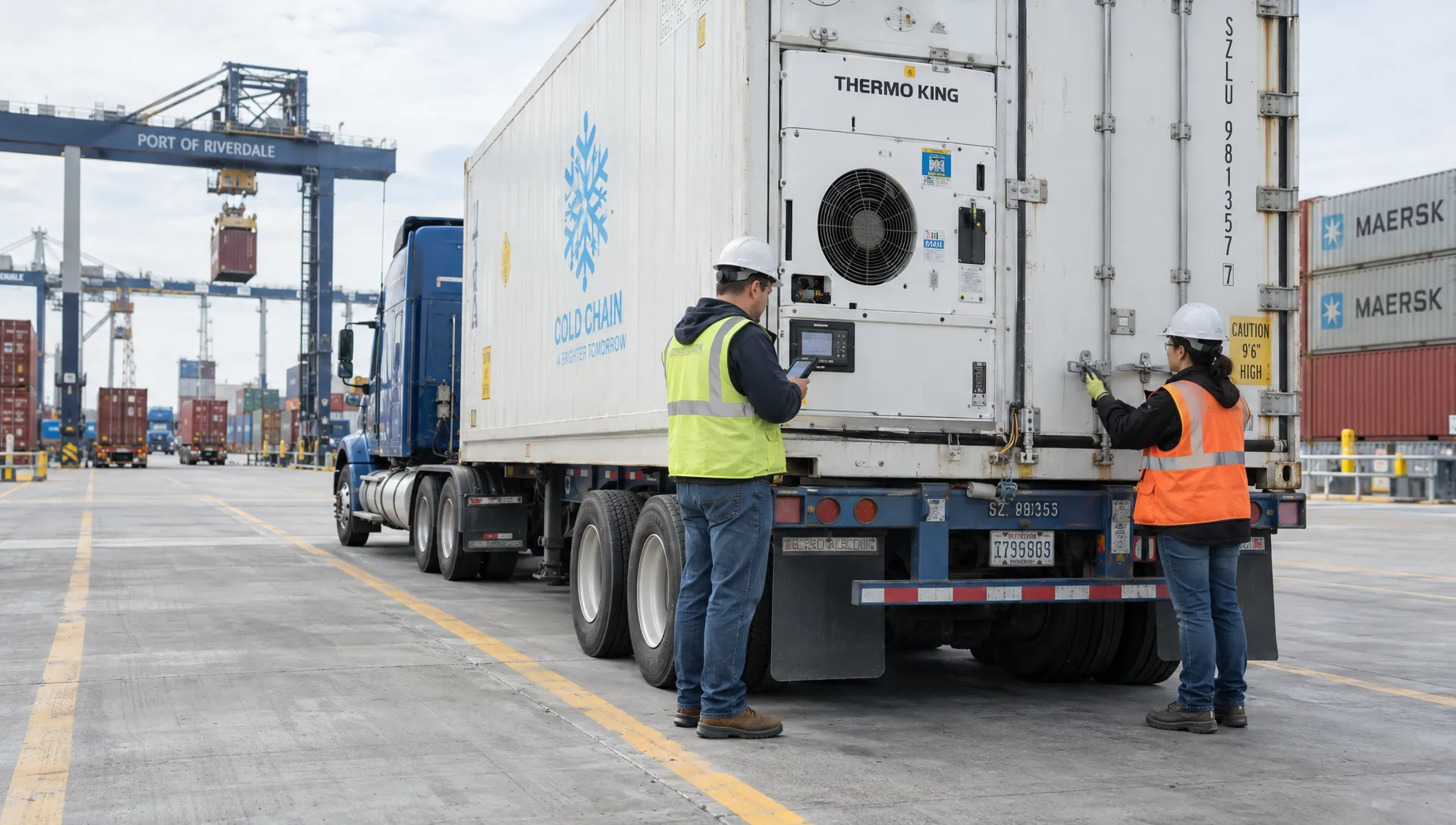
Port and rail ramp execution is a specialist sport. The hard part is not just finding a truck, it is:
Understanding terminal-specific appointment rules
Managing chassis availability (where applicable)
Preventing demurrage, detention, and per diem exposure
If you are not already tracking dwell time and appointment hit rate, outsourcing drayage management can remove a major operational burden while you build internal controls.
3) Transloading and cross-docking in gateway markets
Transloading is one of the most underappreciated levers in freight management services because it sits at the junction of international and domestic freight.
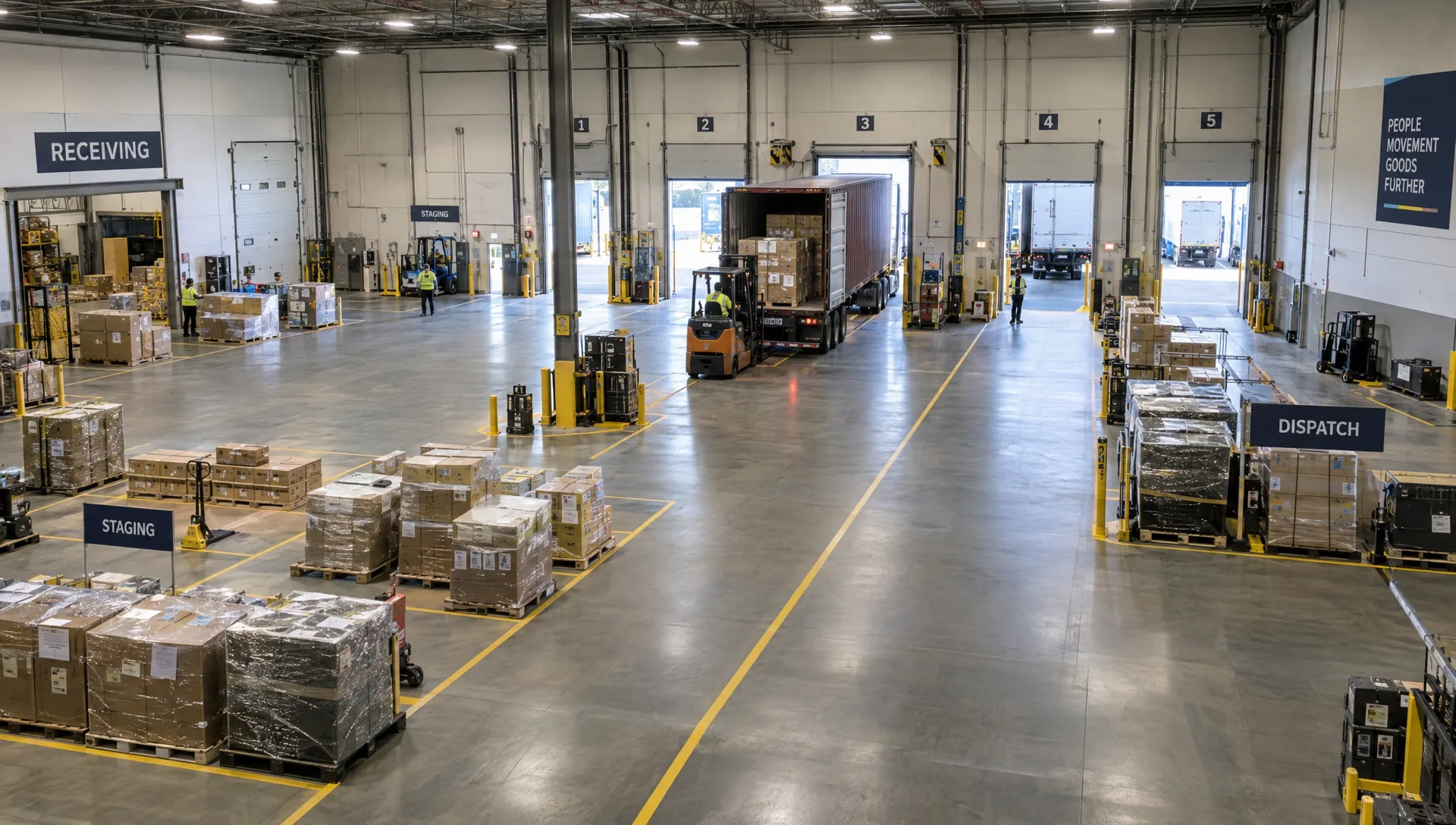
Transloading typically means shifting cargo from one mode or container type to another, often from an ocean container (or rail container) into domestic 53-foot trailers for inland distribution. Cross-docking is typically faster, moving inbound to outbound with minimal storage.
You should strongly consider outsourcing transloading when:
You import through major ports and ship inland at scale
You need to reduce ocean container turn time (and avoid detention)
You want to flex between rail and truck linehaul based on capacity
You need value-added services (palletizing, labeling, sorting) close to the gateway
The operational complexity is real: labor scheduling, floor space, appointment timing, trailer pools, seal control, and shortage management. Most shippers do not benefit from building that capability from scratch unless they run facilities as a core competency.
The transloading connection: ocean and air freight are only “done” when the domestic leg is controlled
Many freight failures happen because teams optimize each leg separately.
Example: Ocean import + transload + inland trucking
If you import ocean FCL into Los Angeles/Long Beach, your cost and service outcome is driven by how tightly you link:
Vessel ETA variability (international leg)
Terminal pickup (drayage leg)
Transload appointment and labor (warehouse leg)
Outbound trailer availability (domestic trucking leg)
If those four pieces are managed by different parties without a shared plan, you get common outcomes: missed appointments, late turns, detention exposure, and inventory arriving “in a lump” rather than in a usable flow.
An integrated provider can reduce handoffs by managing the dray, the transload operation, and the outbound domestic move under one operating cadence. That does not eliminate disruption risk, but it typically makes ownership clearer and recovery faster.
Example: Air freight + deconsolidation + local delivery
Air freight is faster, but it also compresses your downstream timelines. If an air shipment lands and you do not have a plan for:
Warehouse availability near the airport
Deconsolidation and sorting
Same-day pickup and delivery scheduling
then you can lose much of the speed advantage you paid for.
This is where “end-to-end” matters. Air is a premium mode, but the last 20 miles (pickup windows, warehouse cutoffs, delivery appointments) often determines whether the premium spend was justified.
When building in-house freight management makes sense
Outsourcing is not always the answer. Building in-house capability can be a competitive advantage when you meet most of these conditions:
High, stable volume on repeatable lanes (enough scale to justify headcount and systems)
A clear logistics operating model with documented SOPs and strong master data
Negotiating leverage (contracting directly yields material benefits)
Complex product requirements (HazMat, temperature control, high-value, regulated goods) where deep internal knowledge is essential
Some larger BCOs also insource when they want to build a proprietary “control tower” that tightly links demand planning, inventory, and transportation decisions.
The risk is that companies insource too early, especially VC-backed teams. Early-stage operators often underestimate the cost of staffing exceptions, maintaining carrier relationships, and keeping compliance muscle strong.
The hybrid model most teams end up with (and how to make it work)
For many importers and exporters, the best model for freight management services is hybrid:
Keep strategy, governance, and KPI ownership in-house
Outsource execution to specialists
Standardize handoffs through SOPs, milestones, and escalation rules
A simple way to structure this is to define “who owns what” by category.
Category | Shipper should own | Provider should own |
Decisions | Mode rules, service tiers, routing constraints, recovery spend thresholds | Day-to-day routing proposals within policy, operational tradeoffs within SOP |
Documentation | Data standards, product master data, supplier requirements | Document collection, cutoff management, exception chasing |
Operations | Exception severity definitions, customer communication policy | Booking, tracking, dray scheduling, warehouse operations (if outsourced) |
Financial control | Budget, accrual rules, dispute policy | Backup documentation, charge codes, operational proof for accessorial disputes |
The effectiveness of a hybrid model depends on one thing: cadence. Weekly business reviews and monthly KPI reviews sound basic, but they prevent “outsourced drift,” where your providers run on autopilot and your internal team only hears about issues when costs spike.
Technology and integration: outsource execution, not accountability for data
Even when you outsource freight management services, you still want consistent, auditable data.
Practical guidance:
Define milestone events you care about (gate-in, sailing, arrival, availability, out-gate, delivered).
Standardize reference IDs (PO, SKU, container, HAWB/MAWB, B/L).
Validate alerts (exceptions should be actionable, not noise).
If your team is integrating new carrier portals, visibility tools, or automated notification workflows, it is helpful to test signups and email-based verification flows without polluting real inboxes. Tools like programmable disposable inboxes can support QA and automation by capturing emails as structured data, which is useful when you are validating operational integrations.
A practical outsourcing roadmap (without breaking operations)
The main reason outsourcing initiatives fail is that companies flip too much scope at once. A safer rollout of freight management services looks like this:
Start with a single lane and a single operating rhythm
Pick one lane where you have enough volume to learn quickly but not enough to threaten the business if something goes wrong. Define:
Required cutoffs and documentation timelines
Escalation rules (what is a “stop-the-line” issue)
Your minimum reporting requirements
Outsource the “touch labor” first, then expand scope
Many shippers get fast ROI by outsourcing the most operationally intensive areas first:
Drayage coordination in congested gateways
Transloading/cross-dock operations
International booking and documentation chasing
Then, once service stabilizes, you can decide whether to also outsource procurement, compliance coordination, or broader control-tower reporting.
Measure success with cost plus controllability
Lowest rate is rarely the right KPI. Better indicators include:
Dwell time at port and at transload
Detention/demurrage incidents per container
Appointment hit rate
Delivery performance against promise date
Invoice exception rate
These metrics also expose whether the provider can truly operate end-to-end, especially when transloading is in scope.
Frequently Asked Questions
Which freight management services should a shipper outsource first? Start with operationally intensive work where your team lacks specialist capacity, such as drayage coordination, transloading or international booking and documentation. Pilot one lane with clear cutoffs, reporting requirements and escalation rules before expanding scope.
What should stay in-house when outsourcing freight operations? Keep ownership of service-level policies, inventory tradeoffs, shipment master data, compliance governance and vendor performance. A provider can execute your playbook, but your team should retain decision rights and escalation authority.
When does outsourcing transloading make sense? Consider outsourcing when you need gateway flexibility, faster ocean container turns or coordination between inbound containers and outbound domestic trailers. It is especially relevant when your team does not operate facilities as a core competency.
Where SHIPIT Logistics fits in an outsource vs in-house strategy
If you are deciding what to outsource, it helps to look for providers that can reduce the number of handoffs on your critical lanes.
SHIPIT Logistics is positioned as an integrated provider across international freight forwarding, warehousing and fulfillment, transloading, and domestic trucking options (including drayage, LTL, truckload, and specialized equipment). That matters when your recurring problems live in the seams between:
Ocean or air arrival
Drayage pickup
Warehouse or transload execution
Outbound linehaul to your DCs or customers
Depending on your needs, you can structure support as:
End-to-end execution for a lane (international through final delivery)
A targeted solution, such as import drayage plus transload, or transloading only, when you already have other parts covered
The best next step is usually to map one lane and identify exactly where your team is paying for delays, rework, and accessorials. That lane map quickly reveals whether you should invest in internal capability or outsource to a specialist partner.