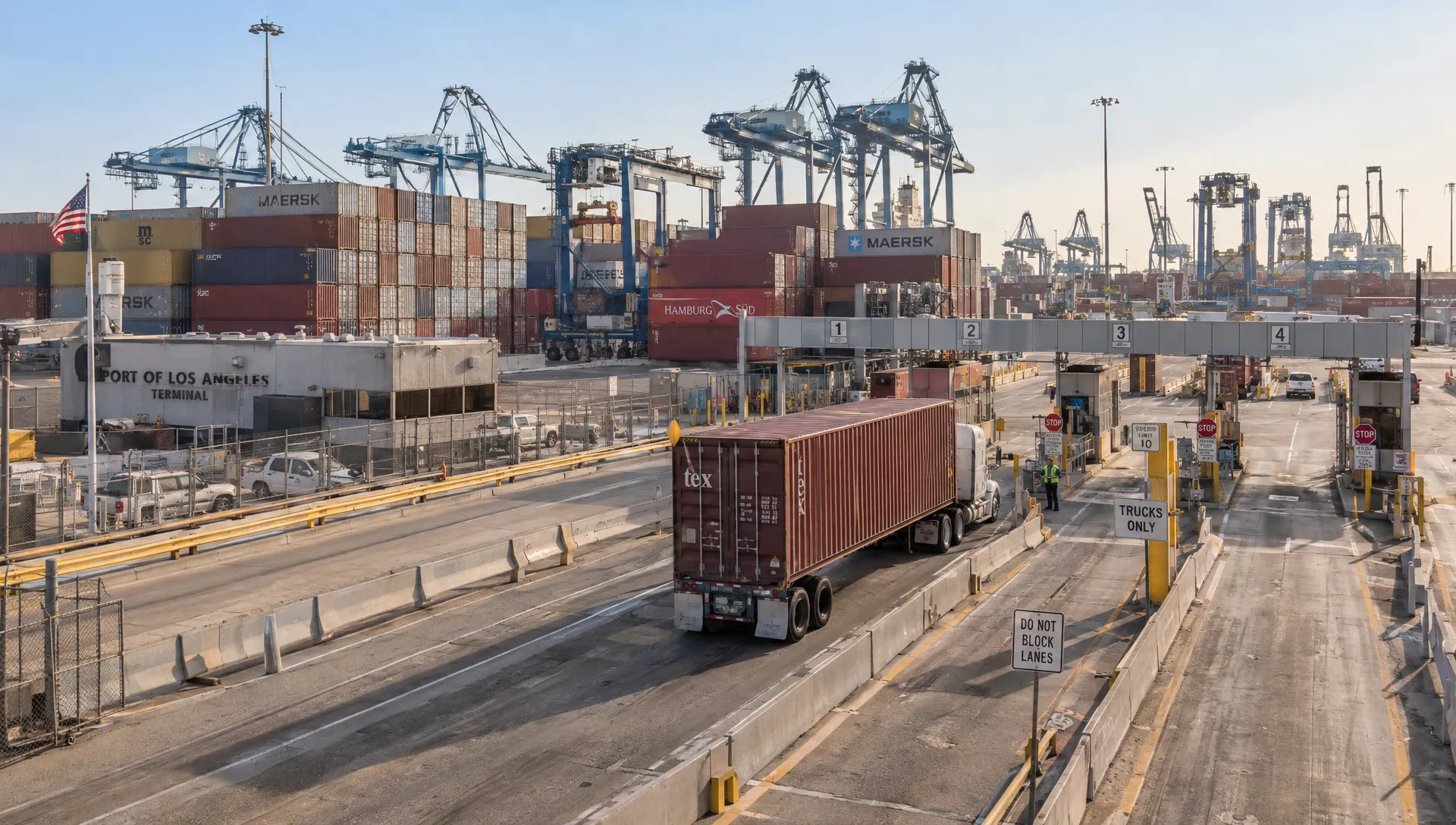
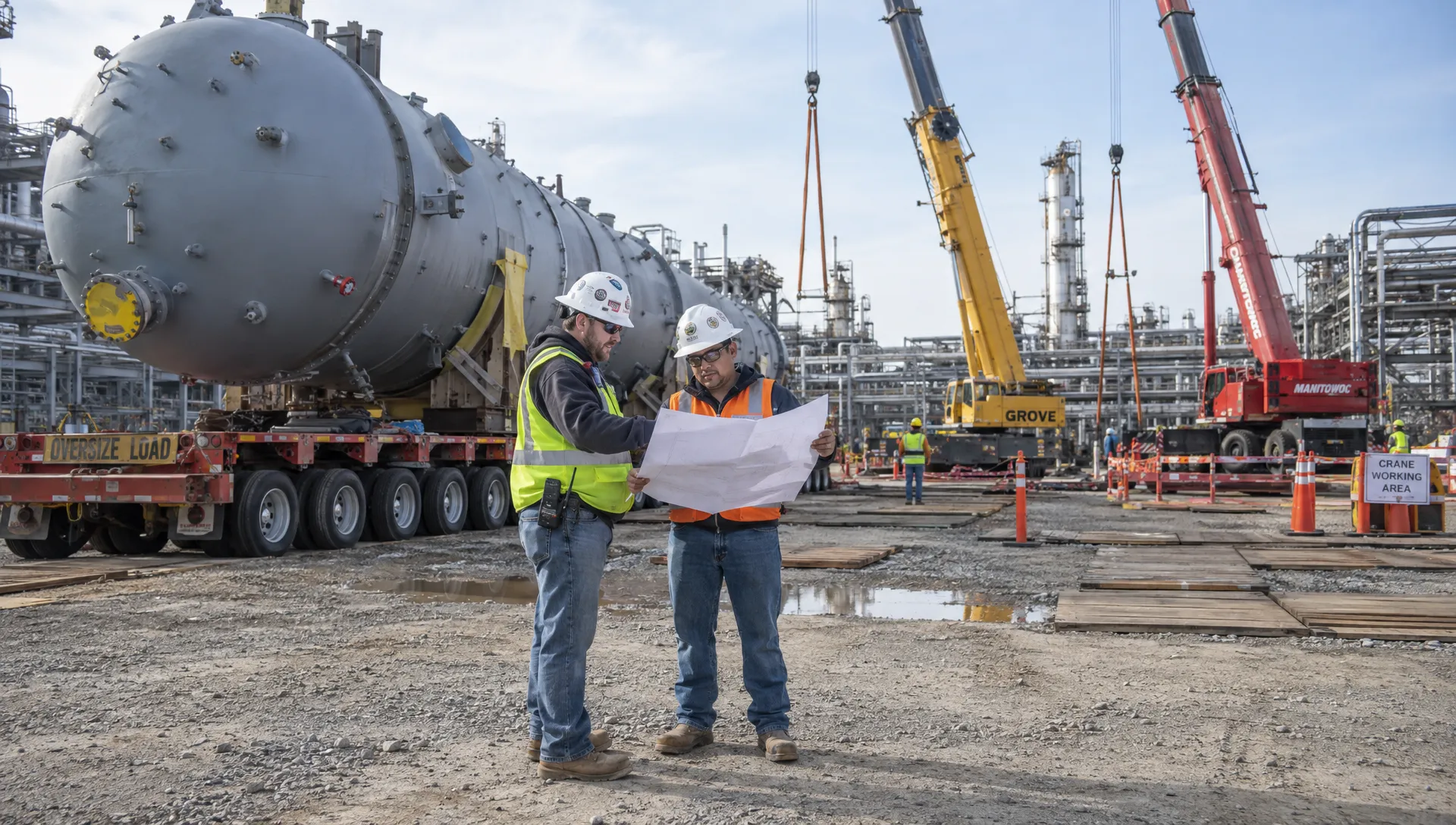
RoRo Auto Booking Checks for EV Battery Acceptance

A confirmed roro auto rate is not the same as permission to load an electric vehicle. Battery chemistry, vehicle condition, state of charge and the nominated vessel’s acceptance policy can still stop an EV after inland transport has been dispatched. For exporters, importers and fleet logistics teams, those checks belong before pickup, not at the terminal gate.
The objective is a documented release decision covering the actual vehicle, sailing and handling chain. Build separate controls for regulatory classification, carrier approval and terminal intake. Passing one does not automatically satisfy the others, particularly for used vehicles, repaired units and shipments involving transshipment.
Confirm acceptance for the complete route
Obtain written acceptance for the origin terminal, ocean service, any transshipment location and discharge port. A carrier’s general statement that it transports EVs does not establish eligibility for every trade lane or vessel.
Submit the vehicle’s VIN, make, model, model year, propulsion type and new or used status. Identify battery replacements, conversions, accident history and any known battery-related recall affecting the vehicle. Disclose non-running units at the quotation stage rather than assuming the terminal will tow them.
For each roro auto movement, ask the booking desk to confirm:
Eligible vehicle categories: Whether the service accepts the declared battery chemistry, used status and operating condition.
Battery charge requirements: The permitted range, measurement method and point at which compliance is assessed.
Evidence and deadlines: Required declarations, inspection reports, photographs and submission cutoffs.
Handling exceptions: Rules for repaired vehicles, unresolved recalls, warning messages or non-self-propelled units.
Route continuity: Whether every connecting carrier and terminal accepts the same declared condition.
Keep the response with the booking reference and policy version or date. Reconfirm acceptance after a vessel substitution, routing change or material change in vehicle condition. An approval issued for one sailing should not be treated as an open-ended authorization.
Classify the actual powertrain under current rules
Since January 1, 2026, IMDG Code Amendment 42-24 has been mandatory. Its vehicle entries distinguish battery chemistries, including UN 3556 for lithium-ion-battery-powered vehicles, UN 3557 for lithium-metal-battery-powered vehicles and UN 3558 for sodium-ion-battery-powered vehicles. The IMO’s dangerous goods guidance provides the regulatory context for maritime dangerous goods transport.
Do not select an entry from the marketing label “EV” alone. A plug-in hybrid combines a traction battery with a combustion powertrain and requires classification against the applicable vehicle provisions. A converted vehicle also needs a classification review reflecting its installed systems.
In a roro auto booking, distinguish the vehicle from batteries or equipment shipped with it. A traction battery installed in a vehicle is not classified simply as a loose UN 3480 lithium-ion battery. Conversely, a removed spare pack does not inherit the vehicle’s treatment because it travels on the same booking.
A qualified dangerous goods preparer should determine whether the applicable vehicle exception, including Special Provision 961 where relevant, is available for the actual carriage conditions. Otherwise, establish the applicable regulated requirements, including Special Provision 962 where relevant. Confirm documentation requirements with the carrier rather than assuming every EV requires, or is exempt from, a dangerous goods declaration.
Regulatory eligibility and commercial acceptance are separate decisions. A carrier can impose stricter conditions or decline a vehicle that meets the applicable transport regulations.
Build the roro auto battery evidence file
Use a VIN-level record rather than a fleet-wide statement that all vehicles are “standard EVs.” Vehicles of the same model can have different battery histories, software alerts and damage exposure.
Control | Evidence to collect | Decision supported |
Vehicle identity | VIN, model year, propulsion type and OEM specifications | Correct booking description and classification |
Battery identity | Chemistry, rated capacity and replacement or conversion records where applicable | Match the installed system to the declaration |
Design-type testing | Applicable UN 38.3 test summary or documentation supporting a specifically authorized exception | Establish the battery’s transport testing basis |
Physical condition | Dated photographs and inspection findings | Identify impact, leakage, deformation or other concerns |
Diagnostic condition | Relevant warning messages, fault findings and repair closure records | Escalate unresolved safety conditions |
Charge condition | Timestamped state-of-charge reading linked to the VIN | Demonstrate compliance at the required checkpoint |
Acceptance | Carrier confirmation and terminal instructions | Authorize dispatch against the agreed conditions |
The UN Manual of Tests and Criteria contains the lithium battery testing framework. A safety data sheet is not a substitute for the applicable UN 38.3 test summary, and a test summary does not establish that an individual used battery remains undamaged.
Ask the manufacturer or authorized supplier for evidence before a booking becomes urgent. For repaired or replacement packs, reconcile the installed battery with the supporting records rather than relying solely on the original vehicle specification.
Pro-Tip: Tie approval to the VIN, evidence revision and sailing reference. A generic email saying “EVs accepted” is a weak dispatch control when the vehicle’s repair history or routing later changes.
Separate routine used vehicles from battery-risk exceptions
Used status alone does not establish a battery defect. Equally, a vehicle that drives onto a transporter is not necessarily fit for ocean carriage.
Screen for underbody impact near the battery enclosure, flood exposure, fire exposure, electrolyte leakage, swelling, unusual heat and unresolved high-voltage warnings. Record relevant accident repairs and investigate battery-related recalls for the specific VIN. A completed recall and an unresolved safety remedy should not be presented as equivalent conditions.
A roro auto shipment needs a hold-and-escalate process when these findings emerge. Place the booking on hold, obtain a competent technical assessment and submit the findings to the carrier’s designated acceptance contact. Ordinary booking approval should not be used to move a damaged or defective battery through standard vehicle handling.
Evidence of smoke, hissing, unusual heat or another active battery event requires the facility’s emergency response procedure. Do not send the vehicle to a port to resolve the issue there or attempt an improvised battery intervention.
For repaired vehicles, provide the repair scope, qualified inspection results and closure of relevant faults. Cosmetic repair photographs alone do not address traction-battery integrity. Likewise, a recently cleared dashboard warning does not explain the underlying fault or demonstrate that it was corrected.
Define who can release the hold. Sales, procurement and dispatch personnel should not override a technical or carrier rejection to preserve a sailing date.
Set state-of-charge controls without importing air rules
There is no universal 30% state-of-charge limit that applies to every EV carried by RoRo. Ocean acceptance depends on the applicable requirements and the carrier’s current policy. Do not copy a limit from a standalone battery air shipment into an ocean vehicle instruction.
Obtain the permitted charge range in writing, including any minimum needed for terminal movements. Clarify whether the carrier checks the vehicle at gate-in, loading or another milestone and how it handles readings outside that range.
For a roro auto fleet movement, calculate the dispatch target around the actual handling sequence. Inland driving, staging dwell, battery conditioning and repeated terminal moves can change the displayed charge before loading. A vehicle delivered at the lower boundary may become noncompliant or immobile before it reaches the vessel.
Record the reading, timestamp and VIN at release and at the agreed handoff. Distinguish state of charge, the energy currently available, from state of health, an assessment of battery condition. Neither substitutes for the other.
Use OEM-approved transport settings where applicable. Confirm key custody, alarm instructions, parking procedures and access requirements without disabling safety systems or disconnecting high-voltage equipment as an improvised workaround. Establish who is authorized to recharge or adjust the vehicle if its charge falls outside the agreed range.
Make inland dispatch conditional on a release gate
The inland order should carry the acceptance conditions, not just a port address and booking number. For a self-propelled EV, this leg normally involves vehicle transport or approved delivery arrangements. Container drayage becomes relevant if an approved containerized alternative is selected.
Set a release gate requiring confirmed carrier acceptance, completed battery evidence, compliant charge status and terminal delivery instructions. Add the applicable customs and export-document milestones. For U.S. exports, title and ownership checks, EEI/AES obligations and CBP vehicle-export procedures remain separate from battery acceptance. SHIPIT’s automobile exporter compliance checklist addresses that parallel workstream.
The roro auto handoff should preserve the evidence chain. Require a condition check at pickup and terminal delivery, with exceptions reported before the driver leaves where terminal procedures permit. Document fresh damage, new warning messages and any material charge change.
Buffer storage is useful only when it solves an operational problem, such as a sailing delay or a controlled inspection hold. Verify that the proposed facility accepts EVs in the declared condition and has suitable access controls, monitoring and emergency arrangements. A generic warehouse booking is not battery-risk approval.
Pro-Tip: Make dispatch release a named responsibility. One coordinator should verify acceptance, documentation and terminal readiness before a transporter is committed, while technical decisions remain with the appropriate qualified parties.
Reassess alternatives without transferring the same risk
A rejected vehicle does not become acceptable merely because the booking changes mode. First establish whether the issue is service availability, missing evidence or an actual battery safety concern. Only the first two may be resolvable through routine replanning.
Use a balanced contingency review rather than automatically switching from RoRo to a container:
Option | Operational use | Acceptance check that remains |
Ocean FCL | Approved containerized vehicle movement with an engineered loading and securing plan | Battery condition, carrier acceptance, classification and safe loading access |
Ocean LCL | Separately eligible automotive components or service parts | Commodity-specific acceptance; loose batteries require their own review |
Air freight | Time-critical eligible vehicles, components or spares | Independent ICAO/IATA assessment, operator approval and applicable charge requirements |
Port drayage | Moving an approved container between the terminal and loading or storage location | Equipment suitability, appointments, free time and cargo readiness |
Cross-dock or buffer storage | Resolving approved staging, inspection or inventory timing needs | Facility acceptance, condition controls and a defined onward release |
Project cargo or heavy haul | Oversized rolling equipment or specialized vehicle transport | Dimensions, axle loads, route constraints, securement and battery acceptance |
For an air alternative, evaluate both directions explicitly. U.S. exports require origin pickup, applicable security screening, export filings and airline acceptance. U.S. imports require foreign-origin acceptance, uplift, U.S. customs clearance coordination, airport transfer and final-mile planning. Ocean approval does not establish air eligibility in either direction.
When the obstacle is handling rather than battery condition, compare the operational trade-offs between RoRo and container vehicle shipping. Keep any roro auto rejection reason attached to the revised shipment file so it is not lost during rebooking.
Price the exception exposure before confirming
Ask for a quote that separates ocean freight from terminal handling, inspection, inland transport, storage and any specifically required dangerous goods services. Identify which charges are firm and which depend on the vehicle’s final acceptance status.
Establish responsibility for rejected delivery, collection from the terminal, reinspection, authorized charge adjustment, storage and rebooking. For container alternatives, add demurrage and detention exposure rather than applying container terminology indiscriminately to RoRo terminal charges.
Before releasing a roro auto booking, check the insurance wording as well. Ask how the policy treats pre-existing damage, battery-related loss, handling damage and storage during a disrupted movement. Carrier acceptance is not an insurance coverage determination.
A usable booking file ends with a clear decision: approved against identified conditions, held pending specified evidence or rejected for the proposed service. That decision is more valuable to dispatch than an unqualified rate confirmation.
Frequently asked questions
Does a confirmed RoRo booking guarantee EV battery acceptance? No. Space or rate confirmation may remain conditional on technical review, documentation and terminal inspection. Obtain written approval for the vehicle’s declared condition and complete routing before dispatch.
Must every EV be below 30% charge for ocean transport? No universal 30% rule applies to every RoRo EV shipment. Obtain the carrier’s current minimum and maximum requirements, measurement checkpoint and instructions for vehicles outside the permitted range.
Can an EV with battery damage move in a container instead? Do not assume so. Containerization does not remove the underlying battery hazard or dangerous goods requirements. The proposed shipment needs a qualified assessment, applicable regulatory review and explicit carrier acceptance.
Need to align EV acceptance with inland transport, ocean execution or an alternative routing? Discuss your shipment with SHIPIT Logistics for end-to-end planning or standalone services, including freight forwarding, customs clearance coordination, drayage, approved staging and specialized final-mile transport.