Cargo Forwarder vs Freight Forwarder: What’s the Difference?

Updated: Apr 30
Most people searching for “cargo forwarder” are trying to answer a practical question: Who is actually responsible for moving my shipment, and what exactly will they do for me? The confusion is understandable because “cargo forwarder” is used widely in everyday conversations, while “freight forwarder” is the more standard industry and legal term (especially in the U.S.). In many cases, they refer to the same type of provider, but not always.
Below is a clear, operations-first breakdown of cargo forwarder vs freight forwarder, including where the terms overlap, where they can mean different things, and what to verify before you hand over a shipment.
Quick answer: are cargo forwarders and freight forwarders different?
In most commercial shipping conversations, “cargo forwarder” is an informal synonym for “freight forwarder.” Both typically describe a company that arranges transportation for cargo across one or more modes (ocean, air, rail, truck), coordinates documentation, and manages handoffs.
Where it gets tricky is that “cargo forwarder” can sometimes be used to describe a narrower slice of the forwarding world, for example:
An air-cargo-focused forwarder (sometimes positioned as a cargo agent or consolidator)
A local “cargo agent” that handles bookings and paperwork but does not manage end-to-end execution
A provider that is essentially a domestic trucking intermediary but markets itself as a “cargo forwarder”
So the difference is less about the dictionary definition and more about scope, licensing, and who holds operational control.
Why the terminology gets mixed up
The forwarding industry grew globally and evolved differently by region and mode. As a result, the same words can mean different things depending on where you operate.
Common reasons you will hear “cargo forwarder” instead of “freight forwarder”:
Regional language preference: In many markets outside the U.S., “cargo forwarding” is a common phrase in English-language trade.
Mode emphasis: Teams working mainly in air freight often say “cargo” because the airline ecosystem is built around “air cargo.”
Sales positioning: Some providers prefer “cargo forwarder” because it sounds broad, even if they only cover a limited set of services.
The practical takeaway: treat the label as marketing, then validate the actual operating model.
The real difference is usually licensing and accountability
If you are shipping internationally, what matters is whether the provider is properly authorized for the role they are performing and whether they can legally issue or arrange the transport documents tied to that role.
In the United States, ocean forwarding and NVOCC activity are overseen by the Federal Maritime Commission (FMC). You can start with the FMC’s overview of regulated ocean transportation intermediaries on the Federal Maritime Commission website.
Air cargo has its own compliance ecosystem (TSA security programs, airline requirements, and often IATA-linked processes). Warehousing, trucking, and customs clearance introduce additional licensing, insurance, and contracting considerations.
A simple way to think about it
A “freight forwarder” (or “cargo forwarder”) may do some or all of the following:
Arrange main carriage (ocean or air)
Manage origin handling (pickup, consolidation, export docs)
Coordinate customs brokerage (directly or via a partner)
Handle destination handoffs (deconsolidation, appointments, final delivery)
Provide warehousing, fulfillment, transloading, and domestic distribution
The more of that chain they truly control (not just resell), the more they function as an end-to-end logistics operator.
Cargo forwarder vs freight forwarder: side-by-side comparison
Here is a practical comparison you can use when evaluating providers or reading quotes.
Topic | “Cargo forwarder” (common usage) | Freight forwarder (standard usage) |
Is it a formal legal category? | Usually no (often informal) | Often yes (depending on mode and jurisdiction) |
Typical meaning | Company arranging cargo movement | Company arranging freight movement (often multi-mode) |
Scope implied | Sometimes mode-specific (often air) | Often broader (air, ocean, trucking, warehousing) |
What you should verify | Actual services, licenses, and who controls handoffs | Same verification, plus mode-specific authorizations |
Best way to decide | Ask “What will you do in-house, and what is subcontracted?” | Ask the same, then map it to your SOPs and SLAs |
When “cargo forwarder” can mean something more specific
There are a few scenarios where the term can hint at a narrower operating model.
1) Air cargo specialization (agent, consolidator, or capacity buyer)
Some providers primarily serve airport-to-airport movements, consolidation, and airline booking workflows. They may be excellent at air cargo execution but offer limited support for:
Domestic drayage and delivery appointments
Warehousing and transloading
Multi-country compliance coordination
This is not “bad,” but it changes how you should plan origin and destination legs.
2) Local documentation and port/airport handling only
In certain trade lanes, a “cargo forwarder” may be more like a local agent who handles export filings or terminal handoffs, while a different company controls the overall shipment.
If your shipment is time-sensitive or high-consequence, clarify whether the party quoting you is:
The lead forwarder (owns the execution plan and escalations), or
A local subcontractor supporting someone else
3) Domestic-only “cargo” intermediaries
Sometimes domestic providers use “cargo forwarder” to describe what is essentially a trucking dispatch or brokerage-style service. Again, that can be perfectly valid for certain moves, but do not assume they can cover international documentation, customs coordination, or cargo insurance guidance.
What services should you expect from a true freight forwarder?
A freight forwarder’s job is not simply “booking a carrier.” It is designing and operating a shipment plan across handoffs, including exceptions.
For importers, exporters, BCOs, and logistics managers, a capable forwarder typically supports:
Pre-shipment planning: routing options, transit-time tradeoffs, cutoff planning
Origin operations: pickup, packing coordination, consolidation (LCL, air consolidations), export documentation
Main carriage: ocean FCL/LCL, air freight, and sometimes rail/intermodal coordination
Customs coordination: brokerage arranged or managed (and advice on data quality)
Destination execution: deconsolidation, drayage, final-mile delivery, appointment management
Risk management: cargo insurance options and claims support
If you want a deeper process view, SHIPIT has a detailed walkthrough in its guide to freight forwarding service workflows.
The most important question: who controls the handoffs?
Two providers can both call themselves a cargo forwarder and produce similar-looking quotes, but the operating reality can be very different.
A practical way to evaluate this is to ask who is accountable for each handoff:
Supplier pickup to export facility
Export facility to port or airport
Port/airport to main carriage
Main carriage to destination terminal
Terminal to drayage carrier
Drayage to transload/warehouse
Warehouse to final-mile delivery
If the answer is “we will introduce you to someone” for multiple steps, you may be managing a patchwork network rather than buying an integrated operation.
Where transloading, warehousing, and drayage fit into the forwarder vs cargo forwarder question
This is where definitions stop being academic and start affecting cost and cycle time.
Many shippers discover too late that their “cargo forwarder” arranged ocean freight, but they still need separate providers for:
Container drayage from the port
Transloading (floor-loaded container to pallets, sorting, labeling, rework)
Short-term warehousing to manage inventory timing
Outbound distribution (LTL, FTL, intermodal)
That gap creates extra handoffs, extra appointments, and extra exception risk.
A common example: import container to U.S. distribution
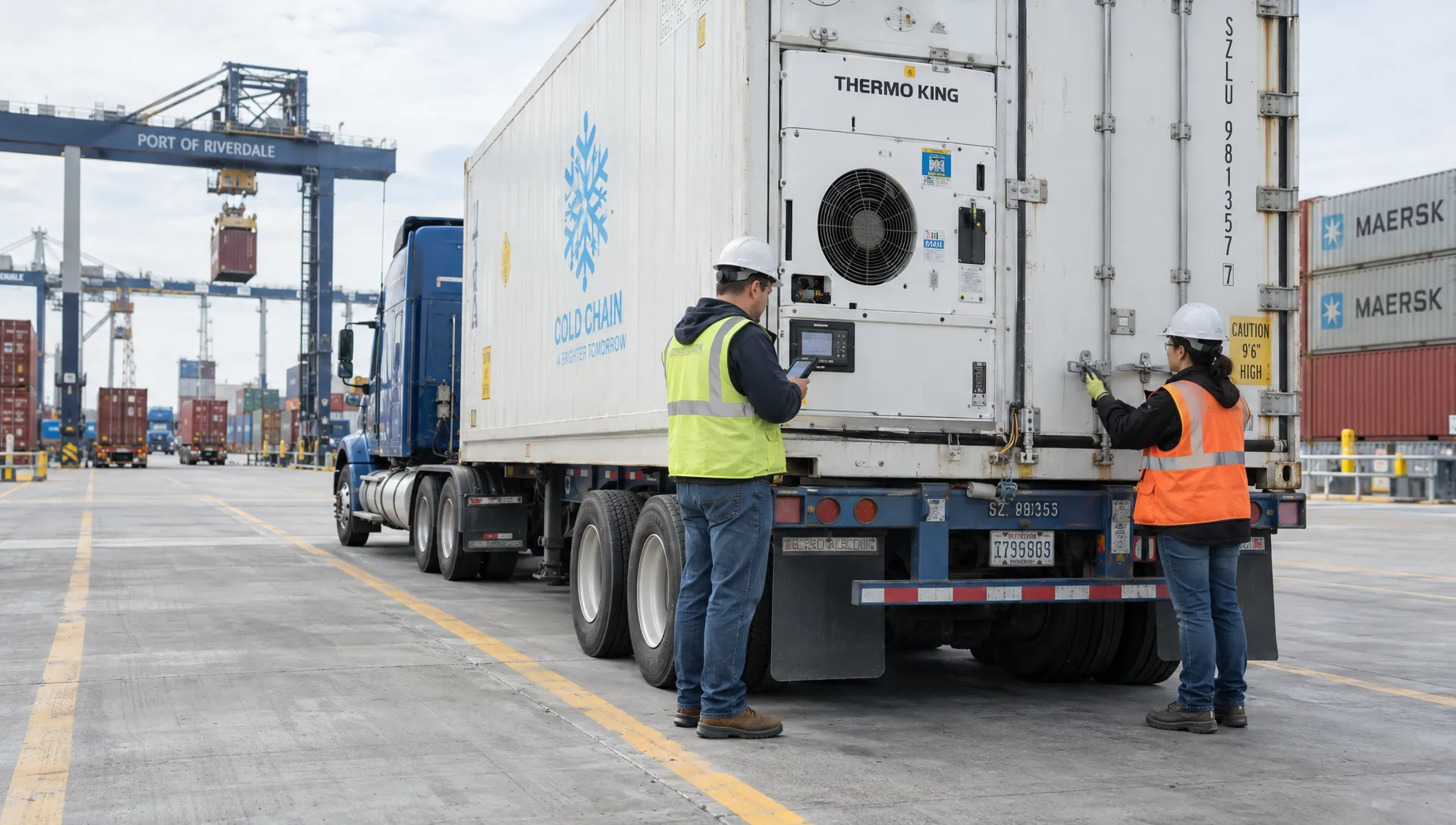
A typical end-to-end sequence for an ocean import might look like:
Container arrives at port
Drayage picks up the container and brings it to a transload facility
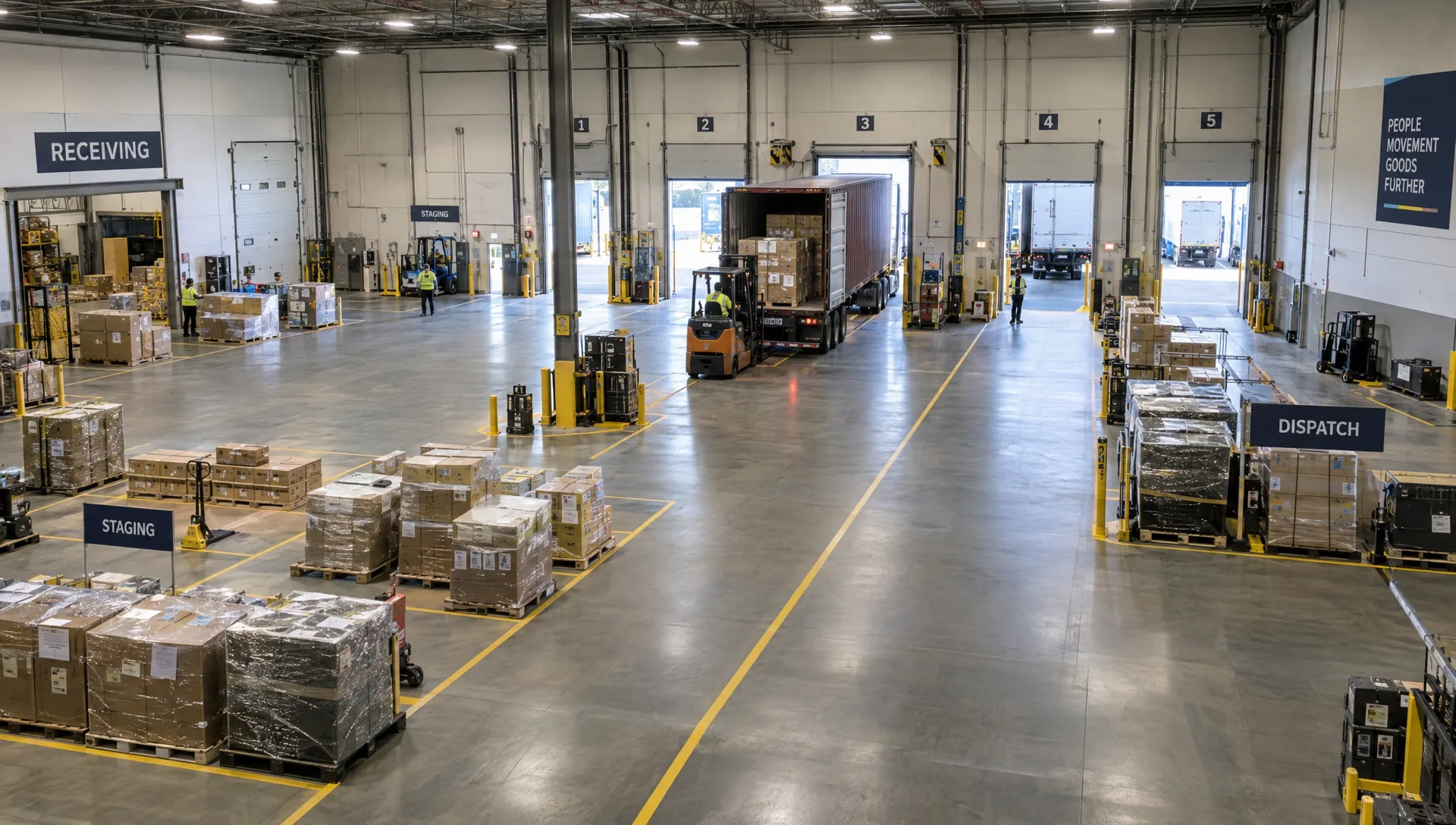
Transload team unloads (devans) and palletizes, labels, or sorts by PO
Outbound loads depart as LTL/FTL to a DC or fulfillment network
Empty container is returned within free time to reduce demurrage and detention exposure
If one provider coordinates ocean freight + drayage + transloading + warehousing + outbound trucking, you typically reduce:
Dwell time between legs
Misaligned paperwork and appointment errors
Finger-pointing during claims, shortages, or delays
SHIPIT Logistics is positioned to support these integrated moves (international forwarding plus drayage/trucking, warehousing, and transloading), which is especially useful for importers doing volume through major gateways.
If you want the operational definitions of these warehouse handoffs, SHIPIT’s post on when to use transloading or cross docking is a solid reference.
What to ask a provider who calls themselves a “cargo forwarder”
If a vendor uses “cargo forwarder” branding, you do not need to disqualify them. You just need to qualify them correctly.
Here are high-signal questions that reveal scope and control quickly:
Which modes do you handle directly (air, ocean, rail, truck)?
Do you handle LCL and FCL ocean shipments, or only one?
Who is responsible for drayage scheduling and chassis strategy at destination?
Where does cargo get deconsolidated or transloaded, and who runs that facility?
Can you support pickup and delivery (including appointment deliveries and accessorials)?
How do you manage exceptions (rollovers, customs holds, missed cutoffs)?
Can you provide cargo insurance options and explain claim workflows?
You are not only buying transportation, you are buying an operating system for handoffs.
A note on money flows: shipping coordination also creates payment complexity
Forwarding is physical execution, but international moves also create a finance layer: supplier invoices, duty and tax payments, carrier invoices, chargebacks, and reconciliation.
In some verticals, especially travel and tourism operators that manage multiple payment methods across suppliers, using a centralized payment platform can simplify reconciliation and fraud controls. For example, Elia Pay positions itself as an all-in-one payments hub for travel agencies. It is not a logistics tool, but it is the kind of back-office system that can reduce operational friction when your business has both complex services and complex payments.
Bottom line: which term should you use?
If you want the safest, most widely understood term, use freight forwarder.
If someone offers you “cargo forwarding,” treat it as a starting point and confirm:
What modes and legs they truly operate
What they subcontract
Which licenses and compliance programs apply to your shipments
Whether they can provide an end-to-end solution that includes drayage, transloading, and warehousing when your lane requires it
For shippers that need integrated international forwarding plus U.S. port drayage and transloading into domestic distribution, working with a provider that can coordinate the entire chain reduces handoffs and improves accountability. SHIPIT Logistics has offered global freight forwarding and logistics services since 1974, including ocean and air freight, warehousing, transloading, and trucking, which makes it a practical fit for importers and exporters that want one operating lead across the shipment lifecycle.