What a Freight Logistics Company Should Handle End to End

Updated: Oct 2
In 2026, the most expensive freight problems a freight logistics company should address often do not come from the linehaul rate. They come from unmanaged handoffs: a container that is available but not pulled, a customs file missing one data element, a warehouse that is not ready to receive, or a delivery appointment that no one confirmed.
A freight logistics company should do more than book transportation. If it claims to handle a shipment end to end, it should control the operating plan from supplier pickup through final delivery, with clear ownership for data, documents, cargo custody, exceptions, and billing.
End to end does not mean every fee disappears or every risk becomes the provider's fault. It means the scope is defined, the weak points are known before the shipment moves, and there is one accountable logistics plan connecting international freight, customs coordination, drayage, transloading, warehousing, trucking, and delivery.
End to end starts with a lane plan, not a rate
A serious provider begins by mapping the lane. The question is not simply which carrier is cheapest. The real question is how the freight will move through each physical, regulatory, and data handoff.
For importers, exporters, BCOs, freight brokers, and shipping managers, a lane plan should show where the cargo starts, who controls it, which mode it uses, what documents are due, where it clears customs, where it is transloaded or stored, and how it reaches the receiver.
Shipment stage | What the provider should control | Why it matters |
Pre-shipment planning | Scope, Incoterms, cargo profile, route, cutoffs, responsibilities | Prevents quote gaps and missed deadlines |
Origin execution | Pickup, supplier coordination, export documents, consolidation | Reduces rollover risk and cargo-ready delays |
Main carriage | Ocean, air, rail, truck, or multimodal routing | Aligns cost, speed, and reliability |
Customs coordination | Data collection, broker handoff, filing timelines, release status | Prevents holds, exams, and compliance surprises |
Gateway execution | Drayage, airport recovery, transloading, warehousing | Controls dwell, demurrage, detention, and missed appointments |
Inland delivery | LTL, truckload, flatbed, specialized trucking, proof of delivery | Protects customer service and final cost |
Post-shipment review | Invoice audit, claims, KPI review, corrective actions | Turns one shipment into a better repeatable process |
When a freight logistics company can explain each stage before you tender the cargo, you are buying operational control, not just capacity.
1. Shipment discovery and quote governance
Accurate execution starts with accurate shipment facts. A provider should ask for more than origin, destination, and weight. It should collect commodity details, dimensions, stackability, packaging type, cargo value, hazardous status, temperature or handling requirements, Incoterms, ready date, delivery deadline, and consignee requirements.
Commodity detail matters. A specialty research supplier such as PeptideX Research Australia has a different freight profile than a furniture importer, machinery exporter, auto dealer, or consumer goods brand. Product type can affect classification, packaging, documentation, carrier acceptance, insurance, and routing assumptions.
A good quote should also show what is included and what is excluded. Port-to-port, airport-to-airport, door-to-door, and warehouse-to-warehouse are not interchangeable scopes. If drayage, transloading, customs brokerage arrangements, cargo insurance, delivery appointments, storage, or accessorials are not addressed, the quote is not complete enough for operational planning.
For complex lanes, ask the provider to put the scope into a written SOW, SOP, or routing guide. SHIPIT has a deeper guide on what to put in a freight forwarding SOW, but the principle is simple: if a handoff can create cost or delay, it should have an owner.
2. Origin execution and export readiness
The origin leg is where many problems begin, especially when suppliers are unfamiliar with U.S. import rules, export documentation, cutoffs, pallet requirements, or cargo measurements.
An end-to-end freight logistics company should coordinate supplier pickup, cargo-ready confirmation, loading instructions, commercial invoice review, packing list review, export documentation, and mode-specific cutoffs. For ocean freight, that may include shipping instructions, verified gross mass, container loading details, and carrier or CFS deadlines. For air freight, it may include screening requirements, airline tender cutoffs, dimensions, and chargeable weight calculations.
For U.S. exports, the provider should also help coordinate Electronic Export Information when required, obtain or transmit the ITN, and align the filing with carrier cutoffs. For vehicle exports, project cargo, or controlled goods, origin readiness may require additional document checks before anything is picked up.
The goal is to avoid discovering a problem on cutoff day. A provider should identify issues early, such as non-stackable cargo, untreated wood packaging, missing dimensions, incomplete party information, or a supplier that cannot meet the pickup window.
3. Transportation mode and routing management
A freight logistics company should help choose the right mode based on total landed cost, service risk, and cargo requirements. The cheapest mode on paper may not be cheapest after storage, demurrage, missed sales, rework, or emergency recovery are included.
Mode | Best fit | What the provider should manage |
Ocean FCL | Container-volume freight, predictable lead times, heavier cargo | Booking, cutoffs, container planning, drayage, customs timing, destination strategy |
Ocean LCL | Smaller shipments that do not fill a container | CFS cutoffs, consolidation, deconsolidation, destination fees, final delivery planning |
Air freight | Urgent, higher-value, lighter, or time-sensitive cargo | Chargeable weight, airline cutoffs, screening, airport recovery, expedited delivery |
Rail and intermodal | Long inland moves where cost matters and timing is planned | Ramp selection, drayage, equipment availability, schedule risk |
Trucking | Domestic moves, port recovery, final delivery, specialized equipment | LTL, FTL, flatbed, step deck, double drop, permits, appointments, accessorials |
A strong provider should also define mode-switch triggers. If an ocean shipment misses a vessel, when should it move by air? If rail dwell threatens a delivery window, when should the cargo be transloaded to truck? If the destination port is congested, when is it worth routing through another gateway?
That decision logic should be discussed before disruption happens.
4. Customs coordination and compliance handoffs
End-to-end logistics must include customs coordination, but shippers should understand the difference between coordination and legal responsibility. Importers and exporters remain responsible for accurate commercial data, classification, valuation, origin, licensing, and product admissibility. The provider's role is to collect the right data, identify gaps, coordinate brokerage arrangements, and align filings with operational deadlines.
For U.S. ocean imports, Importer Security Filing timing is especially important because the ISF must be filed before vessel loading at origin. For imports generally, the provider should help ensure the customs broker has the commercial invoice, packing list, bill of lading or air waybill, bond information, power of attorney, HTS data, and any required agency information.
For exports, the company should coordinate EEI or AES data when required, confirm the ITN or exemption citation, and make sure carrier documents match the filing.
The best providers build a customs handoff process. That process should define who supplies data, who reviews it, who files, when data freezes, how corrections are handled, and how release status is communicated to the drayage, warehouse, and delivery teams.
5. Gateway execution: drayage, transloading, and warehousing
The gateway is where international freight becomes domestic freight. It is also where many end-to-end promises fail.
A container can arrive on time and still miss delivery if no one has arranged the terminal appointment, chassis, customs release, warehouse receiving slot, or empty container return. Air freight can land quickly and still sit if airport recovery, screening release, transfer, and truck dispatch are not coordinated.
This is why drayage, transloading, and warehousing should not be treated as afterthoughts. They are the operating bridge between ocean or air freight and the domestic network.
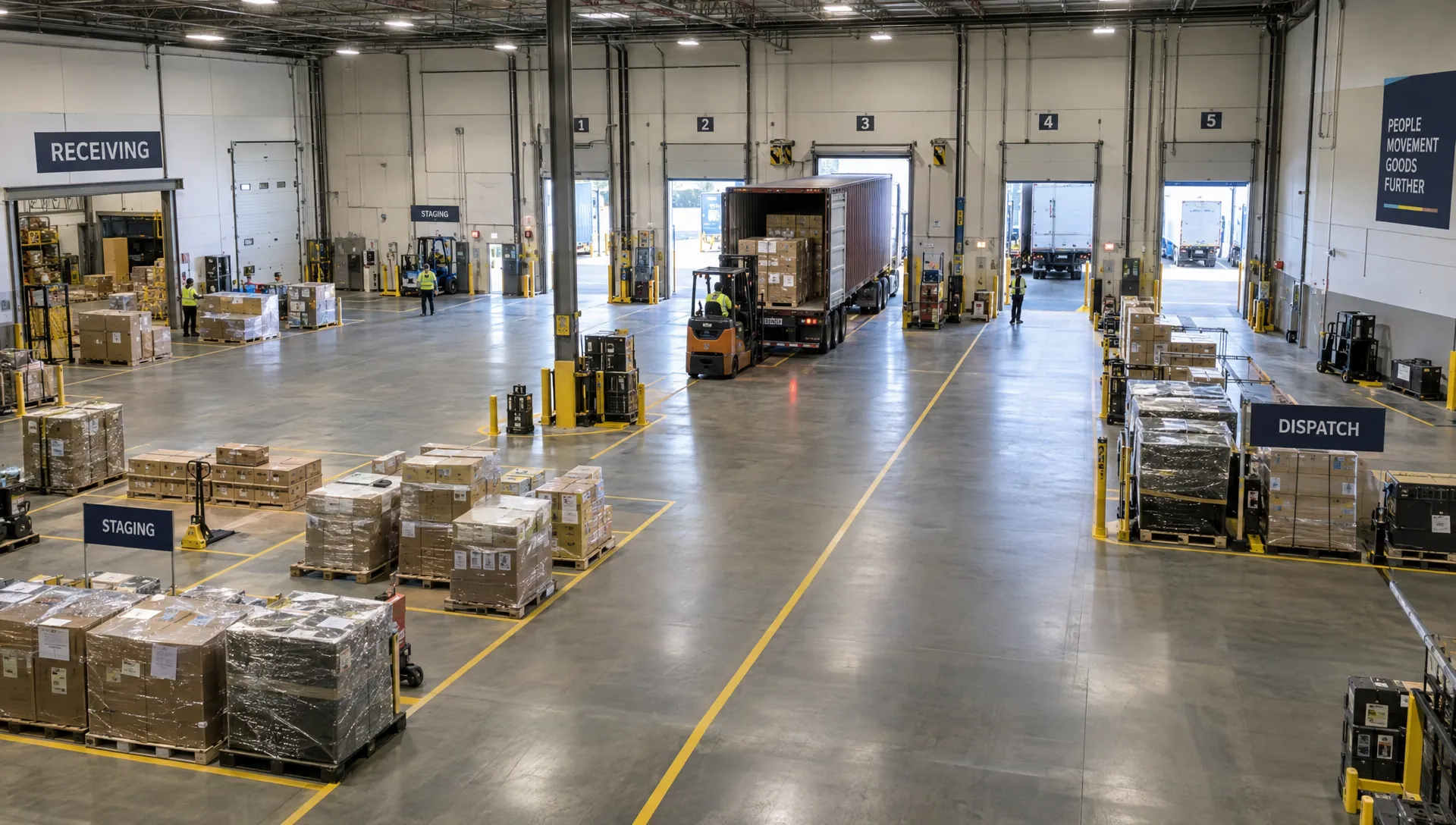
Transloading is especially important for importers and fast-growing brands. In an ocean import flow, cargo can be pulled from the port, stripped at a warehouse, re-palletized or sorted, and moved into domestic trailers while the ocean container is returned quickly. That can reduce dwell, detention, and demurrage exposure while giving the shipper more flexibility in final delivery. For more detail, see SHIPIT's guide on how transloading cuts dwell and fees.
For exports, the flow can work in reverse. Domestic freight can be received from multiple suppliers, consolidated, inspected, labeled, blocked and braced, then loaded into an export container or prepared for air freight. This is useful for exporters, forwarders, brokers, and project shippers that need gateway control without necessarily outsourcing the entire shipment.
A provider like SHIPIT Logistics can support a full end-to-end program, but it can also support a narrower gateway scope when needed, such as import drayage and transload only, export drayage and container loading, airport recovery, or warehouse transfer.
6. Warehousing and fulfillment controls
Warehousing is not just storage. In an end-to-end freight plan, warehousing should be designed around flow.
A freight logistics company should define receiving rules, dock hours, unloading method, inventory capture, labeling, pallet configuration, release process, and outbound mode. If fulfillment, kitting, relabeling, palletization, repacking, or cross-docking is in scope, those tasks should be priced and documented before the cargo arrives.
Warehouse execution also affects customs and claims. Good receiving records, photos, seal logs, exception notes, and pallet counts can help prove when damage or shortage occurred. Poor receiving discipline can make a claim difficult to support, even when the loss is real.
For importers selling into retail, Amazon FBA, wholesale, or direct-to-customer channels, warehousing may be the difference between a shipment that arrives and a shipment that can actually be sold.
7. Domestic trucking and final delivery
Final delivery is where logistics becomes customer experience. A freight logistics company should manage the delivery requirements as carefully as the international leg.
That includes confirming receiver hours, appointment rules, dock access, pallet exchange requirements, liftgate needs, inside delivery restrictions, residential or limited-access conditions, and whether the consignee can unload a live container or trailer.
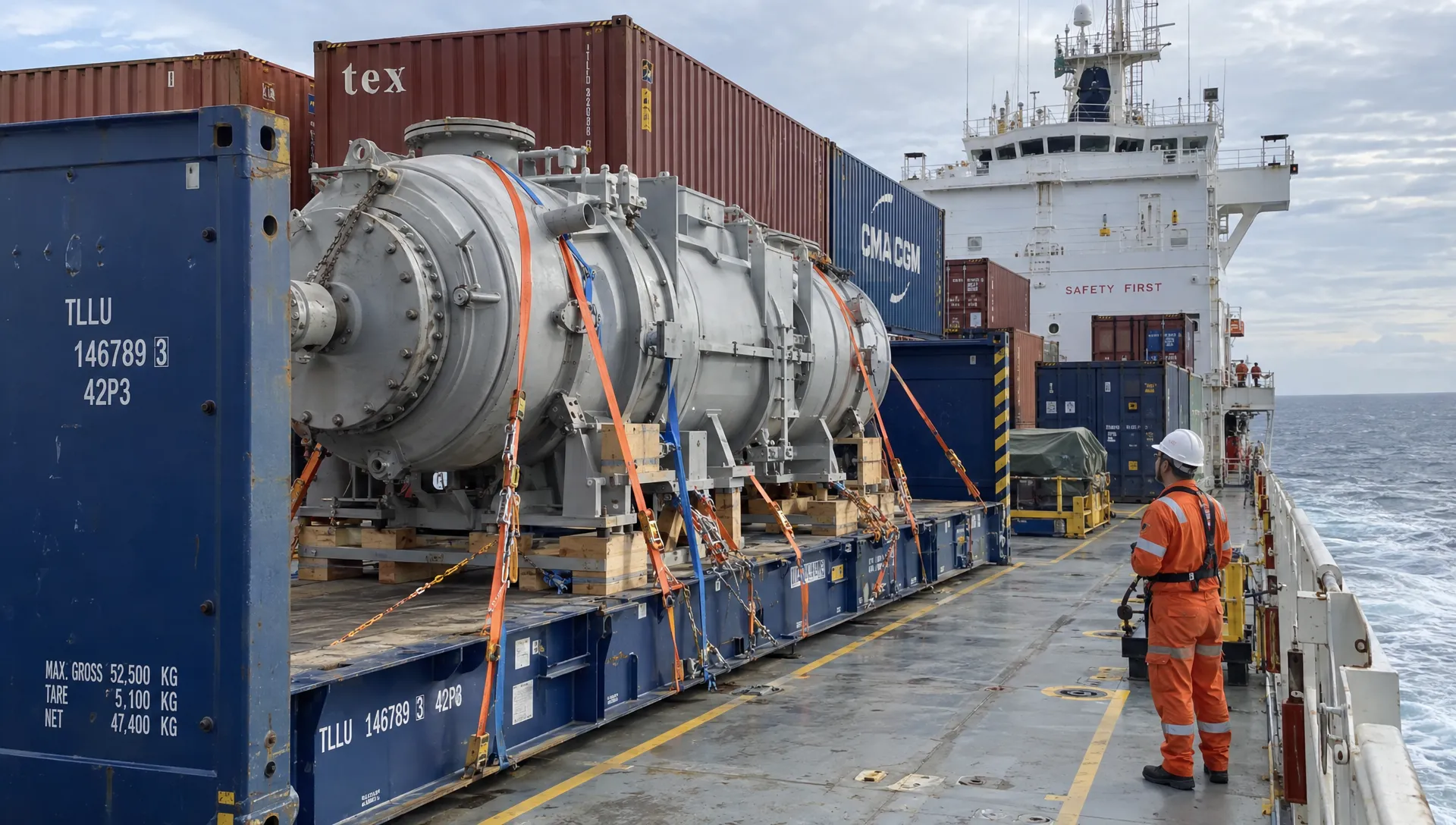
For standard freight, the right answer may be LTL or truckload. For heavier industrial shipments, vehicles, machinery, or out-of-gauge cargo, the answer may be flatbed, step deck, double drop, lowboy, permits, escorts, or project cargo planning.
The provider should match the equipment to the cargo and the receiver. A perfect ocean booking can still fail if the final-mile truck cannot legally or physically deliver the load.
8. Visibility and exception management
Visibility is not just a tracking link. It is a disciplined milestone system that tells the shipper what happened, what is at risk, and who is acting on the exception.
A practical end-to-end milestone plan should cover cargo ready, pickup, origin receipt, booked departure, gate-in or tender, departure, arrival, customs status, availability, outgate, transload start, transload completion, delivery dispatch, delivery appointment, proof of delivery, and invoice closeout.
More importantly, a freight logistics company should have escalation rules. If a vessel rolls, who updates the consignee? If a customs exam is ordered, who coordinates the exam site and drayage? If a warehouse is full, what is the backup? If an LTL carrier reclassifies freight, who disputes the charge?
The value of one accountable logistics plan is that exceptions are not passed from vendor to vendor while the free-time clock runs.
9. Cargo insurance, claims, and risk controls
Many shippers assume carrier liability is the same as cargo insurance. It is not. Carrier liability is usually limited by contract, law, mode, and circumstances. Cargo insurance is a separate risk-transfer decision.
A freight logistics company should explain insurance options, collect cargo value, identify common exclusions, and help the shipper understand what documentation would be needed if a claim occurs. For higher-value cargo, fragile freight, project cargo, vehicles, or international moves with multiple handoffs, this conversation should happen before pickup.
Risk controls also include practical steps: packaging standards, cargo photos, seal records, warehouse receiving notes, condition reports, and prompt exception notices. These controls help prevent claims and support recovery when a claim is unavoidable.
10. Invoice reconciliation and continuous improvement
End-to-end service is not complete when the freight delivers. The provider should reconcile the invoice against the quote, explain accessorials, document root causes, and identify preventable cost drivers.
Common variance drivers include demurrage, detention, storage, chassis fees, waiting time, re-delivery, liftgate, limited access, customs exams, dimensional changes, reclassification, and additional handling.
The best logistics programs use shipment data to improve future performance.
KPI | What it reveals |
Documentation on-time rate | Whether filings and releases are at risk before cargo arrives |
Booking lead time | Whether the shipper is giving enough time to secure capacity |
Port or CFS dwell | Whether gateway execution is causing avoidable cost |
Container-to-outbound cycle time | How quickly transloading converts imports into domestic freight |
Appointment hit rate | Whether delivery planning is reliable |
Invoice exception rate | Whether quotes, scope, and actual execution are aligned |
A provider that owns the process should be able to explain the numbers and recommend changes.
What end to end should not hide
A complete scope should be transparent about exclusions and variable charges. If these items are not discussed early, the shipper may mistake an incomplete quote for a low-cost quote.
Duties, taxes, tariffs, and customs fees are usually separate from freight unless specifically included in the scope.
Customs exams, inspections, and government holds can create extra drayage, storage, and handling costs.
Demurrage and detention may still apply if data is late, freight is held, receivers cannot accept, or terminals are congested.
Accessorials such as liftgate, inside delivery, waiting time, re-delivery, limited access, and residential delivery must be planned.
Cargo insurance is not automatic unless it is requested, quoted, and bound.
Packaging failures can create damage, claims disputes, and carrier rejection even when transportation was arranged correctly.
A trustworthy freight logistics company does not pretend these risks do not exist. It names them, assigns owners, and builds controls around them.
When partial service is better than full end to end
Not every shipper needs a provider to manage everything. A BCO may already have an ocean contract. A freight forwarder may control the international leg but need a reliable U.S. gateway partner. A broker may need drayage, transloading, and truckload execution for a customer without taking on warehouse operations directly.
In those cases, partial service can be the right scope. The key is to define the interface.
For import drayage and transload only, the provider should know who controls the bill of lading, who supplies customs release, who pays terminal charges, who schedules the warehouse, how fast the container must be stripped, and where outbound freight goes.
For export drayage and transload, the provider should know who supplies cargo, who confirms export documents, who files EEI if required, who controls booking, how cargo is loaded, and when the container or air freight must be tendered.
Partial service works well when the handoff is clear. It fails when every party assumes someone else owns the next step.
How to vet a freight logistics company
The best way to evaluate a provider is to ask for operational evidence, not broad promises. A strong provider should be able to walk through your actual lane and explain how it would handle the freight from start to finish, or through the specific segment you want to outsource.
Capability to verify | What good looks like |
Scope clarity | Itemized quote, written assumptions, clear exclusions, defined responsibilities |
Mode expertise | Practical comparison of ocean, air, rail, truck, LCL, FCL, and multimodal options |
Gateway control | Drayage, transloading, warehousing, and delivery plan built before arrival |
Compliance process | Customs data collection, broker coordination, filing timelines, escalation rules |
Warehouse readiness | Receiving plan, labor planning, inventory capture, outbound release process |
Trucking depth | LTL, truckload, specialized equipment, appointment management, accessorial planning |
Exception management | Named escalation path, milestone visibility, recovery options |
Billing discipline | Quote-to-invoice reconciliation and accessorial explanation |
If a provider cannot explain the operational handoffs, the low rate may not survive contact with the real shipment.
How SHIPIT Logistics can support the operating model
SHIPIT Logistics is a U.S.-based freight forwarding and logistics provider with experience dating back to 1974. Its services include international freight forwarding, air and ocean freight, LCL and FCL, container drayage, pickup and delivery, LTL and truckload, flatbed and specialized trucking, warehousing, fulfillment, transloading, project and heavy-lift cargo support, cargo insurance, customs brokerage arrangements, technology integration, and global partner coordination.
For shippers that want one operating plan, SHIPIT can help coordinate the full chain from international transportation through U.S. gateway execution and domestic delivery. For freight forwarders, freight brokers, and BCOs that only need a specific leg handled, SHIPIT can also support targeted services such as import drayage and transload, export drayage and warehouse loading, port recovery, airport recovery, or warehouse-to-truck execution.
The right scope depends on the lane, cargo, timeline, and risk. The important part is making sure someone owns each handoff before the freight moves.
Frequently Asked Questions
What should a freight logistics company handle end to end? It should handle shipment planning, origin coordination, mode selection, documentation support, customs coordination, international transportation, drayage, transloading, warehousing, domestic trucking, delivery, visibility, exception management, insurance options, and invoice reconciliation.
Does end to end mean door-to-door? Often, but not always. Door-to-door is a service scope. End-to-end logistics is an operating model that defines who owns every step, including data, custody, decisions, and exceptions.
Can I use a provider only for drayage and transloading? Yes. Many shippers, brokers, and forwarders use a logistics provider for a specific gateway scope, such as import drayage and transload, export warehouse loading, or airport recovery, while keeping other parts of the shipment in-house.
How should I compare end-to-end quotes? Compare scope, not just price. Confirm whether origin handling, main carriage, customs coordination, drayage, transloading, warehousing, delivery appointments, insurance, accessorials, and exclusions are included or separately charged.
For help building an end-to-end freight plan, or for targeted import or export drayage and transload support, contact SHIPIT Logistics. The team can help map your lane, define the scope, and coordinate the services needed to move freight with fewer handoffs and fewer surprises.