Logistics Trucking Guide: Drayage, FTL, LTL, and Accessorials

Updated: Apr 30
Most supply chain teams spend the majority of their time planning the international move (ocean or air) and then get surprised by the part that is physically closest to them: logistics trucking. Drayage delays, missed appointments, chassis shortages, misquoted accessorials, and unclear handoffs between a port, rail ramp, transload, and final delivery are some of the fastest ways to add cost and variability to your lead times.
This guide breaks down the four building blocks you need to manage trucking like a pro:
Drayage (port and rail ramp pickups and deliveries)
FTL (full truckload linehaul)
LTL (less-than-truckload for palletized freight)
Accessorials (the “extras” that quietly become major spend)
Along the way, you will see how trucking connects to transloading and warehousing, and why an integrated provider can reduce handoffs and exceptions.
Where trucking fits in international freight (and why it is often the bottleneck)
A typical import flow into the United States looks like this:
Ocean container arrives at a marine terminal (or an LCL shipment arrives at a CFS)
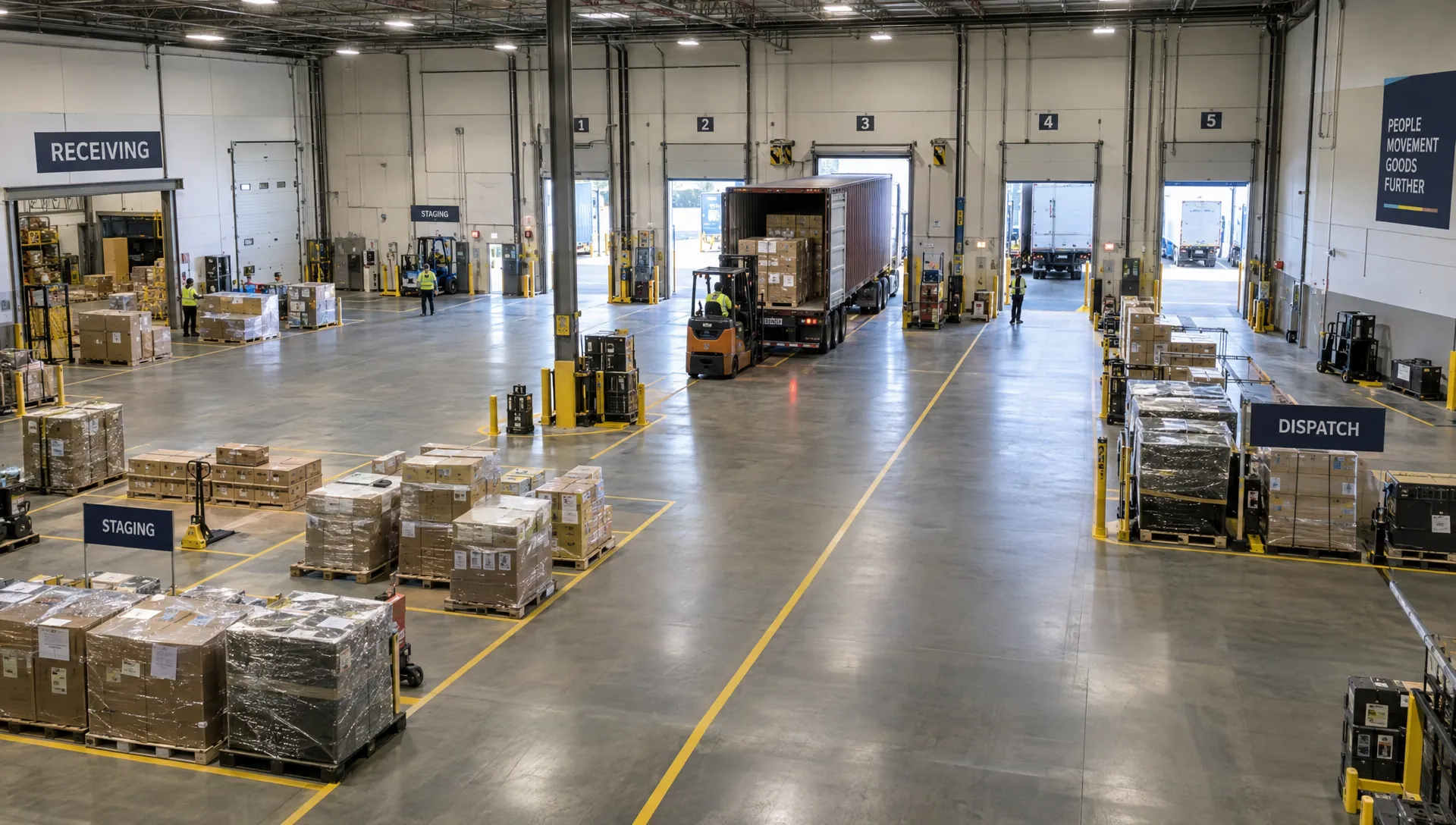
Drayage moves the container (or loose freight) to a transload facility, distribution center, or rail ramp
If you transload, freight is shifted into domestic equipment (often a 53-foot trailer)
FTL and/or LTL moves freight into regional DCs, 3PL warehouses, Amazon FCs, stores, or job sites
The key point is that trucking is not “one thing.” It is multiple legs with different rules, equipment, documentation, and charge triggers.
Drayage 101: what it is, and what makes it expensive
Drayage is short-haul trucking tied to an intermodal node, most commonly a seaport terminal, an inland rail ramp, or a CFS. It is the link between international freight and domestic distribution.
Common drayage types you will hear (and what they mean)
Import drayage: terminal to warehouse, transload facility, rail ramp, or final consignee.
Export drayage: shipper to terminal, including empty pickup and loaded return.
Intermodal drayage: rail ramp to/from warehouse.
Shuttle drayage: short moves, often between terminals, empty depots, and warehouses.
Pre-pull and hold: pulling a container out of the terminal to avoid demurrage risk, then holding it at a yard.
The chassis factor (and why it changes the math)
A container usually rides on a chassis, and chassis supply and sourcing can be a major constraint at busy gateways. Depending on your lane and terminal, chassis may be provided via a pool, a leasing company, or arranged through your provider. Misaligned chassis plans can lead to:
Missed appointments
Extra “bobtail” trips
Chassis splits (one chassis in, a different chassis out)
Additional per-diem style charges in some situations
If you routinely see surprise fees around container and equipment time, it is worth tightening your process around free time, last free day, and appointment readiness. SHIPIT has a deeper explainer on these cost categories in their guide to demurrage, detention, and per diem.
Drayage accessorials that usually hit first-time importers
Drayage quotes can look straightforward until an exception occurs. The most common “gotchas” are not exotic, they are operational:
Wait time and detention (driver waiting at terminal or consignee)
Redelivery (missed appointment or cargo not ready)
Port congestion and appointment scarcity (risk that turns into storage and equipment time)
Pre-pull (when you pull early to protect last free day)
Pier passes and terminal-specific charges (market and terminal dependent)
Drayage is also where “who is responsible?” confusion shows up quickly. If your Incoterms, delivery location, or handoff responsibilities are unclear, you can end up paying for a problem you do not control.
FTL (Full Truckload): when you want speed, control, and fewer touches
FTL typically means you book an entire trailer for your freight, even if it is not filled to the roof. You generally use FTL when:
Your shipment is large enough to justify the trailer
You need better pickup and delivery control than LTL networks
You want fewer cross-dock touches (often reduced damage risk)
Your freight is time sensitive, high value, or operationally complex
FTL equipment basics (and when they matter)
Your trucking plan is only as good as your equipment match. Common equipment categories include:
Dry van: general freight, palletized goods, cartons.
Reefer: temperature-controlled shipments.
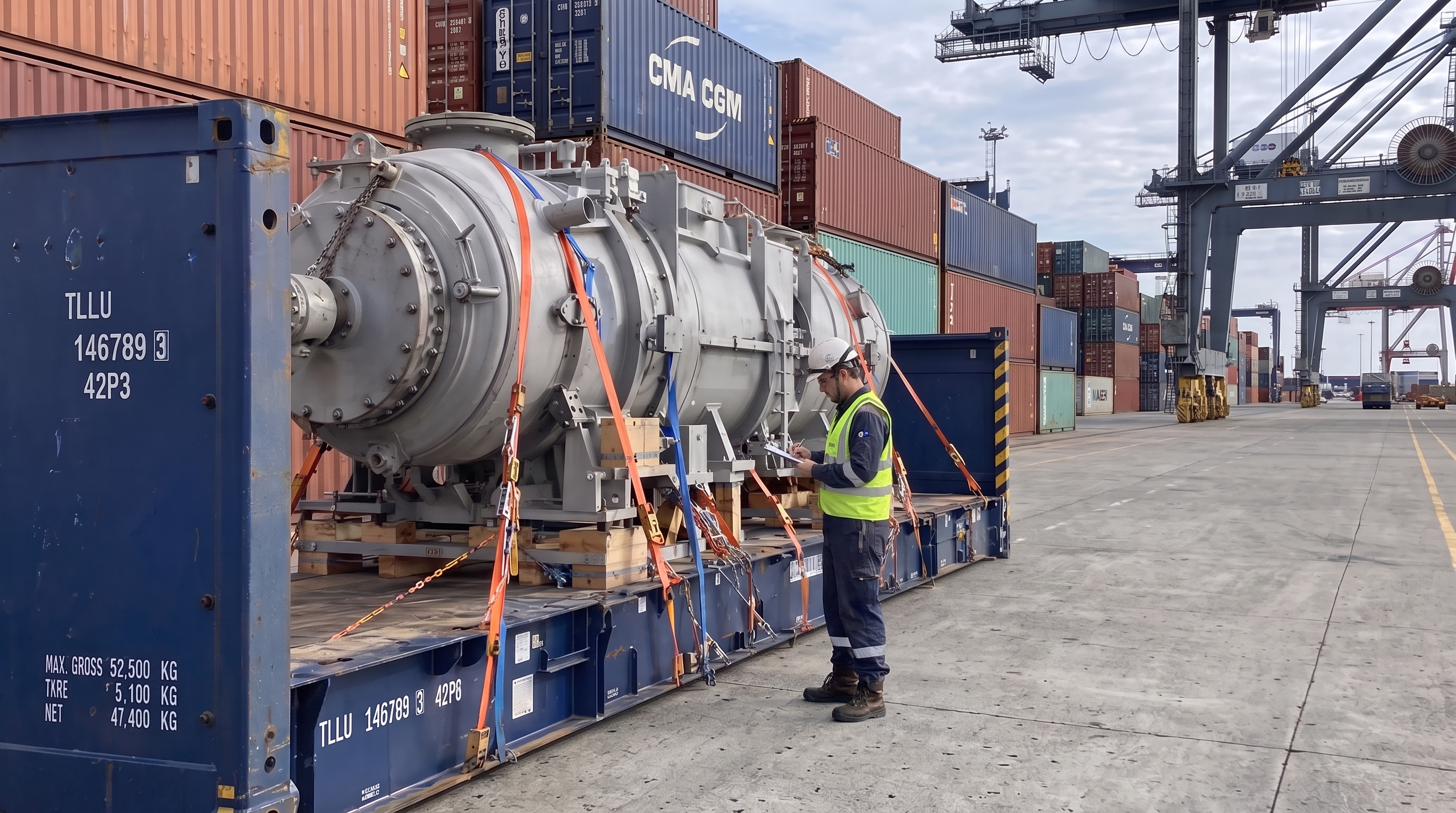
Flatbed, step deck, double drop: machinery, industrial freight, construction materials.
Oversized and out-of-gauge: shipments requiring permits, routing plans, and sometimes escorts.
SHIPIT Logistics supports standard domestic trucking plus specialized options (flatbed, step deck, double drop, and oversized/out-of-gauge). If you are moving project cargo that combines ocean/air with specialized over-the-road delivery, aligning the trucking plan early prevents costly last-minute rebooks.
FTL planning details that reduce exceptions
FTL is “simpler” than LTL, but it still requires precision. The biggest exception drivers are:
Incorrect weights and dimensions (leading to equipment mismatch)
Not confirming loading method (dock, forklift, crane, roll-on)
Appointment requirements and site restrictions (especially for DCs and job sites)
Commodity restrictions and compliance requirements
LTL (Less-than-Truckload): the right tool for pallets, but accessorials decide the final cost
LTL is a shared network where your pallets move through terminals and linehaul legs with other freight. It is a great fit when:
You ship a few pallets at a time
You need nationwide coverage without buying a full trailer
Your freight can tolerate network transit times and handling
Where LTL teams get burned is assuming the base rate is the total. In practice, LTL accessorials and reclassification often decide the invoice.
If you want a dedicated deep dive into how LTL works (packaging, terminology, and shipment prep), SHIPIT has a separate guide: A Guide to LTL (less-than-truckload) Freight Shipping.
Accessorials explained: the “small” line items that become big spend
Accessorials are charges for services and exceptions outside standard pickup and delivery. Some are legitimate add-ons (you truly need the service). Others are avoidable by improving data quality and site readiness.
The accessorial prevention table (use this in your SOP)
Accessorial | Typical trigger | How to prevent it (or control it) |
Detention / wait time | Driver waits beyond allowed time | Require appointment windows, confirm cargo is staged, pre-clear paperwork, track dwell by site |
Layover | Multi-day delay after truck is dispatched | Confirm product readiness before tender, tighten production and warehouse cutoffs |
TONU (truck ordered not used) | Load canceled after dispatch | Use “ready-to-load” checks, define cancellation terms in your SOP |
Redelivery | Missed appointment or refused delivery | Validate delivery requirements, confirm receiving hours, add receiver contact validation |
Liftgate | No dock or forklift at delivery | Ask upfront, add liftgate service at quote time |
Residential | Delivery is to a residence | Flag residential addresses in your order system |
Limited access | Schools, farms, military bases, ports, etc. | Map facility types and auto-tag in TMS/ERP |
Inside delivery | Driver brings freight inside | Confirm scope and add service; consider last-mile specialists when needed |
Reweigh / reclass (common in LTL) | Weight/class differs from BOL | Implement scale and dimensioning checks, improve packaging and density consistency |
Driver assist | Extra labor required to load/unload | Make responsibilities explicit, stage freight, provide on-site labor if needed |
A practical rule: if your team cannot predict accessorials, your data packet is not complete.
The connection between drayage, transloading, and domestic trucking
For many importers, the biggest trucking savings are not about negotiating the lowest linehaul rate. They come from designing the right handoff between international containers and domestic distribution.
What transloading changes
Transloading is the process of moving goods from one mode or container type to another, commonly:
40-foot or 20-foot ocean container into a 53-foot domestic trailer
Ocean container into floor-loaded or palletized outbound loads
LCL deconsolidation into multi-stop distribution
That shift can reduce cost and improve flexibility because:
53-foot trailers often move more efficiently in domestic linehaul networks
You can split one container into multiple outbound loads and destinations
You can build store-ready or FC-ready pallets at the transload point
For a clear definition of how transloading differs from cross-docking, see SHIPIT’s explainer: When to use Transloading or Cross Docking Services.
Why “end-to-end” matters operationally
When different vendors own ocean, drayage, transload, and outbound trucking, each handoff is a risk point:
Who books the appointment?
Who is responsible if the container is not available?
Who pays if the warehouse is not ready?
Who has the proof needed to dispute detention?
A provider that can coordinate freight forwarding, drayage, transloading, warehousing, and outbound trucking can often reduce exceptions simply by reducing the number of interfaces and clarifying ownership.
The minimum data packet to quote and execute trucking correctly
If you want fewer invoice surprises, standardize the information you provide before you tender a load. At minimum, collect:
Pickup and delivery addresses, plus contacts and receiving hours
Appointment requirements (and who is responsible for scheduling)
Cargo details: piece count, packaging type, dimensions, weight, commodity description
Handling requirements (dock, forklift, floor load, crane), plus any site restrictions
For drayage: terminal or rail ramp, container number (when available), last free day, and whether you need pre-pull
Insurance expectations and declared value (when applicable)
This is also where technology helps. If you run your own lightweight tracking portal, EDI middleware, or shipment database, hosting it on reliable infrastructure (for example, high-speed VPS hosting) can improve uptime for customer service and operations teams that depend on real-time status.
What to measure in logistics trucking (KPIs that actually reduce cost)
Most teams track “on-time delivery” and stop there. For trucking, you also want metrics that predict cost and service failures.
KPI | What it tells you | Why it matters |
Appointment compliance rate | Are pickups and deliveries executed as planned? | Predicts redeliveries, detention, and customer escalations |
Average dwell time at pickup/delivery | How long drivers wait | Direct driver cost and the leading indicator for detention |
Accessorial rate per load | How often extras appear | Measures process quality, not carrier behavior |
Tender acceptance (FTL) | Capacity reliability on your lanes | Prevents premium spot buying |
Claims frequency and severity | Damage and loss trends | Often tied to handling touches and packaging |
Port/CFS dwell time (drayage) | Time cargo sits at the node | Drives storage risk and container time exposure |
If you need a broader end-to-end view (international plus domestic), SHIPIT’s post on Freight Management KPIs connects trucking performance to total landed cost.
When to use one provider vs multiple trucking vendors
There is no single right answer, but here is the practical decision logic:
If you are moving simple domestic loads with stable lanes, a narrow carrier strategy can work.
If your trucking is tightly coupled to ports, rail ramps, air gateways, transloading, or warehousing, integration usually reduces exceptions.
Provider questions that prevent surprises
Ask these before you award freight:
Who owns appointment scheduling at terminals, warehouses, and consignees?
How are detention and wait time defined, measured, and disputed?
What is the escalation path when a container is not available, rolled, or on hold?
Can the provider support transloading and storage if the receiving site cannot take freight?
For specialized freight (flatbed, oversized), who manages permits, routing, and compliance steps?
Frequently Asked Questions
What is drayage in logistics trucking? Drayage is short-haul trucking that moves freight to or from a port, rail ramp, or CFS, often involving containers and chassis.
When should I choose FTL instead of LTL? Use FTL when you need better schedule control, fewer handling touches, faster transit, or when the shipment volume justifies a full trailer.
Why do accessorial charges happen so often in LTL? LTL networks price a standard service. Anything outside that (residential delivery, liftgate, inside delivery, reweigh/reclass, appointments) is billed as an accessorial or adjustment.
How can I reduce detention charges? Confirm appointments, stage freight before the truck arrives, ensure paperwork is ready, and measure dwell time by facility so repeat offenders are fixed.
What is the benefit of transloading an import container? Transloading can convert a port move into more efficient domestic linehaul (often via 53-foot trailers), enable multi-stop distribution, and reduce bottlenecks at receiving sites.
Can I use drayage and transload only, without door-to-door freight forwarding? Yes. Many shippers engage a provider specifically for import or export drayage plus transloading, even if the main carriage is arranged elsewhere.
Need an end-to-end trucking plan that connects to ocean, air, and transloading?
SHIPIT Logistics® supports drayage, FTL, LTL, and specialized trucking, plus transloading, warehousing, and international freight forwarding. If you are trying to reduce accessorial surprises, protect last free day, or build a smoother handoff from port or rail to distribution, you can consolidate execution under one operating lead.
Explore SHIPIT’s capabilities at SHIPIT Logistics or contact their team to scope drayage, transload, warehousing, and outbound trucking for your lanes.