Procurement and Logistics Contracts for Surge Capacity

When procurement and logistics teams buy surge capacity, the contract must secure more than a provider’s willingness to quote when demand spikes. It should identify the resources being reserved, the conditions for releasing them and the remedies available when accepted capacity does not materialize.
For industrial shippers, the constraint may be vessel space, aircraft payload, qualified drivers, warehouse throughput or a permitted heavy-haul configuration. Reserving one resource does not secure the others. A confirmed international booking can still fail operationally if airport collection, port drayage or site unloading remains unassigned.
The objective is to buy an executable response to a defined demand event, with clear commercial boundaries. That requires a master agreement supported by mode-specific capacity schedules, activation rules and an agreed escalation process.
Define the capacity product before negotiating rates
A procurement and logistics agreement should distinguish committed capacity from conditional availability and spot-market assistance. Otherwise, competing bids may look comparable while purchasing very different levels of protection.
Capacity tier | Contractual commitment to define | Commercial treatment to negotiate |
Reserved baseline | Specified resources available within an agreed operating window, subject to stated conditions | Minimum volume, recurring reservation fee or another agreed commitment |
Conditional surge | Additional resources released after defined notice and provider confirmation | Option fee, activation charge or agreed rate mechanism |
Spot contingency | Sourcing effort without a preconfirmed allocation | Quote approval and explicit acceptance before execution |
Define capacity in operational units. Ocean allocations need equipment type, trade lane and sailing window. Air allocations need chargeable weight, dimensions, routing and uplift window. Drayage requires executable truck turns, while warehouses need receiving and dispatch throughput, not merely square footage. Heavy haul requires a suitable equipment configuration and a feasible route.
An established freight procurement process can produce comparable offers, but the surge schedule must expose each offer’s assumptions. Identify whether resources are controlled directly, subcontracted or dependent on later carrier acceptance.
Tie any reservation payment to a defined deliverable. A booking attempt, a confirmed allocation and physical equipment availability are different milestones and should not trigger identical payment obligations.
Align procurement and logistics authority before activation
Assign commercial and operational ownership before the first surge request. Procurement can own pricing, commitments and amendments. Logistics should validate routings, handling feasibility and delivery windows. Trade compliance should control classification, licensing and filing responsibilities. Finance should approve emergency spending limits.
These responsibilities may sit with separate departments at a large BCO or with one traffic manager at a smaller manufacturer. Name the accountable role and its backup rather than assuming job titles establish authority.
Supplier purchase terms must also support the transport plan. Specify the Incoterms 2020 rule and named place, cargo-ready requirements, packaging standard and document deadlines. Incoterms allocate defined delivery obligations, costs and risk, but they do not replace a transport capacity commitment or resolve every customs responsibility.
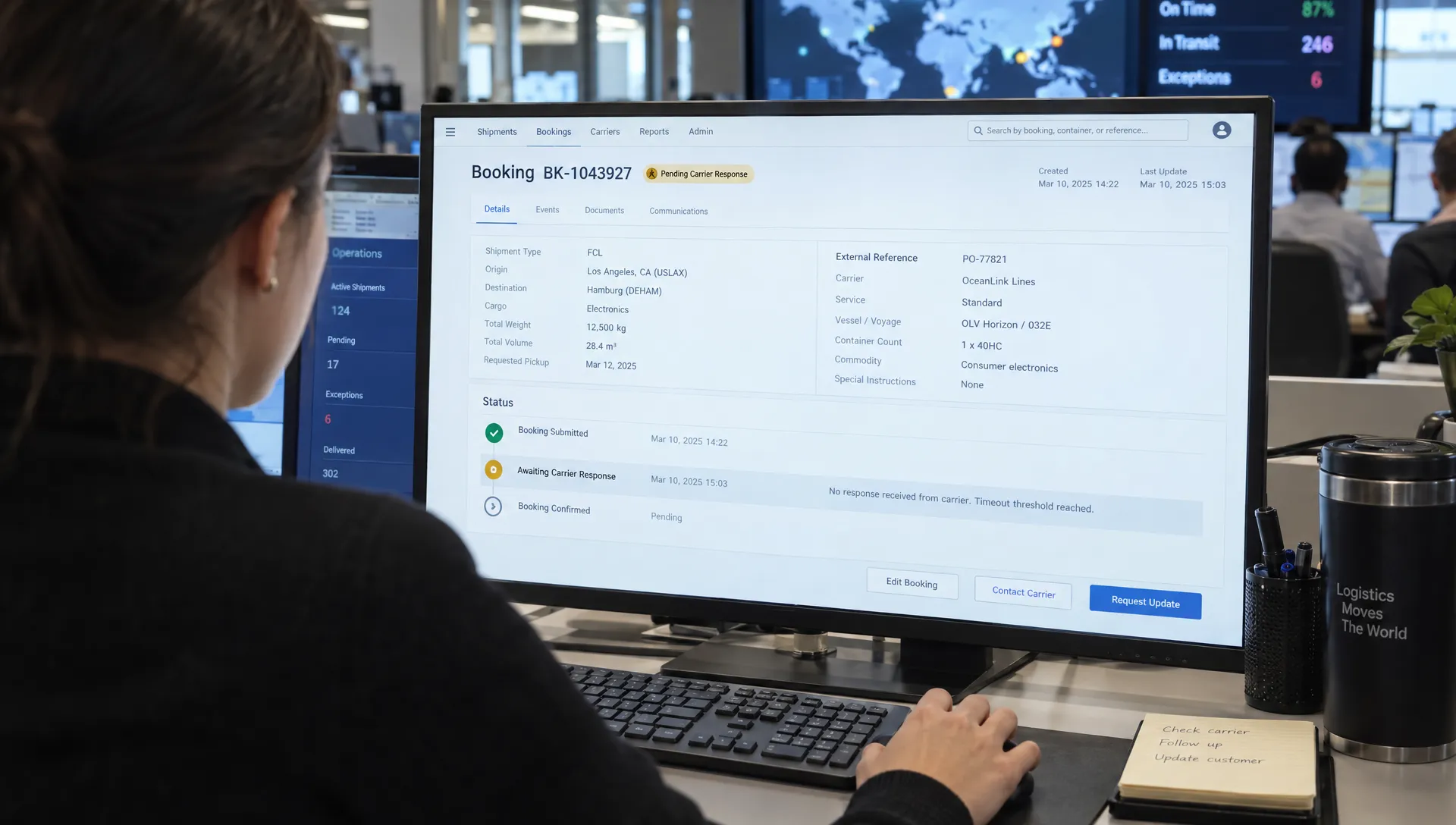
Use separate statuses for forecast, capacity request, accepted release and shipment execution. State when a request becomes binding, when unused reservations expire and who can approve substitutions.
Pro-Tip: Require the provider’s acceptance to identify outstanding conditions. “Accepted subject to permits” should not appear in the same status category as a move with permits, equipment and delivery access confirmed.
Attach mode-specific capacity schedules
A single “priority service” clause cannot describe every freight constraint. Keep the commercial framework consistent, then attach a schedule for each required service.
Ocean freight: reserve usable equipment and departure windows
For ocean freight, procurement and logistics commitments should specify FCL allocations and LCL consolidation arrangements separately. Define acceptable 20-, 40- or 45-foot dry equipment where available, along with the required reefer size, temperature settings and monitoring responsibilities for refrigerated cargo.
For FCL, identify origin, destination, equipment release conditions, cargo cutoffs and the treatment of rolled bookings. Clarify whether the allocation is supported by a carrier commitment or remains subject to confirmation. Do not describe a target departure as guaranteed unless the underlying obligation supports that wording.
For LCL, contract the CFS receiving deadline, consolidation frequency, destination deconsolidation process and cargo-availability milestone. Buyer’s consolidation can combine supplier orders, but supplier readiness and document accuracy must be conditions of the plan.
Allocate verified gross mass submissions, dangerous-goods declarations and applicable IMDG requirements. Define who receives schedule changes and how alternatives are approved. A sailing allocation has limited value if equipment shortages, incomplete documentation or missed receiving windows prevent cargo from using it.
Air freight: make import and export commitments equally executable
Air-related procurement and logistics schedules should distinguish confirmed uplift from a service level based on the next available flight. Specify payload, maximum piece dimensions, routing restrictions, security requirements and temperature-control or dangerous-goods acceptance conditions.
For U.S. exports, allocate factory or warehouse pickup, TSA-compliant Indirect Air Carrier arrangements and applicable security screening, export-control checks and EEI/AES filing when required. Identify the USPPI or authorized filing agent, document cutoffs, consolidation or charter arrangements and destination customs coordination and delivery. The U.S. Census Bureau’s AES guidance is a useful reference for filing responsibilities.
For U.S. imports, assign foreign pickup and airport handover, international uplift, customs clearance coordination, airport cargo release and ramp-to-handler transfers where applicable. Define the handoff into final-mile delivery and the release conditions for NFO or AOG escalation. Cold-chain shipments need monitoring ownership and excursion-response instructions throughout both import and export movements.
Where relevant, require compliance with applicable ICAO Technical Instructions and IATA Dangerous Goods Regulations. Carrier acceptance remains a separate operational gate.
For line-down components, compare the cost of air uplift with the consequence of missing the required delivery date. Preauthorize a spending ceiling and escalation path rather than leaving an urgent air-versus-ocean decision to an unattended approval queue.
Port drayage: purchase executable turns, not nominal truck availability
Drayage schedules should name terminals, operating windows, equipment requirements and the assumptions behind daily truck-turn capacity. Driver availability alone does not establish access to chassis, terminal appointments or a receiving slot.
Connect procurement and logistics obligations to shipment milestones: customs release, carrier release, container availability, last free day, terminal pickup, delivery and empty return. Define which party monitors each milestone and how exceptions reach the decision-maker.
Address overweight cargo, reefer power and monitoring, chassis splits, pre-pulls, waiting time, storage and failed delivery attempts. State whether these services are included, prepriced or subject to approval. Operational feasibility must still be checked against equipment ratings, axle limits and route restrictions.
For demurrage and detention, require timestamped records and prompt notice of impediments. Distinguish responsibility for causing a charge from the process for reviewing and paying an invoice. Where applicable, align that workflow with 46 CFR Part 541’s billing requirements. Do not assume a contracted truck automatically prevents terminal or equipment charges.
Cross-dock and warehousing: reserve throughput when the network needs it
Use cross-docking, transloading or buffer storage when the operating plan requires a decoupling point. Examples include removing containers from a constrained port, staging data center equipment before site readiness or aligning supplier arrivals with an installation sequence.
For these services, procurement and logistics schedules should reserve receiving appointments, labor, handling equipment and outbound dispatch capacity. State storage limits separately. A facility may have floor space available but no safe means to unload a heavy skid during the required shift.
Define inspection, seal verification, damage documentation, inventory reconciliation and release authorization. Temperature-sensitive or high-value cargo also needs specified environmental controls, access restrictions and escalation thresholds.
If a plan assumes three ocean containers can be consolidated into two domestic trailers, validate cube, payload, axle weights, stackability and cargo compatibility first. That ratio is an engineered loading outcome, not a universal saving. Include container stripping deadlines and empty-return responsibilities so a warehouse reservation does not create an unowned detention exposure.
Project cargo and heavy haul: reserve a feasible configuration
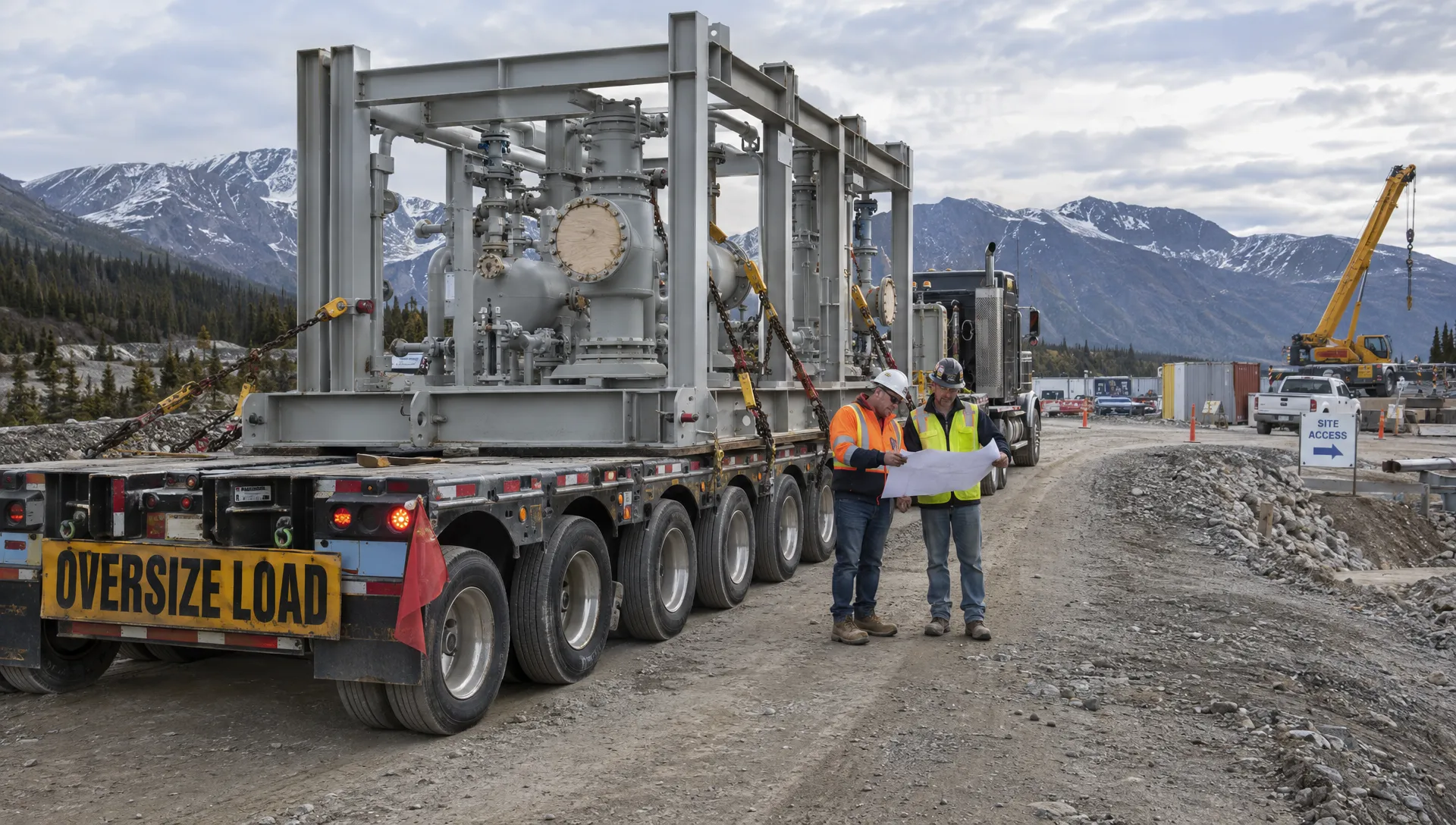
For transformers, manufacturing machinery or cooling skids, a capacity commitment should reference preliminary dimensions, weights, center of gravity, lifting points and support requirements. Define the verification process and the consequences of changes after equipment is reserved.
Heavy-haul availability depends on more than tractors and trailers. Route surveys, permits, bridge restrictions, escorts, utility coordination and site access can determine whether a move proceeds. Reserve engineering and planning resources alongside transport equipment where necessary.
Use project cargo planning to establish these dependencies before agreeing to a delivery obligation. The contract should separate the equipment reservation milestone from route approval and final movement authorization.
Include crane availability, ground-bearing verification, unloading responsibilities and weather restrictions where relevant. Define standby, cancellation and remobilization charges, including what happens if civil works or foundation readiness delay delivery. A provider cannot turn an unverified route into an executable superload move simply by accepting a purchase order.
Control activation charges, substitutions and failure remedies
A usable surge clause needs an activation clock: authorized requester, required data, notice period, provider response deadline and acceptance expiry. Define whether the clock runs continuously or only during specified business hours and identify the relevant time zone.
For procurement and logistics teams, pricing discipline means separating the cost of holding capacity from the cost of using it. Itemize reservation fees, minimum-volume obligations, execution rates and accessorials. If rates float, identify the benchmark or formula, adjustment frequency, applicable lanes and approval threshold.
Specify how substitutions work. A different port, airport, sailing, aircraft routing, warehouse or trailer configuration can alter delivery risk and compliance requirements. Require approval for changes that exceed agreed cost, transit-time or handling tolerances.
Remedies should match the provider’s actual obligation. Options to negotiate include reservation-fee credits, agreed recovery-cost contributions and termination rights after repeated failures. Define evidence requirements and notification deadlines. Have counsel review liability limitations, force majeure, subcontractor obligations and the applicable transport regime; a broad service promise does not automatically override those provisions.
Pro-Tip: Separate emergency mitigation from the liability dispute. Agree who can authorize recovery transportation immediately, then reconcile responsibility using the contract’s evidence and claims process.
Also distinguish cargo insurance from performance remedies. Physical loss or damage coverage does not necessarily cover delay, production interruption or the cost of replacing failed capacity.
Test the contract against an actual surge scenario
Before award, run a tabletop exercise involving operations, compliance, finance and the provider. Use a plausible demand event rather than asking whether the provider can “handle peak season.”
For example, an industrial equipment manufacturer might face simultaneous inbound component acceleration, urgent U.S. export spares, delayed ocean containers and an installation-site closure. Ask each participant to work through the relevant contract schedules with the same shipment data and deadlines.
The procurement and logistics test should establish who accepts the demand increase, which resources are confirmed and what remains conditional. Require an executable sequence showing cargo readiness, document release, carrier or equipment acceptance, handling appointments and final delivery authorization.
Then introduce a failure: a missed flight connection, unavailable chassis, warehouse receiving restriction or permit delay. Check whether the fallback has its own capacity and approval path. Two providers relying on the same constrained terminal appointment pool or specialist trailer are not independent alternatives.
Record every unresolved dependency and assign an owner before signature. The exercise should produce amendments to the schedules, not just meeting minutes. Repeat it when cargo dimensions, trade lanes, forecast bands or receiving conditions change materially.
Measure capacity delivery without rewarding the wrong behavior
Procurement savings and transport performance can conflict. A lower reservation fee may purchase weaker acceptance obligations. High tender acceptance can conceal late collections, while fast dispatch may merely transfer congestion to a warehouse or job site.
Use a shared procurement and logistics scorecard that separates commitments from outcomes:
Measure | Definition to agree | Primary accountability |
Reserved-capacity fulfillment | Accepted, compliant releases served within the contracted window | Provider and logistics |
Activation response | Time from a complete request to acceptance or rejection | Provider |
Forecast adherence | Released demand against agreed volume bands and notice periods | Procurement and demand owner |
Delivery performance | Required-date achievement, with exception categories | Logistics and provider |
Cost-to-serve | Reservation, execution and accessorial costs for the defined scope | Procurement, logistics and finance |
Cargo and compliance exceptions | Document, security, handling or regulatory failures using agreed classifications | Compliance, logistics and provider |
Define denominators carefully. Report requests outside the contracted notice period separately from compliant requests, without hiding their operational impact. Distinguish provider rejection from shipper cancellation and distinguish late delivery caused by transport execution from site refusal.
Review both unused reservations and failed releases. The first may reveal excessive coverage or inaccurate forecasts; the second may expose a commitment that was never operationally supported. Adjust the capacity band, service scope or release conditions accordingly.
Frequently Asked Questions
What should procurement and logistics teams require before paying a reservation fee? Require a defined resource, operating window, activation process and evidence of the provider’s commitment. State whether the fee buys confirmed allocation, conditional availability or sourcing effort, and document the credit or refund treatment if that obligation is not met.
Does a forwarder’s acceptance guarantee vessel space, aircraft uplift or heavy-haul availability? Only to the extent established by the accepted terms and supported operational arrangements. Identify outstanding carrier confirmations, permits, equipment releases and other conditions rather than treating every acceptance as an unconditional guarantee.
Can surge capacity be contracted for only one service? Yes. A shipper can procure a standalone service such as export air execution, import clearance coordination, drayage or transloading. The agreement should still define upstream readiness and downstream handoffs so the reserved service can perform.
Need end-to-end execution or a standalone capacity solution? Discuss your air, ocean, drayage, warehousing or project cargo requirements with Shipit Logistics, including activation windows, operational dependencies and the scope of commitment your supply chain needs.