Temperature Controlled Warehouse Excursion Response Plans

A temperature controlled warehouse excursion response plan must connect an alarm to specific actions: protect personnel, limit further exposure, preserve evidence and prevent unauthorized inventory release. A notification tree alone cannot accomplish that. The plan needs product-specific thresholds, named decision-makers and recovery capacity that remains usable during a refrigeration failure, power outage or prolonged receiving delay.
For logistics directors and quality leads, the operational test is straightforward: can the night shift contain an incident without guessing whether to move the freight, open the doors or dispatch a replacement truck? Build the procedure around those decisions, then test it across the warehouse and transportation providers that share custody.
Specify product limits and decision authority
Start with the cargo owner’s approved storage requirements, packaging specifications and available stability data. Do not substitute a facility’s advertised temperature range for the product’s acceptance criteria. Refrigerated reagents, moisture-sensitive electronics and industrial chemicals can require very different responses to the same air-temperature reading.
Separate three conditions in the procedure. A warning threshold allows intervention before an approved limit is breached. An action threshold initiates the defined excursion workflow. A monitoring failure creates an evidence gap that requires investigation, even when no out-of-range reading is available.
The temperature controlled warehouse SOP should also distinguish air temperature, product temperature and refrigeration setpoint. They are not interchangeable measurements. A short air-temperature spike near a door does not establish the temperature of every pallet, but neither does an acceptable room average prove that every storage location remained compliant.
Assign authority before an event. Warehouse operations should be empowered to contain exposure under an approved procedure. The designated cargo owner or quality authority decides product disposition. Facilities personnel manage equipment recovery, while transportation coordinators arrange approved alternatives. Name deputies and after-hours contacts for each role.
Pro-Tip: Put acknowledgment deadlines and escalation steps in the operating agreement. An unanswered email is not an escalation process, especially when the primary contact is outside the warehouse’s time zone.
Convert the alarm into a controlled response
Set response targets using documented thermal performance, packaging endurance and staffing coverage. A universal response time is not defensible across every product and facility. Specify separate targets for alarm acknowledgment, physical verification, inventory containment and backup-capacity activation.
Response stage | Required action | Accountable role | Evidence to retain |
Detect and acknowledge | Open an incident record and confirm the affected sensor, zone and alarm condition | On-duty incident lead | Original alert, timestamps and acknowledgment |
Verify safely | Check an independent measurement and inspect power, refrigeration and door status | Trained operations or facilities personnel | Readings, equipment status and observations |
Contain | Restrict affected inventory and stop movements that could increase exposure | Warehouse operations | Location-level holds and movement history |
Escalate | Notify quality, the cargo owner and transportation contacts as applicable | Incident lead | Contact attempts, decisions and approvals |
Recover | Restore qualified conditions or execute an approved transfer | Facilities and logistics leads | Recovery readings and transfer records |
Disposition | Release, rework, return or reject inventory through authorized review | Designated quality or cargo authority | Signed decision and supporting assessment |
During a temperature controlled warehouse incident, containment and troubleshooting should proceed in parallel. Close unnecessary doors, suspend avoidable picking in affected zones and preserve the remaining controlled environment. Do not disable alarms merely to quiet repeated notifications.
Personnel safety takes priority over cargo recovery. Refrigerant leaks, electrical faults or damaged dangerous goods require the applicable emergency procedure and qualified responders. Inventory urgency never authorizes entry into an unsafe area.
Reconstruct exposure before judging product damage
Preserve raw monitoring data before changing configurations, replacing devices or resetting equipment where safe and practicable. Retain sensor identifiers, calibration status, alarm settings, audit trails and the original time basis. If systems use different time zones, normalize the incident timeline while keeping the source records unchanged.
The exposure assessment should establish the last confirmed acceptable reading, the first unacceptable reading, the duration of the uncertain interval and the point at which acceptable conditions were re-established. Include sampling frequency: a logger recording every fifteen minutes cannot identify the precise second a limit was crossed.
A temperature controlled warehouse investigation must connect those readings to actual inventory locations. Use mapping studies, rack positions, airflow patterns and pallet movement records to define the potentially affected population. A sensor beside an evaporator may not represent a pallet beside a loading door or a blocked return-air path.
Distinguish confirmed facts from estimates. Packaging qualification and product probes may support a narrower exposure assessment, but assumptions about thermal lag need technical justification. Do not use mean kinetic temperature or a favorable average to dismiss freezing, brief damaging peaks or products for which that assessment method is inappropriate.
Keep unaffected stock separate only when the evidence supports that boundary. Missing records should remain visible as uncertainty, not disappear into a reconstructed spreadsheet.
Separate quarantine, transfer and product release
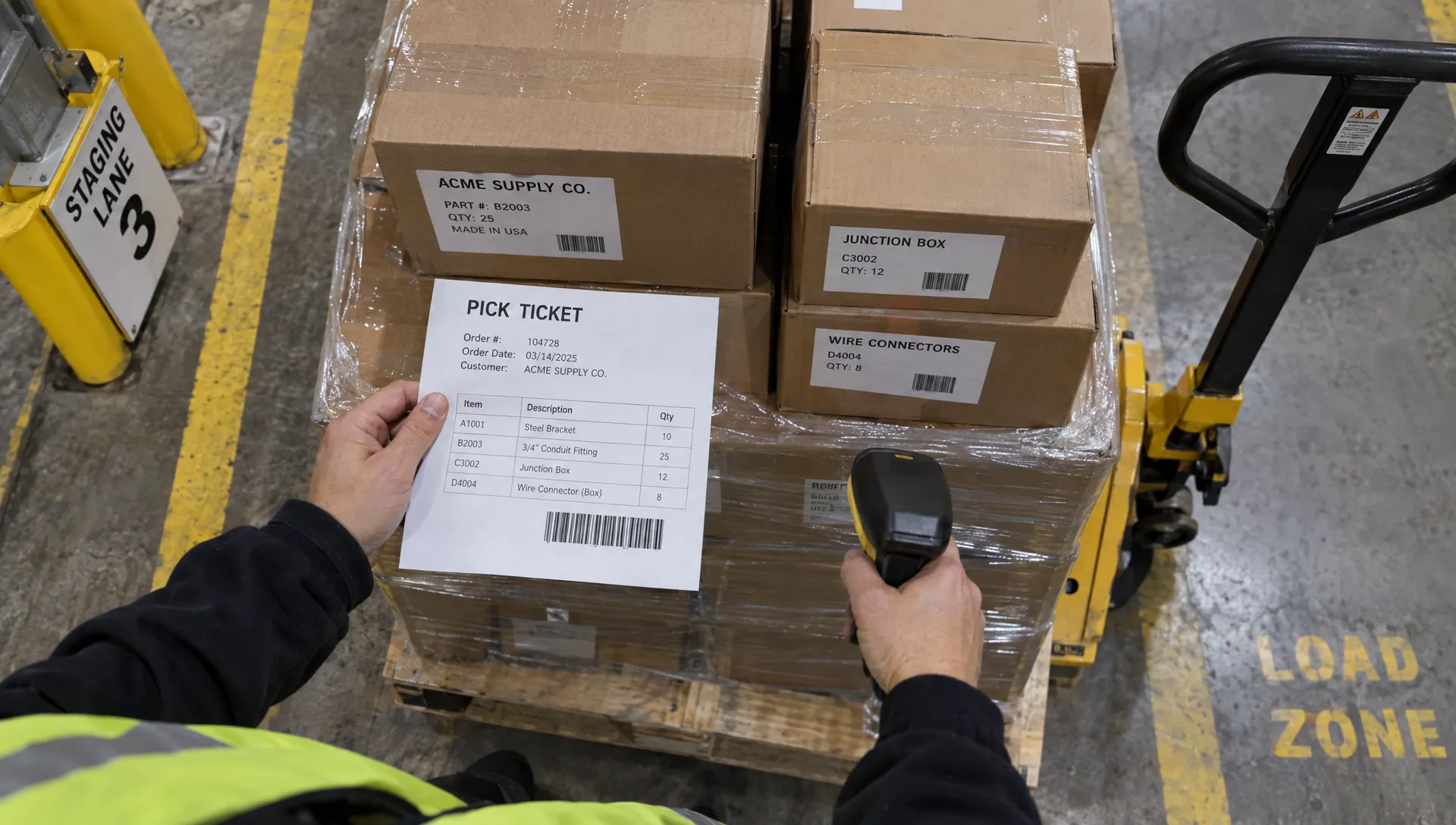
Use both system controls and physical identification to prevent affected lots from being picked, allocated or loaded. Record lot or serial numbers, quantities, locations and any split pallets. If material moved before the alarm was recognized, trace its destination and notify the next custodian promptly.
Restoring room temperature does not release the product. Equipment recovery, inventory transfer and quality disposition are separate decisions with separate approval requirements. An emergency movement may protect cargo while it remains under quarantine.
For a temperature controlled warehouse transfer, the approval should identify the destination, permitted handling conditions, transport equipment, monitoring method and person authorized to receive the shipment. Confirm that the receiving site can preserve lot identity and hold status rather than simply provide empty floor space.
Customs, security and dangerous-goods restrictions continue to apply during recovery. A commercial decision to relocate stock does not override a government hold or authorize movement to an unapproved location. Resolve those constraints before dispatch.
The custody record matters as much as the booking. Apply the same documented acceptance and release responsibilities used in refrigerated warehouse handoffs, including who receives the freight, which readings accompany it and who can authorize onward delivery.
Match recovery transport to the affected freight leg
Emergency capacity is useful only when it preserves the remaining product tolerance. Compare pickup delay, handling exposure, equipment suitability and receiving access, not just quoted transit time. Faster linehaul can still create a worse outcome if freight waits unprotected at a terminal.
Build mode-specific recovery branches
Freight interface | Recovery decision | Controls to confirm before movement |
Ocean FCL and LCL | Retain cargo in an appropriate powered reefer or relocate it to suitable storage when permitted | Reefer operating condition, power continuity and release status. Standard dry 20-, 40- or 45-foot containers do not provide active temperature control. LCL recovery also depends on CFS access and segregation. |
US air imports | Coordinate foreign-origin handling, uplift, US clearance, airport transfer and final-mile capacity | Remaining packaging endurance, ramp exposure, monitoring continuity and an available receiving appointment. NFO capacity does not eliminate these constraints. |
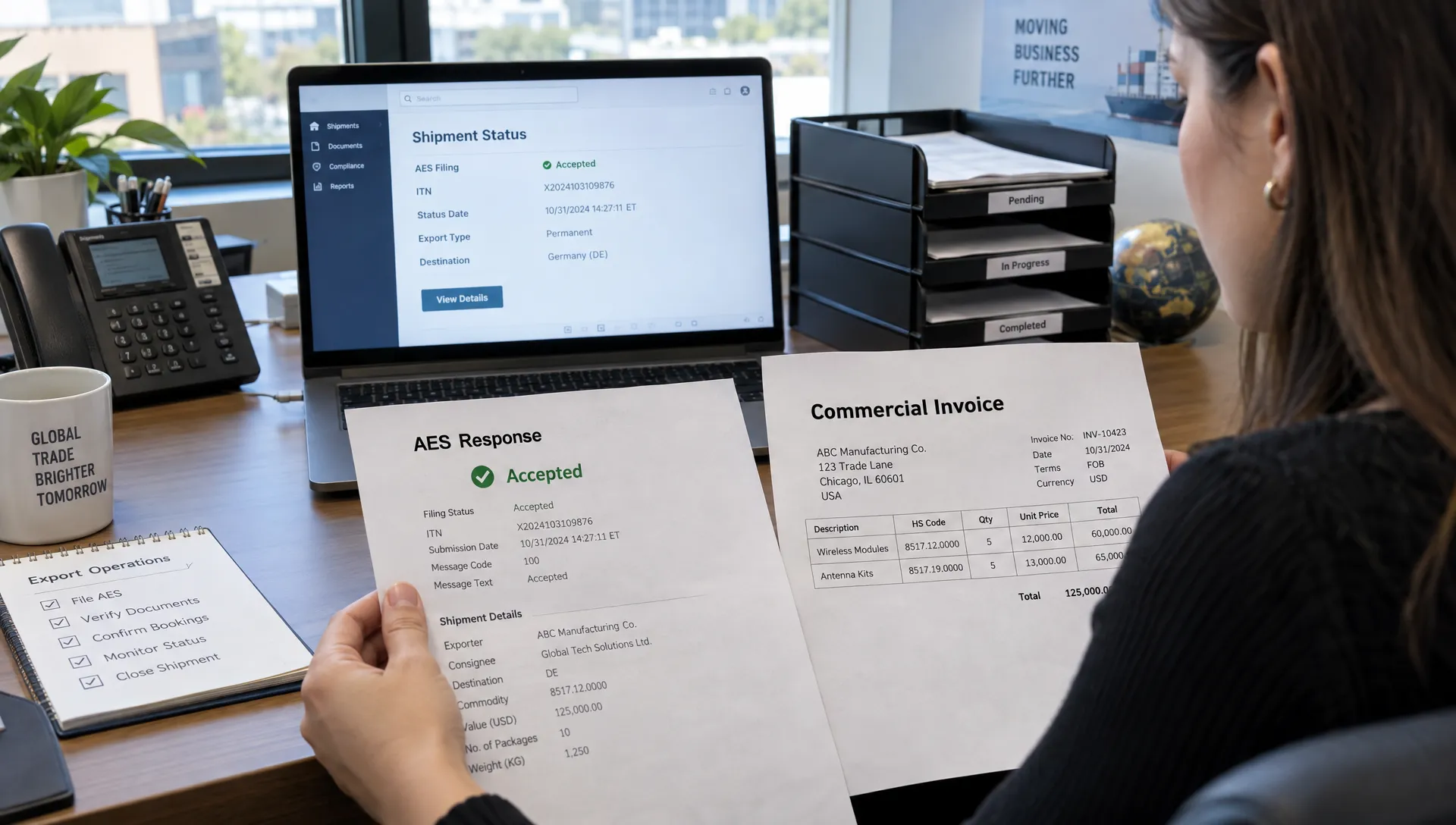
US air exports | Align factory or warehouse pickup with screening, export processing and airline acceptance | Applicable TSA/IAC screening arrangements, EEI/AES requirements, export restrictions and destination-side controlled handling. Verify dangerous-goods acceptance where relevant. |
Port drayage | Keep reefer power and custody continuous between terminal, chassis, truck and destination | Suitable genset arrangements where needed, fuel, gate access, driver instructions and an appointment that avoids uncontrolled queueing. |
Cross-dock and warehousing | Transfer only when unloading and receiving capacity are confirmed | Available temperature controlled warehouse space, dock conditions, compatible handling equipment and uninterrupted quarantine identification. |
Project cargo and heavy haul | Protect sensitive machinery or assemblies without creating an unsafe emergency lift | OEM preservation instructions, dimensions, floor loading, rigging, permits and suitable heavy-haul equipment. Enclosures or local conditioning require engineering approval. |
For air versus ocean recovery, evaluate the complete door-to-door exposure profile and business interruption risk. Air freight may protect a commissioning deadline, but only if packaging, acceptance and destination handling remain suitable. Ocean alternatives need sufficient remaining product tolerance for sailing schedules and port dwell.
Secure fallback capacity before it is needed
A contingency agreement should reserve usable capability, not merely list another warehouse’s address. Confirm compatible temperature and humidity ranges, pallet or equipment dimensions, segregation requirements, receiving hours and handling restrictions. Pharmaceutical materials, industrial chemicals and sensitive electronics cannot automatically share the same recovery arrangement.
Assess common-cause failures. A nearby backup facility may share the same utility outage, flood exposure or access-road closure. An alternate temperature controlled warehouse should reduce the relevant risk rather than reproduce it at another address.
Check backup power against the loads that matter: refrigeration, monitoring, communications, doors and necessary material-handling equipment. A generator’s presence does not establish its tested runtime, fuel availability or ability to support all required systems simultaneously.
Include a cost-authorization mechanism for after-hours labor, emergency trucking, temporary conditioning and alternate storage. Negotiating spending authority during an active excursion can consume the remaining recovery window. Keep operational authorization separate from later decisions about liability or insurance coverage.
Pro-Tip: Ask the backup provider to accept a realistic shipment profile during a drill. Confirming space by telephone will not reveal an undersized doorway, incompatible dock arrangement or missing after-hours receiver.
Audit the temperature controlled warehouse response plan
Run exercises against specific failure scenarios rather than asking participants whether they understand the SOP. Useful tests include a refrigeration fault during peak receiving, an overnight communications failure and a regional outage that removes the primary backup site.
Include at least one scenario where the room returns to range before quality personnel respond. The correct workflow should still preserve the incident record and prevent automatic inventory release. Test another scenario with incomplete logger data so the team must manage uncertainty explicitly.
Measure performance against the agreed targets: acknowledgment, containment, contact escalation, transfer readiness and time to a complete disposition packet. Track whether the team identified all affected lots and preserved a consistent timeline across the warehouse, trucker and cargo owner.
The temperature controlled warehouse review should also examine temperature mapping after material layout changes, sensor calibration records, alarm delivery failures and maintenance history. Seasonal conditions and changes to airflow or storage density can alter the assumptions behind the response plan.
Do not reward a drill solely for fast dispatch. An unauthorized transfer, missing hold status or undocumented handoff is a failed control even when the truck leaves quickly.
Close the incident with evidence and corrective action
The final incident packet should connect the initiating event to the affected inventory, exposure assessment, containment actions, recovery movements and authorized disposition. Include the rationale for excluding any lots from the affected population. Preserve records according to applicable product, contractual and regulatory requirements.
Investigate the cause beyond the immediate equipment fault. A failed compressor may explain lost cooling, while delayed alarm acknowledgment, blocked airflow or unavailable transport explains why exposure continued. Corrective and preventive action should address both the technical failure and the response weaknesses.
For recurring temperature controlled warehouse events, trend incidents by zone, shift, equipment asset and freight interface. Repeated door-related alarms may call for appointment or staging changes rather than wider alarm tolerances. Repeated data gaps may require communications redundancy instead of additional refrigeration capacity.
Close actions only after checking effectiveness. A revised contact sheet should survive an after-hours test, and a repaired refrigeration system should demonstrate stable performance under the approved verification procedure.
Frequently Asked Questions
Does every temperature alarm require product rejection? No. An alarm requires the defined response and an evidence-based assessment. Product disposition depends on approved limits, exposure duration, stability information and the designated authority’s decision, not the alarm alone.
Can inventory move while it remains quarantined? Yes, when an approved protective transfer is permitted by applicable restrictions. The destination must accept the hold status, maintain required conditions and prevent unauthorized use or distribution.
What should a temperature controlled warehouse excursion report contain? Include original monitoring records, sensor and calibration details, the incident timeline, affected inventory, containment measures, transfer evidence and the authorized disposition. Document uncertainty and corrective actions rather than presenting estimates as confirmed measurements.
How frequently should the response plan be tested? Set a documented, risk-based schedule and retest after significant facility, product, system or provider changes. Exercises should cover after-hours response and backup-capacity failure, not just normal staffed operations.
Need to connect warehouse contingency planning with freight execution? Shipit Logistics coordinates ocean freight, US air imports and exports, port drayage, warehousing and specialized project transport through end-to-end or standalone services. Share your cargo requirements, trade lanes and recovery constraints to discuss an operational plan with clearly assigned responsibilities.