Refrigerated Warehouse Handoffs That Protect Cold Chain Release

Cold chain release is often treated as an administrative finish line: customs cleared, quality approved, carrier dispatched, shipment released. In practice, release is a controlled custody event. The refrigerated warehouse is where physical condition, temperature evidence, inventory status, regulatory disposition and outbound transportation readiness either align or start to diverge.
For logistics teams moving food, beverage, pharmaceutical, biotech, cosmetics or other temperature-sensitive cargo, the release handoff is one of the highest leverage control points in the flow. It is also where pressure builds. Free time is expiring at the terminal. The consignee wants inventory available. QA is waiting on a temperature download. A dray carrier is on the clock. The warehouse has dock congestion. None of those pressures change the core rule: cargo should not move from controlled status to released status until the evidence and the next custody step are ready.
Temperature excursions matter, but they are not the only risk. SHIPIT has written separately about cold chain logistics risks beyond temperature excursions, and refrigerated warehouse release is where many of those broader risks become operational: dwell time, unclear custody, incorrect status, incomplete documentation, poor trailer readiness and avoidable handoffs.
Release is a status control problem before it is a warehouse problem
In a mature cold chain operation, release is not a single yes or no field. A refrigerated warehouse may be holding the cargo physically, but multiple parties can control different release layers: CBP or another agency, the importer, the shipper quality team, the buyer, the customs broker, the freight forwarder, the carrier or a third party lab.
That means the warehouse needs a status model that prevents physical movement from outrunning administrative authorization. A pallet may be customs released but not QA released. It may be QA released but still subject to customer allocation. It may be saleable but not ready for outbound transport because the trailer setpoint, sanitation record or seal process is not aligned.
Release layer | Common handoff risk | Refrigerated warehouse control |
Customs or agency release | Freight is staged for outbound before regulatory hold is lifted | System hold that blocks pick, pack, transload and shipping tasks |
QA or product disposition | Warehouse team treats clean temperature history as final product approval | Separate QA release field with named approver and timestamp |
Temperature release | Data logger is missing, unread or not reconciled to route history | Receipt hold until logger, reefer download or shipper instruction is reviewed |
Chain of identity | Pallets are separated from lot, PO, SKU or batch identity during staging | Scan-based receipt and controlled location assignment |
Transportation release | Outbound carrier arrives before trailer, power, seal and instructions are ready | Dispatch gate that requires pre-load checks before dock assignment |
The practical point is simple: a refrigerated warehouse should not be optimized only for cold storage. It should be optimized for controlled state transitions. Every handoff should move cargo from one defined status to another with evidence, accountability and a timestamp.
Import drayage to refrigerated warehouse: the first release-sensitive handoff
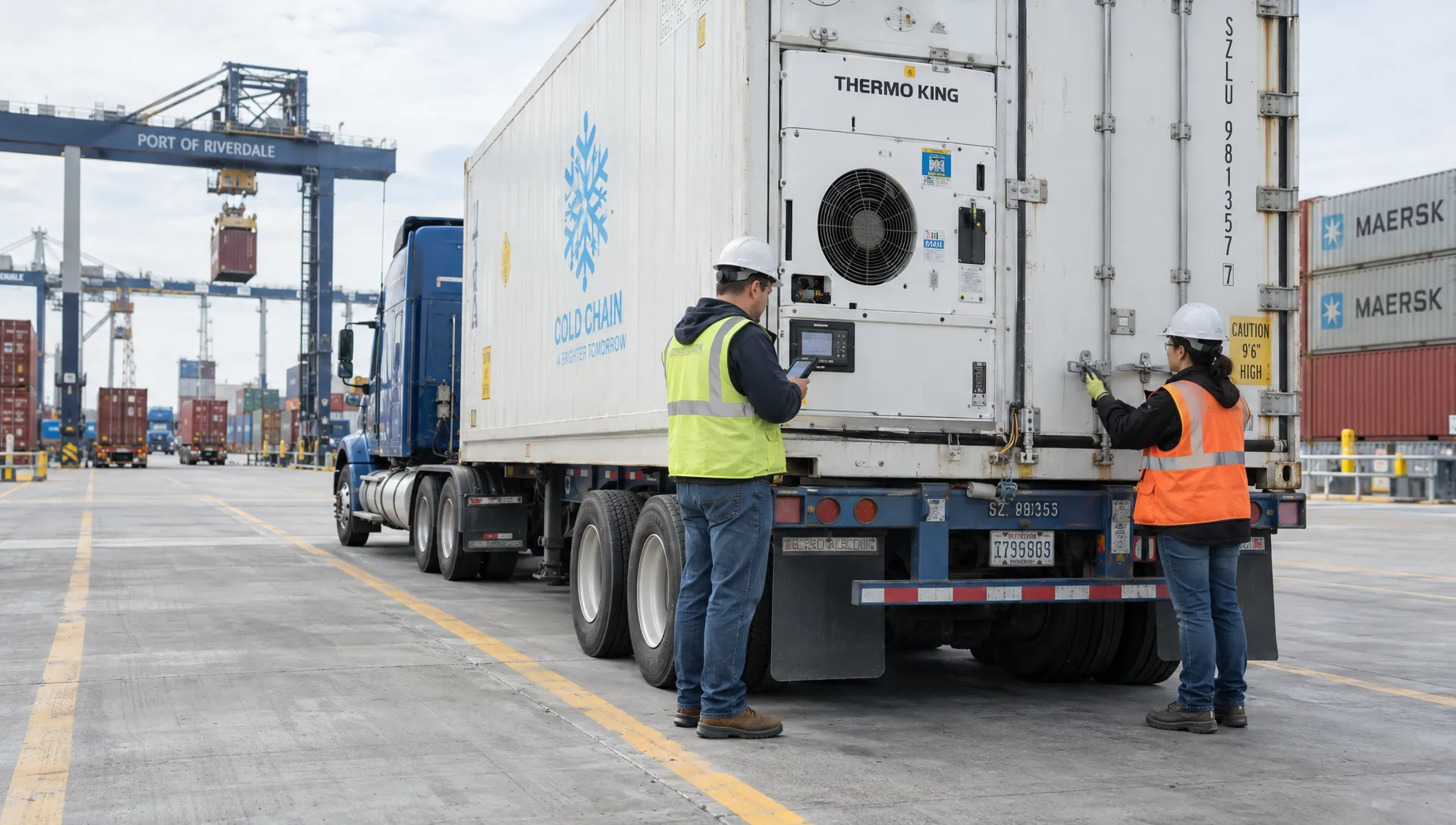
For ocean imports, the release sequence often starts before the container leaves the terminal. A reefer container may have been powered at origin, during vessel transit and at the marine terminal, then moved under genset by a drayage provider. The warehouse receiving event should connect that history instead of treating the arrival as a new starting point.
The pre-alert matters. The warehouse should know the container number, seal number, commodity, temperature setpoint, acceptable temperature range, agency hold status, expected arrival time, dray carrier, chassis or genset requirements and special handling instructions before the driver reaches the gate. If those data points arrive in fragments, the receiving team is forced to decide under time pressure.
The highest risk window is often the gap between yard arrival and controlled receipt. A container can be physically on site but not yet in a dock door. A driver may need to wait for inspection. A genset may be running but not logged. A warehouse may have refrigeration capacity, but not at the specific temperature zone required for that cargo. The handoff should capture dock-to-power timing, seal condition, reefer display reading, visible cargo condition and any mismatch between documents and physical cargo.
This is where disciplined receiving process pays off. The same principles behind receiving warehouse SOPs that protect inventory before putaway become more demanding in cold chain: do not separate identity from condition, do not separate condition from custody and do not let speed erase exception detail.
For U.S. food shipments, the FDA Food Safety Modernization Act sanitary transportation rule also reinforces the need for clean shipper, carrier and receiver practices around sanitary and temperature-controlled transport. Many customer programs go further than the regulation, especially when cargo is high value, shelf life sensitive or bound for major retail compliance programs.
Air freight handoffs require different release logic
Air cold chain freight does not always arrive as a full trailer or container load. It may arrive in active temperature-controlled containers, passive insulated packaging, airline ULDs, loose cartons or consolidated freight moving through a cargo terminal. That changes the release risk.
The refrigerated warehouse may receive cargo after airline terminal recovery, bonded transfer, truck transfer or forwarder breakdown. Unlike ocean reefers, the temperature control history may sit across packaging validation, airline handling milestones and data logger files rather than a single reefer unit record. Passive packaging can also have a validated duration that is consumed by delays before warehouse arrival.
For time and temperature-sensitive air cargo, warehouse release should account for packaging clock, not only current product temperature. A carton that arrives within range may still require QA review if the lane exceeded the validated packout duration or if there is unexplained dwell at an uncontrolled node. The release handoff should document not just what temperature was observed at receipt, but how much of the validated shipping window remains and whether the next leg can be completed within that window.
This matters for export as well. A refrigerated warehouse preparing cargo for air uplift needs to stage by flight cutoff, packaging type, carrier handling code and release status. Cargo should not be tendered simply because it is packed. Tender should occur when the air booking, temperature handling instruction, security status, export documentation and carrier acceptance window line up.
Transloading without weakening release control
Transloading is valuable when it removes port dwell, corrects mode constraints, builds domestic delivery density or shifts cargo from international equipment into domestic trailers. For cold chain freight, however, transloading creates a concentrated release risk because it combines physical handling, custody transfer and sometimes status change in one event.
A refrigerated transload should begin with a decision about release state. If the shipment is under customs hold, agency hold or shipper QA hold, the transload plan should specify whether the cargo can be handled under bond, moved to a quarantine location, segregated by lot or transferred only after release. The team should avoid vague instructions such as transload when available because availability may mean different things to the terminal, dray carrier, warehouse and consignee.
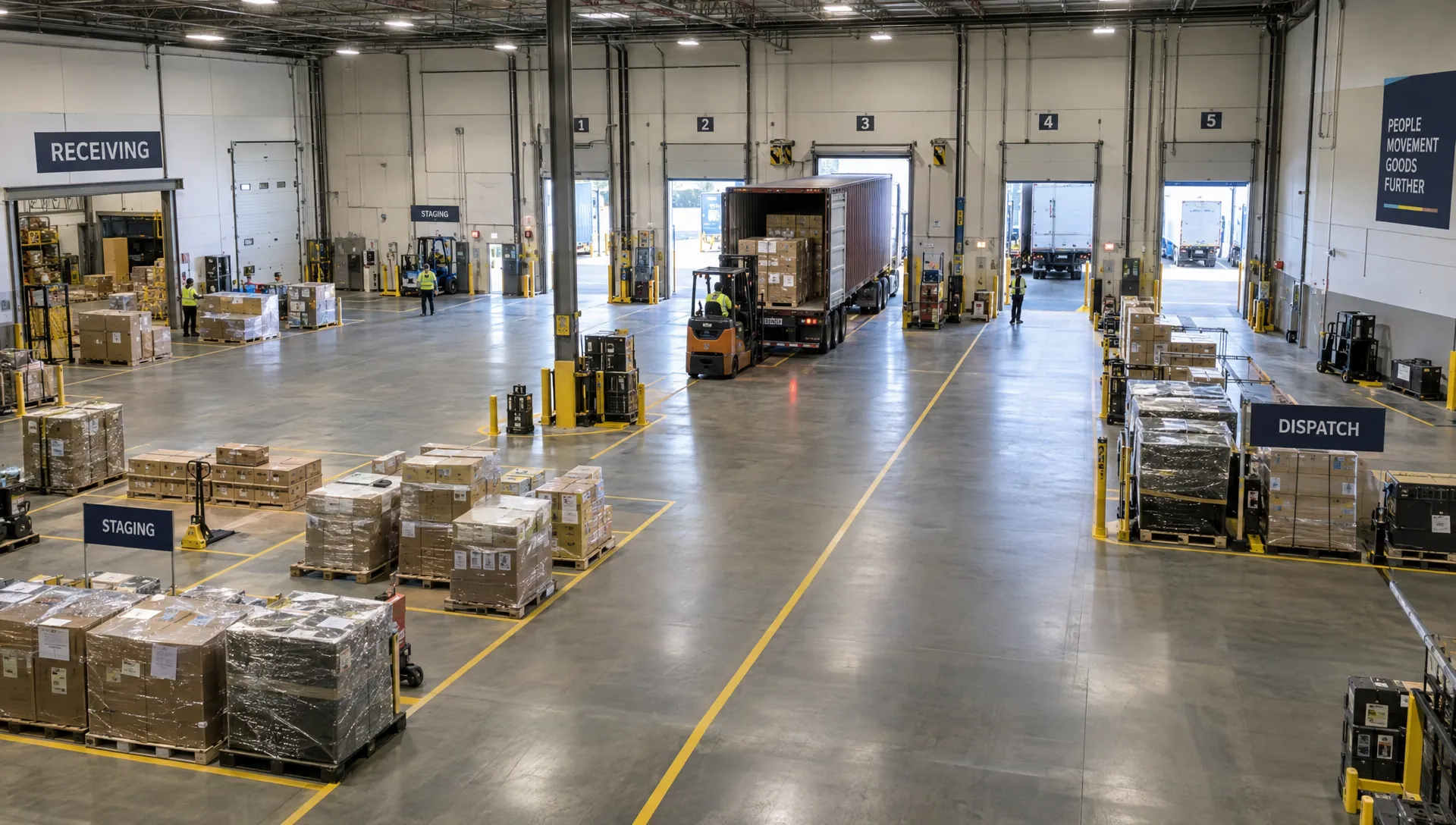
Operationally, the warehouse should control three elements during cold chain transload: door exposure, identity preservation and trailer readiness. Door exposure is not only the minutes a door is open. It includes staging outside the temperature zone, dock congestion, waiting for an outbound trailer, mixed-temperature freight conflicts and rework caused by poor load sequencing. Identity preservation matters when pallets are split, restacked, relabeled or allocated across multiple outbound orders. Trailer readiness covers pre-cool confirmation, sanitation, setpoint, fuel, telematics if required, seal process and driver instructions.
For ocean imports, this is often the point where a 40 foot reefer container is stripped and rebuilt into regional truckload, LTL pool or final mile delivery flows. For exports, the pattern can reverse: domestic refrigerated trucks feed a warehouse, cargo is consolidated, release status is verified and product is loaded into an ocean reefer or prepared for air export. The transload is not a side activity. It is the bridge between international freight, drayage, warehouse control and outbound execution.
Build a release packet that can survive an audit
A strong refrigerated warehouse release process produces a usable evidence packet, not a pile of disconnected files. This is especially important when a consignee, insurer, regulatory body or shipper QA group challenges release after the fact.
At minimum, the release packet should connect shipment identity, custody timeline, temperature evidence, exception handling and approval authority. For pharmaceutical and healthcare freight, release documentation can be even more exacting. SHIPIT covers that tighter control environment in pharmaceutical warehousing controls for import holds and releases, where quarantine, status segregation and evidence-based release packets are central to the process.
Evidence element | Why it matters at release | Typical source |
Arrival timestamp and yard status | Shows when warehouse custody or site control began | Gate system, yard log or TMS event |
Seal number and seal condition | Supports chain of custody and tamper control | Driver paperwork, photos and receiving record |
Temperature setpoint and observed reading | Confirms equipment instruction and condition at handoff | Reefer display, telematics or carrier record |
Data logger or reefer download review | Connects release decision to route history | Logger file, download report or QA review |
Hold and release authorization | Proves cargo was eligible for movement | WMS status, broker notice, QA email or customer portal |
Exception disposition | Shows who approved movement after variance | CAPA record, deviation file or written instruction |
The key is linkage. A temperature file without a shipment identifier is weak evidence. A release email without lot detail can create ambiguity. A clean WMS status without proof of seal and condition may be insufficient for a cargo claim. The release packet should make it clear which cargo was released, by whom, based on which evidence and into whose custody.
Outbound release: the cold chain is not protected until the next carrier is ready
Many release failures happen after warehouse QA approval. The cargo is cleared internally, but the outbound handoff is not controlled tightly enough. A refrigerated warehouse can maintain product integrity for days, then lose control in a 45 minute loading window if the outbound process is rushed.
Trailer pre-cool should be verified against the required setpoint before loading starts. The warehouse should confirm whether the instruction refers to setpoint, discharge air or return air readings, since carriers and customers may describe temperature requirements differently. Fuel level, unit alarm status, cleanliness, odor, bulkhead condition and seal process should be checked before cargo leaves the controlled zone.
Load sequencing should match delivery order, product compatibility, weight distribution, temperature zones and release status. Mixed-release freight is a common trap. If one pallet in a shipment remains on QA hold, it should not sit on the dock beside released freight with similar labeling and destination. Physical segregation should mirror system status.
For LTL or multi-stop refrigerated distribution, release control becomes more complicated because cargo may encounter crossdocks, pool points or terminal dwell. The warehouse should know whether the carrier network can maintain the required temperature range and whether the shipment can tolerate intermediate handling. When the product cannot tolerate uncontrolled network touches, a dedicated reefer truckload or direct expedited move may be the cleaner release decision even if the rate is higher.
RACI clarity at release prevents expensive gray zones
Cold chain release failures often come from gray-zone ownership rather than a lack of refrigeration. The warehouse assumes the forwarder has cleared the hold. The forwarder assumes the broker notified the warehouse. The broker assumes the importer told QA. The carrier assumes the dock assignment means the freight can ship.
A release-oriented RACI does not need to be bureaucratic, but it must be explicit. The importer or shipper should define product release criteria. The broker or forwarder should communicate customs and agency status. The warehouse should enforce physical and system holds. The dray carrier should provide custody and equipment evidence from terminal to warehouse. The outbound carrier should accept temperature, seal and handling instructions before loading.
The worst handoff phrase in refrigerated warehousing is good to go when it is not tied to a named authority and a defined status. Replace it with specific release language: customs released, FDA hold lifted, QA released for shipment, released for transload under quarantine or released for delivery to consignee. Each phrase should map to what the warehouse is allowed to do physically.
Metrics that reveal weak refrigerated warehouse handoffs
Cold chain teams often track temperature excursions and on-time delivery, but those metrics can miss release fragility. A load can deliver on time and remain in range while still having poor documentation, status ambiguity or avoidable dwell. Better release metrics look at the handoff itself.
Useful metrics include dock-to-power interval for inbound reefers, arrival-to-receipt time by temperature zone, receipt-to-release lag by hold reason, percentage of shipments with complete release packet before dispatch, number of manual status overrides, transload dwell outside primary storage and outbound trailer rejection rate. These metrics expose the process gaps that create future claims.
Release lag should be segmented. A two day delay caused by agency hold is different from a two day delay caused by missing logger data, unclear QA ownership or an appointment failure. If all delays are labeled pending release, the operation loses the ability to improve.
The same logic applies to temperature exceptions. Not every variance is a product loss, and not every clean temperature record means the shipment was well controlled. A mature refrigerated warehouse operation tracks whether exceptions were identified early, escalated to the correct party, dispositioned in writing and reflected in system status before cargo moved.
Where an integrated provider reduces release risk
Cold chain release becomes harder when the international forwarder, customs broker, dray carrier, warehouse, transload operator and outbound trucker all operate as separate islands. Each handoff can be managed, but the control burden increases as parties multiply. The issue is not only physical handling. It is the number of times shipment identity, status and instructions have to be reinterpreted.
An integrated logistics provider can reduce that fragmentation by aligning ocean or air freight, import drayage, refrigerated warehousing, transloading and outbound trucking under one operating plan. That does not mean every shipment needs a full end-to-end solution. Some importers only need port drayage into a refrigerated warehouse and a controlled transload. Some exporters need domestic pickup, cold storage, consolidation and ocean or air handoff. Others need a full program that connects forwarding, customs brokerage arrangement, cargo insurance, warehousing, project handling and final delivery.
The operational advantage is a cleaner control tower around release. The same provider can structure the pre-alert, book drayage, coordinate receiving, enforce hold status, manage transload timing, prepare the outbound trailer and preserve documentation across the move. When exceptions occur, there are fewer blind spots and fewer handoffs where the next party claims it never received the instruction.
Frequently Asked Questions
What should a refrigerated warehouse verify before releasing cold chain cargo? It should verify shipment identity, regulatory status, QA or customer release status, temperature evidence, seal and condition records, inventory allocation and outbound carrier readiness before cargo leaves controlled storage.
Can cold chain cargo be transloaded before final QA release? Sometimes, but only if the shipper, importer or authorized quality party allows it and the warehouse can maintain quarantine or restricted status after the transload. The permission should be written, specific and tied to lot or shipment identity.
How should import drayage be linked to refrigerated warehouse release? The drayage handoff should preserve container number, seal condition, genset or reefer status, terminal pickup time, arrival time, temperature reading and any hold status so the warehouse can connect terminal custody to receipt evidence.
What is the biggest documentation gap in cold chain release? The most common gap is disconnected evidence. Temperature files, release emails, WMS status, seal photos and carrier records exist, but they are not linked clearly enough to prove which cargo was released and why.
When does an end-to-end provider help most? Integrated control helps most when the move includes international freight, port drayage, refrigerated warehouse handling, transloading and outbound trucking, especially when cargo is high value, hold-sensitive or under tight shelf life constraints.
For refrigerated warehouse handoffs tied to ocean freight, air freight, import or export drayage, transloading and outbound trucking, SHIPIT Logistics can help build a tighter custody path. Whether you need an end-to-end cold chain flow or only the drayage and transload segment, the release process should move with the cargo, not chase it after the fact.