Warehouse Freight Handoffs and Drayage Invoice Audit Checks

A warehouse freight handoff can close operationally while remaining unresolved financially. The container arrived, the cargo was unloaded and the driver left, yet the invoice may still contain disputed waiting time, overlapping equipment charges or handling fees unsupported by the warehouse record. A signed delivery receipt alone cannot validate those lines.
The control point is the connection between custody events, contractual billing triggers and charge approval. For logistics directors and accounts payable teams, that means building one shipment-level evidence trail that supports both cargo release and invoice reconciliation, without treating either as proof of the other.
Separate custody acceptance from charge approval
Assign an accountable owner to each transition: terminal or airport release, truck dispatch, warehouse receipt, outbound loading and equipment return. Record who controls the cargo, who controls the equipment and who can authorize an exception. These responsibilities often sit with different parties.
The warehouse can confirm receipt and condition without approving a trucking accessorial. Dispatch can verify that a truck waited without establishing which party owes the charge. Procurement or another designated commercial owner should resolve liability against the applicable agreement.
Before dispatch, establish the rate confirmation, warehouse tariff, appointment requirements and escalation contacts. Specify whether unload completion, paperwork release or physical gate-out stops the waiting-time clock. An undefined endpoint creates disputes even when every timestamp is accurate.
Pro-Tip: Give warehouse personnel a defined exception-approval limit and an escalation contact. A signature acknowledging driver departure should not become accidental approval of an unquoted charge.
Build a warehouse freight evidence chain
Use a common shipment reference across the transportation order, warehouse receipt and supplier invoice. Preserve container and chassis numbers where applicable, plus seal numbers, purchase orders, house or master transport references and equipment substitutions. A container number alone is insufficient when several deliveries or handling activities share one movement.
Keep these events distinct:
Event | Evidence to retain | What it establishes |
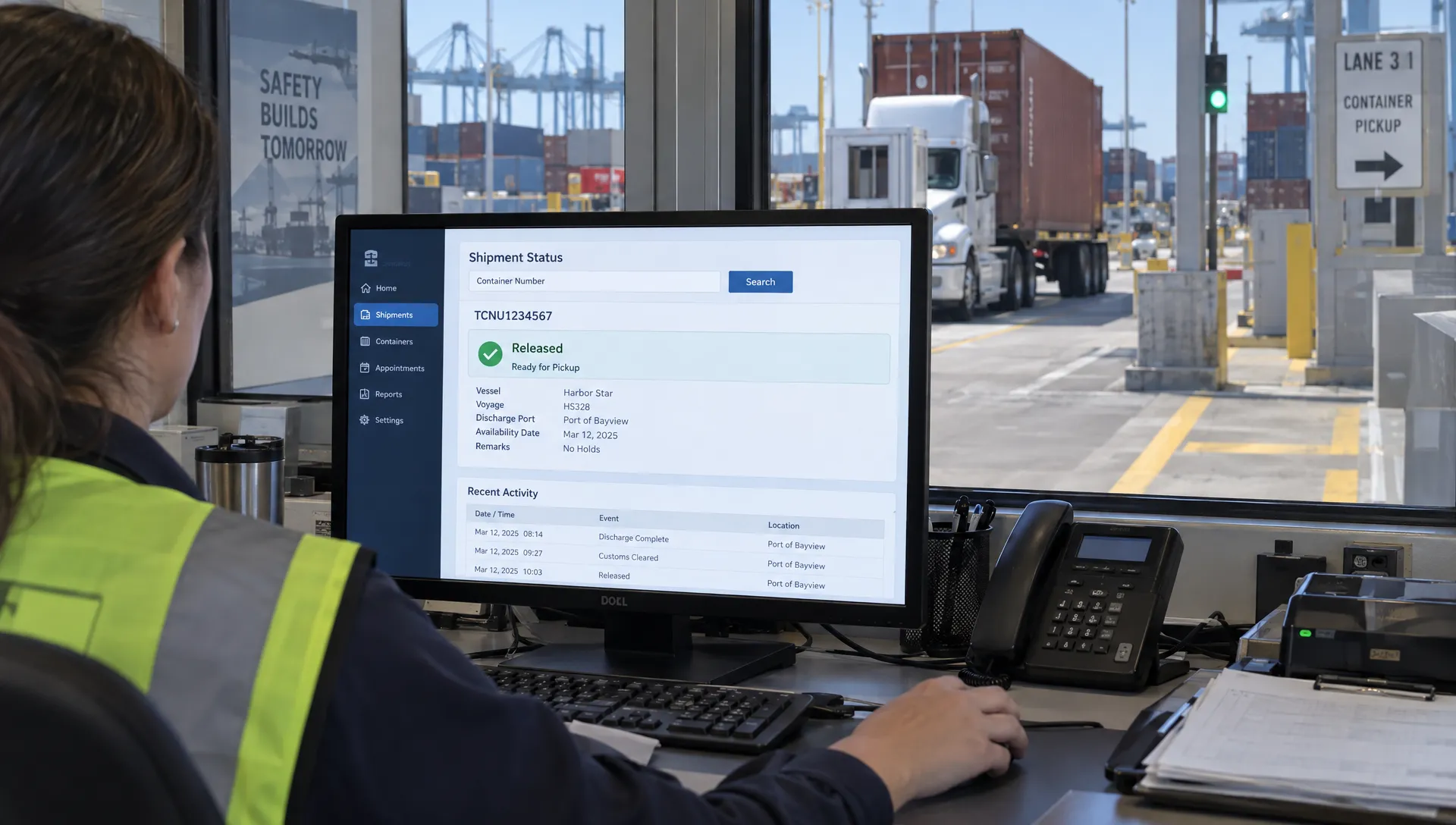
Cargo available and released | Carrier, terminal or airport release status with timestamp | Whether pickup could proceed |
Appointment accepted | Booking confirmation and revision history | Agreed service window |
Equipment collected | Equipment interchange receipt and equipment IDs | Start of documented equipment custody |
Warehouse arrival and check-in | Gate record and receiving acknowledgment | Arrival versus accepted check-in |
Unloading and driver release | Dock record, completion time and release acknowledgment | Handling duration and potential waiting endpoint |
Cargo received | Warehouse receipt, count and condition exceptions | Inventory custody, not equipment return |
Empty equipment returned | Accepted return interchange record | Evidence of completed return |
Outbound cargo released | Loading record, seal and signed transport document | Next custody transfer |
For each warehouse freight movement, preserve original timestamps and identify the time zone. Distinguish a planned appointment from an actual event and retain revisions rather than overwriting them. Geofence data can corroborate arrival, but it should not automatically replace the contractual check-in event.
Record shortages, damage, broken seals and temperature excursions when discovered. A later inventory adjustment cannot reliably reconstruct the condition at custody transfer.
Reconcile each invoice line against its billing basis
Audit at line-item level rather than approving an invoice because its total resembles the quote. Match the supplier, shipment reference, service date, equipment and currency first. Then test whether each charge was contracted, actually incurred, correctly calculated and allocated to the responsible party.
Invoice line | Audit check | Supporting evidence |
Drayage linehaul | Correct lane, equipment and scope; no duplicate move | Accepted rate confirmation and completed dispatch |
Fuel surcharge | Correct index period and calculation basis | Agreed formula and applicable rate |
Driver waiting time | Correct start, stop, allowance and rounding | Appointment, check-in and release records |
Chassis usage | Correct equipment, billable dates and minimums | Interchange records and equipment agreement |
Pre-pull or yard storage | Service occurred and was covered or authorized | Dispatch instruction and yard events |
Split, flip or additional stop | Extra activity occurred and was billable | Equipment history and service record |
Warehouse handling | Correct receipt, handling unit and included services | Warehouse tariff and receiving or loading record |
Warehouse storage | Correct quantity, period and occupancy basis | Inventory ledger and agreed storage terms |
Ocean demurrage or detention | Correct free time, dates, billing party and applicable requirements | Carrier or terminal records and governing terms |
A warehouse freight audit should also test for overlapping scope. Receiving, unloading, palletization and outbound loading may be separate charges or components of an agreed package. Neither arrangement is inherently wrong; charging both a bundled service and its included components is the issue.
Keep the operating clocks separate
Driver waiting time, warehouse storage, chassis rental and ocean equipment detention can accrue simultaneously. Concurrent dates do not prove duplicate billing because the charges may concern different assets and services. Conversely, different labels do not prove that two charges are distinct.
Reconstruct each clock independently. Identify the trigger, free allowance, calendar convention, stop event and liable party. Check weekends, holidays, partial-day treatment and minimum charges against the actual agreement rather than applying a companywide assumption.
For ocean-carrier or marine-terminal demurrage and detention, assess applicable FMC billing requirements alongside the governing terms. Do not automatically extend those requirements to motor-carrier waiting time or warehouse storage.
Cargo receipt does not stop an empty-container return obligation. Likewise, a customs release does not establish that the carrier, terminal or warehouse released the shipment for pickup. These distinctions make warehouse freight records useful for resolving charges rather than merely documenting activity.
Test the calculation with an explicit example
Assume an illustrative drayage agreement starts waiting time at the later of the appointment or documented check-in. It ends at signed driver release, includes 90 free minutes and bills additional time in started 30-minute increments at $45 per increment.
The appointment is 9:00 a.m., check-in is 8:40 a.m., signed release is 11:10 a.m. and gate-out is 11:30 a.m. The contractual interval is 130 minutes. After the allowance, 40 minutes remain, producing two increments and a $90 charge.
An invoice calculated from 8:40 a.m. through 11:30 a.m. would instead produce three increments and $135. The $45 difference comes from incorrect endpoints, not an arithmetic error. These figures are illustrative, not Shipit Logistics rates.
Preserve the calculation with the supporting records. A documented adjustment is more useful than an unexplained deduction that the supplier later disputes.
Apply the controls across each freight interface
The evidence standard should remain consistent, but the operational triggers change by mode. A warehouse freight control process should accommodate routine replenishment, expedited components and engineered project moves without forcing them through identical handling assumptions.
Ocean freight: reconcile container and cargo records
For FCL, match the warehouse outturn to the packing list and container record. For LCL, reconcile the house shipment, CFS release, piece count and deconsolidation charges. Buyer’s consolidation requires purchase-order-level allocation so one delayed supplier does not obscure charges attributable to another.
Confirm the booked equipment and lane acceptance for 20-, 40- or 45-foot containers, including dry or reefer requirements where applicable. Container count alone does not establish truck payload, handling effort or storage demand.
Before diverting cargo into a warehouse, compare direct delivery with the complete alternative: drayage, handling, storage, outbound transport and equipment exposure. Moving cargo off-terminal may reduce one charge while creating others. Choose the route against total expected cost and delivery risk, not one avoided fee.
Air freight: distinguish import recovery from export acceptance
For US air imports, connect foreign-origin pickup and international uplift to arrival availability, customs clearance, carrier release, airport transfer and final-mile receipt. For NFO or AOG movements, document the requested recovery service and actual availability before approving premium waiting or redelivery. Temperature-controlled cargo also needs transfer timestamps and monitoring exceptions, not simply a clean delivery signature.
For US air exports, connect factory or warehouse pickup to cargo acceptance, TSA-compliant IAC handling and screening arrangements, EEI/AES filing when required and booked uplift. Confirm piece count, chargeable weight, screening-related handling and any rebooking trigger. Door-to-door instructions should identify destination clearance and delivery responsibilities.
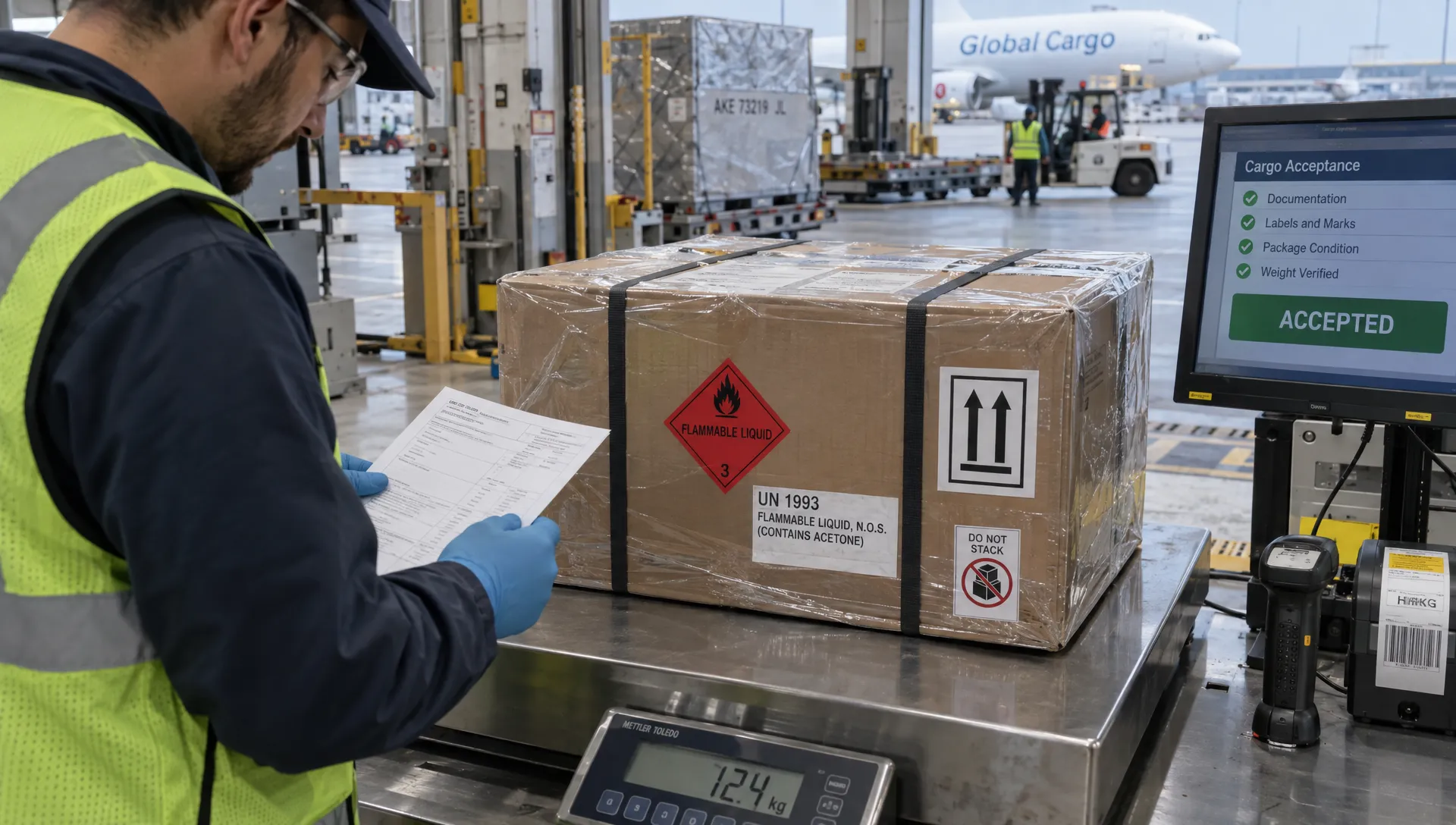
In both directions, hazardous-material documentation and acceptance must align with applicable IATA/ICAO requirements and carrier restrictions. Air freight may protect a production deadline, but its premium should be compared with the actual consequence of an ocean delay. Do not add warehouse handling unless consolidation, security, screening or another operational requirement justifies it.
Port drayage: connect dispatch decisions to equipment closure
Dispatch should verify release status, terminal appointment availability, receiving capacity and empty-return instructions before sending the truck. Gate optimization depends on those conditions being aligned, not simply securing the earliest pickup slot.
Audit a pre-pull against the instruction that triggered it, the yard arrival and departure records and the resulting equipment dates. Determine whether the move was planned to protect free time or caused by a receiving exception. The commercial outcome depends on the agreed scope and allocation of responsibility.
Close the equipment record only after accepted return or another authorized disposition. When equipment moves directly into another booking, the controls for street turns without custody gaps help preserve authorization and billing boundaries. A planned return appointment is not proof that return occurred.
Cross-dock and warehousing: reconcile physical units with charge units
A warehouse freight invoice may bill by container, pallet, carton, labor hour, square foot or another agreed unit. Confirm that the operational record supports that unit. Twelve received pallets and sixteen outbound pallets may be legitimate after sorting or repalletization, but the transformation needs a record.
For cross-dock work, connect the inbound receipt to the outbound load and explain residual inventory. For buffer storage, reconcile daily balances, release instructions and the tariff’s billing convention. The distinctions covered in warehouse storage charges matter when short dwell crosses a minimum or recurring billing boundary.
Do not assume a three-container-to-two-trailer transload is feasible from cube alone. Payload, axle limits, packaging compatibility and delivery sequencing can eliminate the expected saving. Record the approved load plan before comparing the invoice with the original estimate.
Project cargo and heavy haul: audit readiness and scope changes
For transformers, manufacturing skids or other oversized equipment, warehouse receipt may require engineered support, rigging access, floor-capacity confirmation and specialized lifting arrangements. A conventional pallet-handling tariff is not an adequate commercial baseline.
Match crane mobilization, rigging labor, escorts, permits, route surveys and standby to the approved scope and actual execution records. Identify whether a charge is a fixed mobilization, measured service or cancellation obligation. A readiness checklist should confirm site access, receiving crew, lifting capacity and the permitted delivery window before dispatch.
When dimensions, weight or center-of-gravity information changes, route the revision through engineering and commercial approval. A warehouse freight exception involving heavy cargo can alter both the safe handling method and the transport configuration. Treat it as a controlled scope change, not an informal dock instruction.
Resolve exceptions without disrupting the next release
Use separate statuses for operational completion, document completeness and financial approval. Cargo can be delivered while an invoice remains under review, and an invoice can be mathematically correct while responsibility remains disputed.
Assign each exception to a named owner with a response deadline. The dispute record should contain the contested line, contractual basis, event evidence, proposed adjustment and supplier response. Where contract terms and payment procedures allow, separate undisputed amounts from disputed lines instead of allowing one missing record to stall the entire invoice.
Pro-Tip: Track disputes by preventable cause, such as missing return evidence, unclear waiting-time endpoints or unauthorized handling. Invoice savings alone will not show whether the same operational failure keeps recurring.
Review warehouse freight exceptions jointly across transportation, warehouse operations, procurement and accounts payable. Feed recurring issues into booking instructions and rate agreements. The objective is not simply to negotiate credits after delivery; it is to make the next movement easier to execute and verify.
Frequently Asked Questions
Which records should support a drayage waiting-time charge? Retain the appointment, documented check-in, contractual allowance, agreed stop event and applicable rate. Gate or GPS records can corroborate the timeline, but the contract determines which events control billing.
Does a signed warehouse receipt validate every freight charge? No. It establishes receipt subject to its contents and exceptions. It does not automatically approve waiting time, equipment usage, storage or additional handling. Validate each charge against the relevant agreement and service evidence.
Can storage, chassis usage and detention all apply on the same day? Yes, if each concerns a distinct contracted service or asset and its billing conditions are met. Audit the clocks independently, then check for overlapping scope, incorrect dates and misallocated responsibility.
Should every warehouse freight discrepancy stop payment? Follow the contract and internal payment controls. Distinguish missing documentation, calculation errors and liability disputes, then assign an owner and deadline. Keep financial disputes separate from operational release decisions wherever the governing agreements permit.
Need tighter control across handoffs and accessorials? Bring your lane, cargo profile, service scope and recurring invoice exceptions to Shipit Logistics. Discuss end-to-end execution or standalone support across ocean freight, US air imports and exports, drayage, transloading, warehousing and project cargo.