Air Cargo Freight Forwarder Plans for US Export Charters

A US export charter can secure aircraft capacity without securing the delivery outcome. An air cargo freight forwarder must align aircraft loadability, export authorization, airport handling and destination release before the shipper commits to positioning costs or cancellation exposure. For industrial cargo, the plan also has to connect with ocean arrivals, container drayage, warehouse staging and heavy-haul delivery. The right commitment is a controlled door-to-door execution plan, not simply a departure time.
Decide which cargo actually needs the charter
Start with the required-on-site date, then separate the shipment into installation-critical cargo and material that can travel through lower-cost channels. A missing control cabinet may justify airlift even when the associated equipment remains on the water.
Workstream | Role in the recovery plan | Release condition |
Air freight | Move deadline-critical components | Aircraft acceptance and compliance clearance |
Ocean freight | Carry planned replenishment and noncritical equipment | Sailing schedule supports site need |
Port drayage | Connect containers with terminals and inland facilities | Equipment, appointments and release status confirmed |
Cross-dock or warehouse | Sequence cargo when arrivals and installation diverge | Handling capacity and storage conditions verified |
Project cargo or heavy haul | Deliver oversized machinery and skids | Route, permits and unloading resources approved |
Compare dedicated charter, part-charter and scheduled freighter capacity against the same delivery milestone. Next Flight Out (NFO) may suit a small urgent spare; a dedicated aircraft may be justified by dimensions, volume or a coordinated commissioning deadline.
What must an air cargo freight forwarder validate before booking?
A budgetary aircraft quote is not a loadability approval. Submit the packed dimensions and gross weight of every piece, including skids, protective covers and lifting attachments. Identify center of gravity, lifting points, stackability, orientation restrictions and allowable shock or vibration limits.
The operator must evaluate cargo-door clearance, internal contours, floor loading, restraint requirements and loading equipment. A piece that fits through the door may still require engineered load spreading or a different aircraft. Payload also depends on route, fuel requirements and operating conditions, not just a published aircraft specification.
Airport selection needs the same scrutiny. Confirm runway suitability, operating hours, handling equipment, parking availability and any required landing or overflight permissions. The nearest airport may produce a slower delivery if it lacks the necessary loader or requires a difficult road transfer.
Pro-Tip: Obtain written technical acceptance against the final packing list and loading drawings. Record which changes, including added packaging or revised weight, trigger operator reapproval.
Keep commercial and technical approvals separate. The charter agreement should identify the operating carrier, aircraft substitution rights and conditions that remain open before the flight can proceed.
Build separate export and import control files
An air cargo freight forwarder should maintain distinct regulatory checklists for US-origin exports and US-destination imports, even when both support the same industrial project. Documents that enable departure do not automatically establish admissibility at arrival.
US-origin export execution
Before factory pickup, establish the US Principal Party in Interest, filing responsibilities and written authorization for any agent submitting Electronic Export Information (EEI). Reconcile Schedule B reporting with the applicable export-control classification; a commodity reporting code does not establish licensing status.
Validate destination, end user, end use and any required authorization before treating the shipment as ready. Where applicable, address EAR or ITAR requirements through qualified compliance personnel. A charter booking does not override licensing or sanctions restrictions.
EEI filing deadlines depend on the transaction. The Foreign Trade Regulations filing provisions generally require air shipment filing at least two hours before scheduled departure, with exceptions and additional requirements for particular cargo. Build the applicable deadline into the pickup plan rather than leaving it to airport arrival.
The operating plan must also establish TSA-compliant cargo acceptance and required security measures through the appropriate Indirect Air Carrier and operator arrangements. Passenger-aircraft and all-cargo requirements are not interchangeable.
US-destination import execution
For inbound recovery moves, an air cargo freight forwarder needs equivalent control over foreign-airport handoff, international uplift, US customs release and final delivery. Confirm importer-of-record readiness, broker authorization, bond arrangements where required, tariff classification and any partner-government-agency requirements before departure.
The commercial invoice, packing list and air waybill must describe the same goods and parties. Pre-arrival preparation reduces avoidable document holds but does not guarantee release or prevent examination.
After landing, distinguish CBP release from airline or terminal availability. Ramp transfer, breakdown, terminal charges and carrier release can still control the truck's collection time. For AOG or NFO cargo, arrange an explicit after-hours escalation path rather than assuming the shipment can be collected immediately.
Apply temperature monitoring and custody controls on either direction of travel when the product requires them. Identify who reviews excursions, who authorizes continued movement and where cargo can be held safely if customs or transport availability interrupts the planned connection.
Connect the charter with the other freight workstreams
A charter often recovers one part of a larger equipment deployment. Assign ownership across each interface so expedited components do not arrive before their supporting materials, installation crews or unloading equipment.
Ocean freight: preserve capacity for the noncritical balance
An air cargo freight forwarder should challenge whether the entire order needs airlift or only the components blocking installation. Keep the noncritical balance on FCL or LCL services when its arrival still supports the construction or production sequence.
For containerized equipment, select among 20-foot, 40-foot and, where available and suitable, 45-foot dry equipment based on actual availability and cargo requirements. Use reefers where the specified temperature conditions require them. Verify carrier acceptance separately for regulated cargo.
Buyer’s consolidation can combine compatible supplier orders, while LCL introduces consolidation and destination CFS handling milestones. Neither approach should conceal a critical component inside a shipment whose availability misses the installation window.
Use separate tracking and release milestones for the air and ocean portions. The relevant comparison is total project delay avoided, not whether every purchase-order line travels together.
Port drayage: protect both terminal cutoffs and equipment cycles
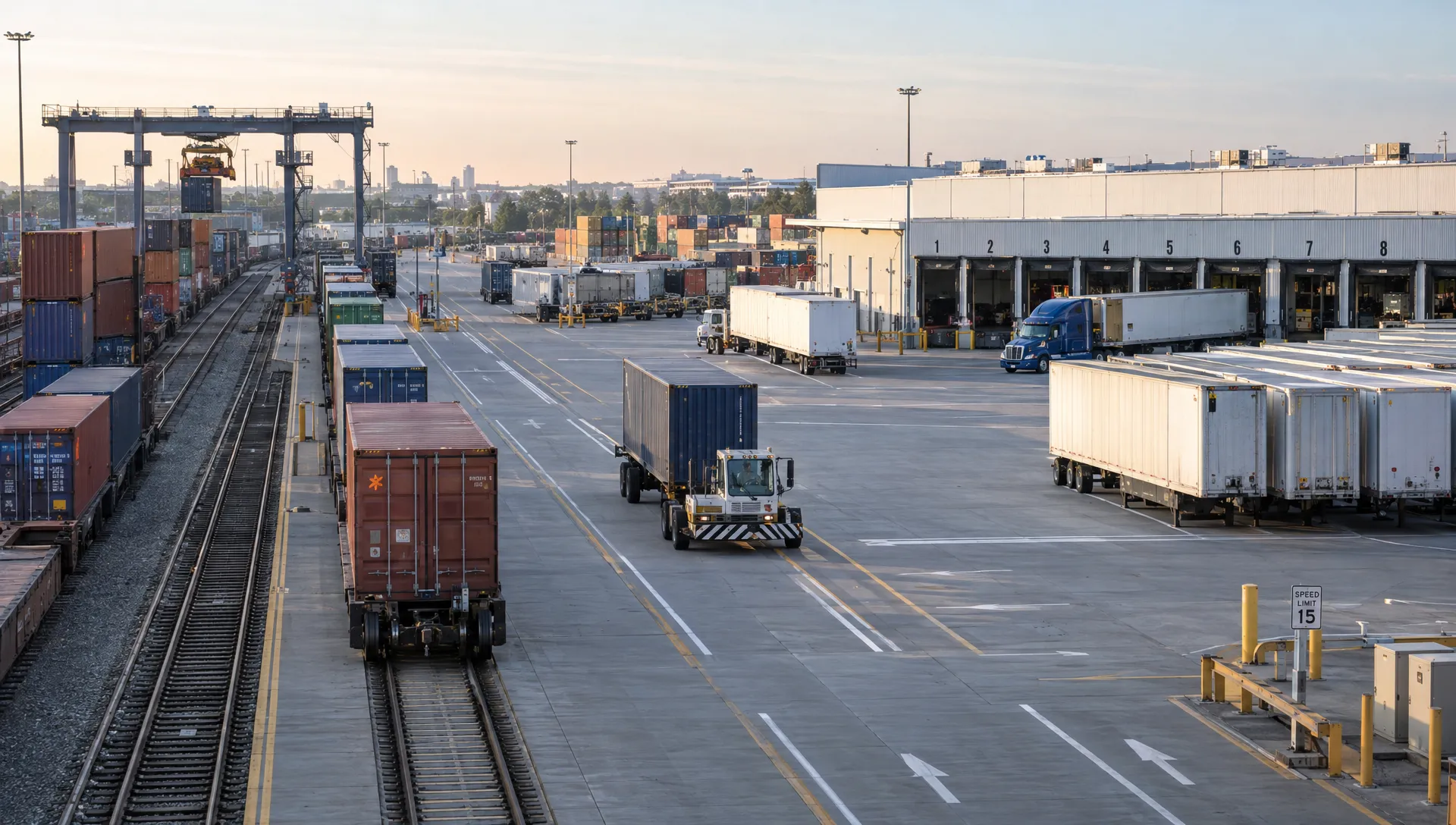
For US ocean exports supporting the same project, coordinate empty-container availability, loading appointments, verified gross mass submission and terminal receiving windows. A missed gate cutoff can undermine the schedule even when the air charter performs exactly as planned.
For imports, verify customs and carrier releases, terminal appointments, chassis arrangements and the receiving facility’s unloading capacity. Track terminal free time and equipment return obligations separately so demurrage and detention exposure remains visible.
Do not dispatch a truck solely because a vessel has discharged. Confirm that the container is available and collectable, then match the appointment to the inland delivery slot. Overweight machinery requires a legal transport plan, not an assumption that standard drayage equipment can accept the load.
Cross-docking and warehousing: stage only when the schedule requires it
An air cargo freight forwarder should add warehouse handling only when it solves a defined constraint, such as an unavailable job site or the need to synchronize air and ocean arrivals. Direct delivery remains preferable when the site can receive the cargo safely.
For the ocean portion, cross-docking may reduce container dwell or transfer freight into equipment better suited to inland delivery. A proposed three-to-two consolidation needs validation against cube, payload, axle loads, compatibility and unloading sequence before anyone treats it as a saving.
Buffer storage is useful when installation dates remain uncertain. Specify environmental limits, floor capacity, segregation, security and retrieval priorities. Record serial numbers and package condition at receipt so a later discrepancy can be traced to a custody event.
Temperature-sensitive cargo requires suitable storage and transfer arrangements throughout the dwell period, not just a temperature-controlled flight segment.
Project cargo and heavy haul: approve the road interface early
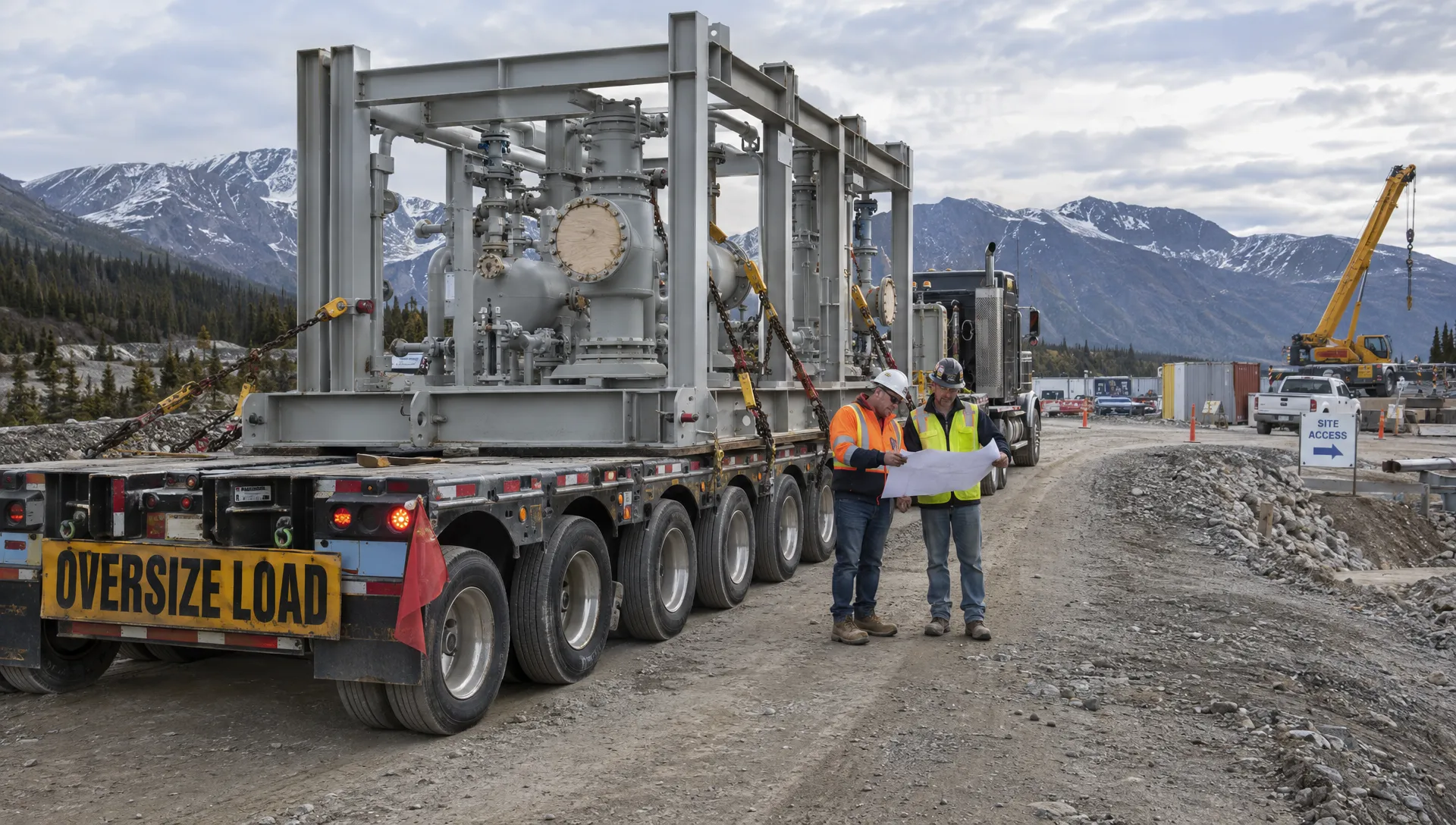
Oversized cargo needs a continuous engineering plan from factory lifting through aircraft loading and destination delivery. Validate transport height, axle distribution, bridge restrictions, turning clearances and access to the final unloading position.
A control skid may fit an aircraft but still exceed standard trailer dimensions once crated. Conversely, removing packaging to meet an aircraft contour may violate the manufacturer’s protection requirements. Resolve those conflicts before booking, with written approval for any dismantling or packaging changes.
For associated machinery moving by breakbulk, flat rack or specialized trailer, integrate the project cargo planning requirements with the charter schedule. Heavy-haul permits, escorts, cranes and rigging crews have independent readiness conditions.
The receiving site should approve the unloading method and delivery sequence. An airport arrival is not a useful recovery milestone if the cargo must wait for a crane or a permitted route.
Air freight and final mile: control both ends of the flight
For US exports, work backward from foreign-site delivery through destination clearance, airport recovery, flight arrival and US-origin acceptance. Confirm the destination agent’s responsibilities and the consignee’s ability to provide import documentation before uplift.
For US imports, use the same reverse schedule from the American receiving dock through final-mile dispatch, terminal release, customs processing and foreign-origin acceptance. This is especially important for AOG spares or line-down components whose value depends on immediate availability.
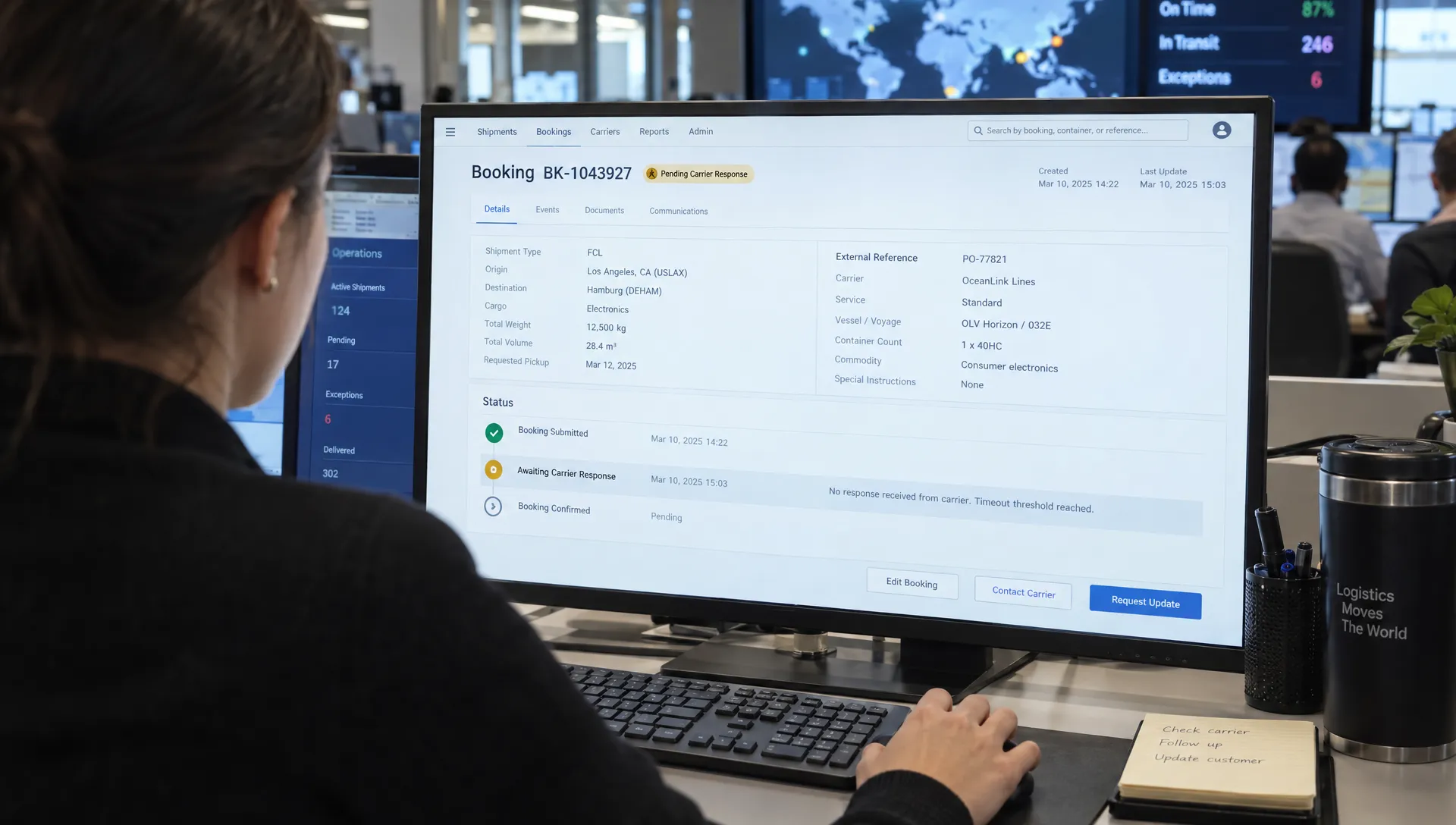
At either end, assign a named owner to each handoff and define the evidence required to close it: acceptance receipt, departure confirmation, release notice, pickup record or proof of delivery. Shipment visibility should distinguish a planned event from a completed event and identify who acts when the next milestone becomes unattainable.
Compare the full commitment, not just the flight price
Ask the air cargo freight forwarder to separate aircraft charges from pickup, export handling, screening where applicable, specialized loading, destination handling, customs services and final-mile transport. Identify which costs are firm, estimated, excluded or payable directly by another party.
Charter pricing can also include positioning, landing and navigation charges, crew-related costs, waiting time and cancellation exposure. Establish how fuel changes, aircraft substitution, schedule changes and additional handling affect the final invoice. Scheduled-air alternatives may use chargeable weight, while dedicated charter economics depend on the aircraft mission and contract.
Dangerous goods require acceptance review in either direction. Lithium batteries, chemicals and equipment containing regulated materials must meet applicable US requirements, ICAO Technical Instructions, IATA Dangerous Goods Regulations and operator variations. Some articles are restricted or forbidden; chartering an aircraft does not remove those limits. The FAA’s hazardous materials resources support checking the US regulatory framework.
Liability and insurance also need separate review. Carrier liability, forwarder contractual liability and cargo insurance are different protections. Confirm valuation, deductibles, exclusions, geographic scope and any conditions governing storage or specialized handling. Review the contract’s delay provisions rather than assuming production losses are recoverable.
Align the sales contract with the transport plan using the relevant Incoterms 2020 air freight insurance considerations. Incoterms allocate specified obligations and risk but do not replace the charter agreement or insurance policy.
Set go/no-go gates before financial exposure increases
Require the air cargo freight forwarder to maintain a readiness record with evidence, owners and decision deadlines. “Booked” should not conceal unresolved technical, regulatory or receiving-site conditions.
Gate | Evidence needed | Decision if unresolved |
Cargo readiness | Final packing data, condition records and pickup access | Delay pickup or revise the flight plan |
Technical acceptance | Operator-approved load plan and handling arrangements | Change aircraft, packaging or routing |
Compliance readiness | Required authorizations, filings and cargo acceptance | Hold movement until requirements are satisfied |
Destination readiness | Clearance plan, terminal recovery and delivery resources | Adjust arrival or arrange suitable holding |
Commercial authorization | Accepted exclusions, cancellation terms and insurance decision | Withhold commitment pending approval |
Pro-Tip: Put the next irreversible cost beside each gate. Aircraft positioning, specialized equipment mobilization and nonrefundable permits may create exposure before cargo reaches the airport.
Agree on exception triggers as well as status updates. These can include a packing change, missed filing milestone, unavailable loader, temperature excursion or lost delivery appointment. For each trigger, identify the decision-maker and the latest time an alternative remains viable.
For damage or shortage, preserve packaging, photographs, monitoring records and handoff receipts. Notify the relevant carrier, forwarder and insurer within their applicable requirements. Do not discard evidence or authorize repairs before checking survey and claims instructions.
Frequently Asked Questions
What information is needed for a US export charter quote? Provide pickup and delivery locations, cargo-ready date, required-on-site deadline, piece-level packed dimensions and weights, commodity details, dangerous goods status, handling limits and any known licensing requirements. Mark provisional data clearly.
Does booking a dedicated charter guarantee delivery? No. Aircraft serviceability, operating permissions, weather, cargo acceptance, customs release and ground handling can affect execution. Compare written commitments, exclusions and recovery arrangements rather than relying on a flight schedule alone.
Can one provider handle only the export air segment? Yes, the scope can be modular. Define who controls pickup, export filing, airport acceptance, air transport, destination clearance and delivery so the standalone service does not leave an unowned handoff.
When should a project combine air and ocean freight? Split the shipment when a limited set of components determines the critical path and the remaining equipment can meet its required date by ocean. Validate installation dependencies before separating the cargo.
Need an air cargo freight forwarder for a US export charter or a coordinated import recovery? Shipit Logistics provides end-to-end execution and standalone services across air freight, ocean freight, port drayage, warehousing and project cargo. Share the final cargo data, required-on-site date and current constraints to scope the transport plan and its responsibilities.