Contract Logistics for Volatile Import Allocation

Updated: Oct 1
For mature import programs, contract logistics is less about outsourcing activities and more about reserving operating choices before volatility arrives. Import allocation now changes after booking, after vessel departure, after customs release and sometimes after freight is already sitting in a port-adjacent building. The logistics design has to assume that demand signals, purchase order priority, port performance, inland capacity and cash preservation will not line up cleanly.
That makes volatile import allocation a different problem than seasonal volume planning. A seasonal plan asks how much space and labor will be needed. An allocation plan asks where inventory should be committed, how late that decision can be made and which partner has the authority to redirect cargo without creating a chain of exceptions.
For BCOs, importers, fast-scaling product companies, freight forwarders and brokers managing shipper programs, the practical question is not whether to use a warehouse, transload node or domestic carrier. It is how to structure those functions so the same import shipment can support multiple downstream outcomes without being touched, rated and re-explained by separate vendors at every handoff.
Volatile allocation is a network control issue
Import allocation volatility tends to show up as a sales or planning problem, but the cost is usually absorbed in operations. A national retailer shifts purchase orders from a West Coast DC to a Southeast DC. A startup redirects inbound inventory from marketplace fulfillment to wholesale orders. A broker gets a shipper request to split freight between truckload, LTL and storage after customs release. A forwarder has to move an urgent SKU by air while the balance stays on the water.
The traditional answer is to rebook, re-consign or re-warehouse. That works for low-frequency exceptions, but it is expensive when volatility is structural. Every late allocation decision can trigger extra drayage, stop-offs, cross-dock labor, demurrage exposure, detention, rework, claims risk and downstream appointment failures.
A better operating model treats allocation as a controlled sequence of decision points:
Decision point | Allocation choice | Operational dependency |
Origin booking | Ocean, air or split mode | Supplier readiness, cargo value, required arrival window |
U.S. port or airport | Gateway selection | Sailing schedule, air capacity, drayage access, inland destination mix |
Arrival recovery | Direct dray, transload or hold | Container free time, warehouse slotting, customs status |
Post-recovery allocation | DC, customer, pool point or storage | Order priority, replenishment need, outbound carrier capacity |
Domestic release | Truckload, LTL, parcel injection or dedicated route | Cube, weight, appointment rules, consignee requirements |
This sequence matters because allocation changes become more expensive as the freight moves deeper into the domestic network. Contract logistics should therefore preserve optionality near the gateway, where containers, pallets and outbound routing can still be separated before the freight is committed to a final destination.
Build around allocation bands, not averages
Average weekly import volume is a poor design metric when allocation is volatile. Two importers can both average 20 containers per week and have completely different operating risk. One may receive four steady containers per day. The other may receive two blank weeks followed by 40 containers tied to a single promotion, tariff deadline or production catch-up.
Contract logistics agreements should model volume in bands and tie each band to a labor, door, yard and transportation response. This does not mean buying unlimited standby capacity. It means defining what happens when the operation moves above or below the baseline before the disruption occurs.
Volatility pattern | Common failure mode | Contract logistics response |
Container bunching after delayed sailings | Port dwell, demurrage, missed floor-loaded unload windows | Pre-agreed surge unload plan, priority container list, trailer pool logic |
Demand shift by region | Inventory lands near the wrong DC | Gateway transload with delayed domestic allocation |
SKU priority changes after arrival | Low-priority freight blocks high-priority freight | Segregated staging by PO, SKU class or customer order |
Air expedites layered over ocean imports | Duplicate handling and poor visibility | Shared control tower across air, ocean, customs and domestic release |
Retail appointment compression | Freight ready but no delivery slot | Short-term storage, staged truckload release, appointment-led allocation |
The point is to avoid renegotiating operations during the spike. When the allocation bands are defined, the provider can activate surge doors, direct more drayage into a transload facility, hold lower-priority pallets or release hot SKUs before all containers in the lot have been unloaded.
Use drayage and transload as the allocation valve
For volatile imports, the drayage and transload layer is often the most important control point in the network. It is where container free time, warehouse labor, domestic trailer capacity and allocation decisions collide.
A direct-to-DC model is efficient when the destination is stable and the DC can absorb containers predictably. It breaks down when the final destination changes after arrival or when DC appointments lag behind terminal availability. In those cases, port-adjacent transloading can convert an ocean container constraint into a domestic transportation choice.
That does not mean every container should be transloaded. Contract logistics should define which freight qualifies for gateway handling and which freight should remain a straight dray. Qualification can be based on cube utilization, floor-loaded complexity, SKU urgency, consignee mix, detention risk, regional split requirements or whether the container needs special equipment for domestic movement.
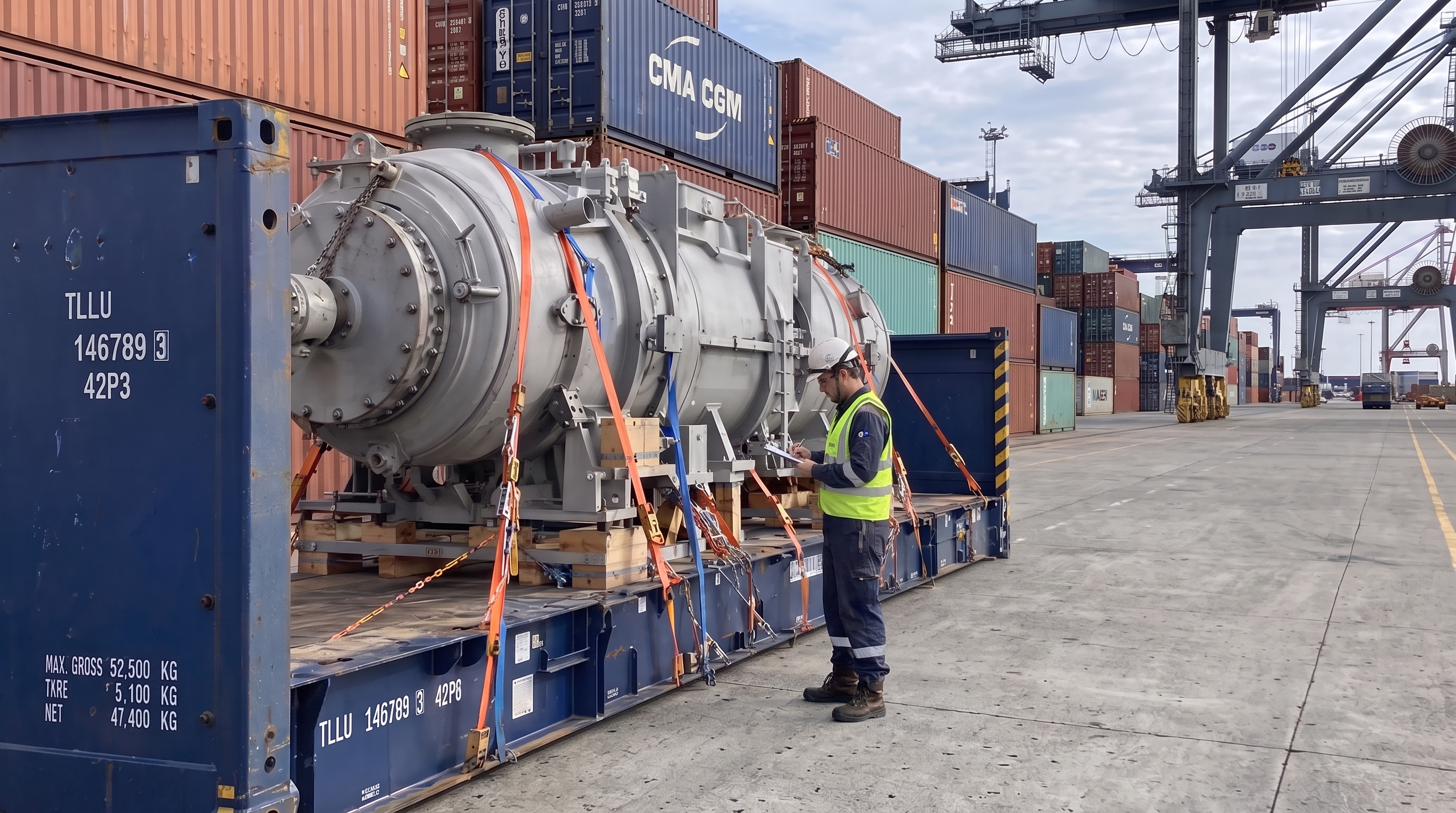
For example, a BCO importing mixed-SKU consumer goods may allocate full pallets to wholesale orders, hold reserve inventory in short-term storage and move the balance inland on 53-foot trailers. A machinery importer may only need import drayage, blocking and bracing review, then specialized trucking to a jobsite. A forwarder may ask for drayage and transload only, with domestic linehaul handled by the shipper's incumbent carrier.
The cleanest programs make those options explicit. A provider with coordinated port drayage and transloading capabilities can help reduce the number of handoffs between terminal pickup, recovery, sortation and domestic release, especially when allocation decisions are still moving.
Warehouse design has to protect flow before storage
Volatile allocation puts pressure on warehouse space, but the constraint is not always square footage. More often, the limiting factors are dock turns, staging discipline, labor timing, trailer availability, system visibility and the ability to keep undecided freight from contaminating committed outbound freight.
High-density storage may look efficient on a lease cost basis, but it can slow the exact decisions the import program needs to make quickly. If the warehouse cannot separate hot orders from reserve inventory, or if freight is buried before the allocation decision is final, storage savings can be lost through rehandling and missed shipment windows.
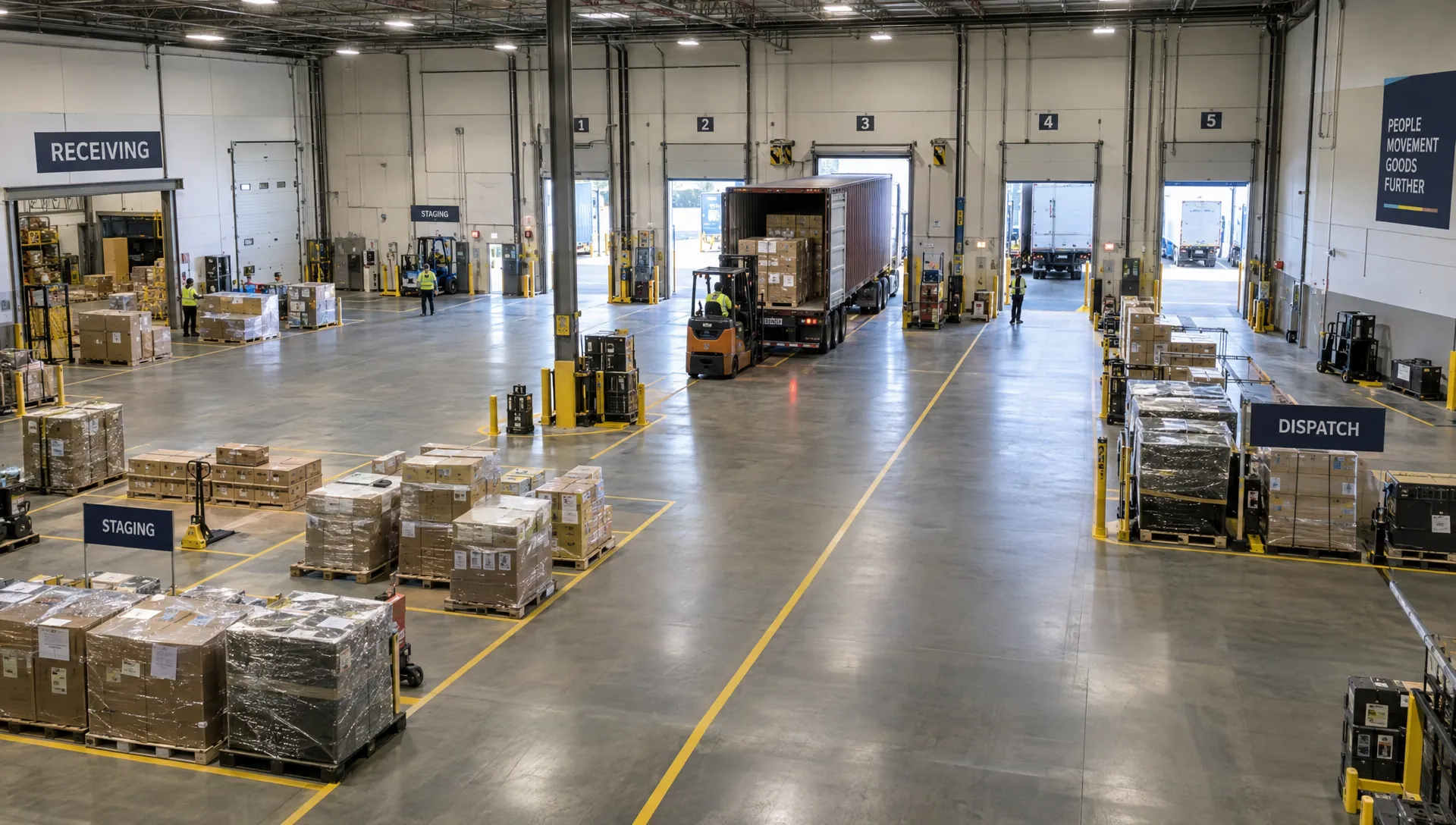
For import programs with frequent reallocation, the facility layout should distinguish between temporary control zones and true inventory storage. A transload staging area may need to be designed for rapid sortation by PO, destination region, customer, routing guide or freight class. A storage area may need more disciplined location control, cycle count logic and release rules.
Teams managing dense import nodes can go deeper on this topic in SHIPIT's article on warehouse space optimization for high-velocity import flows, which focuses on flow design rather than simply maximizing pallet positions.
Contract logistics terms should define decision rights, not just rates
Many logistics contracts spend pages on rates and only a few lines on operating authority. That is a problem when allocation is volatile. The provider may know a container should be pulled today, transloaded tomorrow and released to a different destination, but still lack the authority to act until the shipper, broker, forwarder and consignee each respond.
Advanced contract logistics programs should define who can make which decision and under what conditions. This is especially important when the provider is coordinating freight forwarding, customs brokerage arrangement, drayage, transloading, warehousing and outbound transportation across multiple parties.
Useful contract language often covers:
Allocation cutoffs: The latest time a shipper can change destination, mode or consignee before additional charges or delay risk applies.
Container priority rules: The order in which containers are pulled when free time, SKU urgency, customs status and warehouse capacity compete.
Exception authority: The circumstances under which the logistics provider can choose a faster or lower-risk routing without waiting for a full escalation chain.
Data requirements: The minimum purchase order, SKU, carton, HTS, consignee and appointment data needed before cargo arrives.
Surge triggers: The volume, dwell, labor or appointment thresholds that activate pre-approved overflow or premium capacity.
This is where contract logistics becomes an operating architecture rather than a procurement event. The rates still matter, but rate discipline is only useful if the network can execute the allocation logic those rates were built to support.
Air, ocean and domestic modes need one allocation logic
Volatility rarely stays inside one mode. Ocean delays can create air expedites. Air arrivals can overtake ocean inventory and force replanning. Rail congestion can shift freight to truckload. A customer chargeback can move a delivery from deferred LTL to team service. If each mode is managed separately, the importer may optimize the exception and damage the network.
The better approach is to manage mode changes against a shared allocation hierarchy. Hot SKUs, committed customer orders, launch inventory, service parts and production-critical components should not compete equally with replenishment stock. Once that hierarchy is agreed, the provider can decide whether the right answer is air freight, ocean priority handling, transload release, LTL injection, truckload consolidation or short-term warehousing.
For example, a venture-backed product company may need to preserve cash by keeping most inbound freight on ocean FCL while using air freight only for launch-critical SKUs. A forwarder may need a U.S. partner that can recover air imports, coordinate delivery and also transload ocean containers arriving in the same week. A broker may only need import drayage plus a transload service so its own contracted carrier can handle the final linehaul.
Coordinate services under the same shipment priorities
A provider like SHIPIT Logistics can support these patterns through international freight forwarding, air and ocean services, container drayage, transloading, warehousing, pickup and delivery, LTL, truckload and specialized equipment options when required. The value is not simply having each service available. The value is coordinating those services under the same shipment priority, data set and exception process.
For shippers trying to reduce repetitive coordination across vendors, the operational logic is similar to the approach described in managed logistics for teams that need fewer touchpoints: fewer handoffs, clearer accountability and a more direct path from inbound arrival to domestic execution.
Use allocation triggers instead of ad hoc escalation
Volatile import programs often rely on emergency meetings because the organization has not agreed on triggers. By the time a team escalates, the container may already be incurring charges, the delivery appointment may be lost or the outbound carrier may have moved capacity elsewhere.
Triggers should be operational, measurable and tied to a pre-approved action. They do not need to be complicated. The key is that the provider and shipper agree on the response before the metric crosses the threshold.
Trigger | Why it matters | Pre-approved response |
Terminal free time below agreed threshold | Limits recovery options and increases demurrage risk | Prioritize drayage for containers with highest cost or service exposure |
Warehouse staging exceeds planned capacity | Slows unloads and outbound release | Activate overflow plan or throttle lower-priority drayage |
Allocation file not received by cutoff | Prevents accurate sortation and routing | Move freight to exception staging or default allocation rule |
Outbound appointments unavailable | Converts ready freight into storage | Hold release, consolidate by consignee or shift mode if approved |
Air expedite approved for same SKU as ocean freight | Creates duplicate inventory risk | Reconcile order priority across modes before domestic dispatch |
These triggers also improve post-event analysis. Instead of asking why the provider did not react faster, the shipper can see whether the trigger fired, whether the data was available and whether the approved response was sufficient.
Measure the cost of allocation quality
Import allocation performance cannot be judged only by freight spend. A low drayage rate does not help if containers sit. A low warehouse rate may not matter if every allocation change requires rehandling. A cheap outbound move can still fail if it misses the customer window and creates chargebacks.
More useful metrics connect allocation decisions to operating outcomes. These can include container dwell by priority class, percentage of containers pulled before free time expiration, dock-to-available time after transload, rehandle rate by allocation change, outbound tender acceptance after import release, premium freight caused by late allocation and storage days by exception reason.
Finance teams should also separate planned logistics cost from volatility cost. Planned cost includes the expected drayage, unload, storage and outbound movement. Volatility cost includes rework, accessorials, premium labor, additional shuttle moves, detention, demurrage, missed appointments and mode upgrades caused by late or inaccurate allocation. Without that split, the organization may push for lower base rates while leaving the more expensive failure modes untouched.
The right scope may be full-stack or modular
Not every importer needs the same contract logistics scope. Some organizations want one partner to coordinate forwarding, customs, drayage, transload, warehousing and final delivery. Others already have strong international forwarding or domestic transportation relationships and only need a U.S. gateway partner for import drayage and transload execution.
The scope should follow the volatility. If the highest variability is at origin, the program may need tighter purchase order management, air and ocean planning and supplier coordination. If volatility appears at the port, drayage and transload control matter most. If it appears after freight is palletized, warehouse release logic and domestic routing become the priority.
This modular view is especially useful for forwarders and FMCSA licensed property brokers. They may not want to replace their customer-facing role. They may need a reliable operational partner that can recover containers, transload freight, stage inventory, prepare freight for domestic trailers and hand it back into an existing carrier network. The same principle applies to BCOs that want end-to-end accountability for some lanes and targeted support for others.
A strong contract logistics design does not force all cargo into one operating pattern. It establishes a control framework that can support full-container direct dray, gateway transload, short-term storage, domestic consolidation, air recovery, export drayage or project cargo handling when the shipment profile requires it.
Governance is the difference between flexibility and chaos
Flexibility without governance can make volatility worse. If sales, planning, finance and logistics can all redirect freight without a common rule set, the warehouse becomes the place where conflicting priorities accumulate.
The governance cadence should be practical. Weekly operational reviews can focus on arriving containers, allocation cutoffs, labor planning, dwell exposure, appointment constraints and hot order status. Monthly reviews can evaluate cost drivers, routing guide performance, storage trends, claims, forecast accuracy and whether the current allocation bands still match the business.
The most valuable governance conversations are specific. Instead of discussing whether the network is generally flexible, review the containers that changed allocation after arrival. Identify who changed the instruction, when the provider received it, what physical work had already happened and what incremental cost followed. Over time, those reviews reveal whether the business needs better upstream planning, more gateway optionality, clearer decision rights or a different warehouse layout.
Frequently Asked Questions
How should contract logistics agreements handle and measure unpredictable import allocation? They should define allocation cutoffs, surge bands, decision rights, data requirements and pre-approved exception responses. Rates are still important, but the operating rules determine whether the provider can react before cost and dwell escalate. Container dwell by priority, dock-to-available time, rehandle rate, storage days by exception reason, demurrage and detention exposure, outbound tender acceptance and premium freight caused by late allocation provide a clearer picture than base transportation spend alone.
When is transloading better than direct drayage for volatile imports? Transloading is usually more useful when final destinations may change, freight needs to be split by region or customer, domestic trailer capacity is easier to secure than container capacity or the importer needs to protect container free time. Direct drayage still works well for stable destinations and facilities that can unload containers quickly.
Can a provider support only import drayage and transload without taking over the full supply chain? Yes. Many shippers, forwarders and brokers use a modular model where one partner handles port recovery, transloading, staging or handoff to domestic carriers while other parties continue managing international forwarding or customer relationships.
What data is most important before import cargo arrives? Purchase order detail, SKU or carton data, consignee routing, priority class, customs status, appointment requirements and any allocation rules that determine how freight should be split. The earlier this data is available, the later the physical allocation decision can safely remain open.
If your import allocation keeps changing after booking, arrival or release, SHIPIT Logistics can help design a practical contract logistics model around the services you actually need, from international freight forwarding and air or ocean freight to drayage, transloading, warehousing, pickup and delivery, truckload, LTL and specialized cargo support.