Port Drayage and Transloading for Faster Warehouse Distribution

Updated: Oct 1
An import container that has been discharged from a vessel is not yet usable inventory. For high-volume importers managing warehouse distribution, it is a clock. Terminal free time, container per diem, chassis availability, delivery appointments, rail cutoffs, and warehouse receiving schedules all start competing for attention as soon as freight becomes available.
That is why port drayage and transloading should be planned as one operating model, not as separate spot decisions. When a container is pulled quickly from a US marine terminal, moved a short distance to a port-adjacent logistics center, stripped, palletized, and reloaded into domestic equipment, the importer gains control over time, cost, and routing. The goal is simple: get freight out of the congested port environment and into the inland distribution network before avoidable fees and delays accumulate.
For B2B importers moving multiple ocean containers per week, this strategy can be a major supply chain velocity lever. It is especially powerful when cargo can be consolidated from three ocean containers into two domestic 53-foot over-the-road trailers, or routed into domestic rail equipment for longer inland moves.
Why port drayage is a velocity decision
Port drayage is often described as a short-haul trucking move, but that definition understates its importance. In an import program, drayage is the handoff between the international leg and the domestic supply chain. If that handoff is slow, the entire inland plan becomes more expensive.
A container sitting at a marine terminal is exposed to several risks at once. Terminal congestion can limit appointment availability. Chassis shortages can delay pickup. Customs or exam holds can compress free time. Vessel bunching can create sudden labor and yard pressure. Even when the ocean freight leg performs well, the inland supply chain can still lose days at the port if drayage is not planned before availability.
Rapid drayage changes the sequence. Instead of waiting for the final destination to accept the intact ocean container, the importer pulls the box from the terminal as early as practical and moves it to a nearby transload warehouse. That short drayage run shifts the freight from a constrained marine terminal to a controlled warehouse distribution environment where labor, dock doors, pallets, outbound trailers, and routing decisions can be scheduled around the importer’s priorities.
This does not magically eliminate every port constraint. The container still has to be released, picked up, and gated out. But it reduces the time the cargo spends inside the most expensive and least flexible part of the network.
How the drayage and transloading sequence supports warehouse distribution
The mechanics are straightforward, but execution quality matters. A strong program begins before the vessel arrives. The importer or logistics provider should confirm commercial documents, customs release status, delivery orders, terminal availability, appointment rules, chassis strategy, warehouse receiving capacity, pallet requirements, outbound carrier capacity, and final delivery windows.
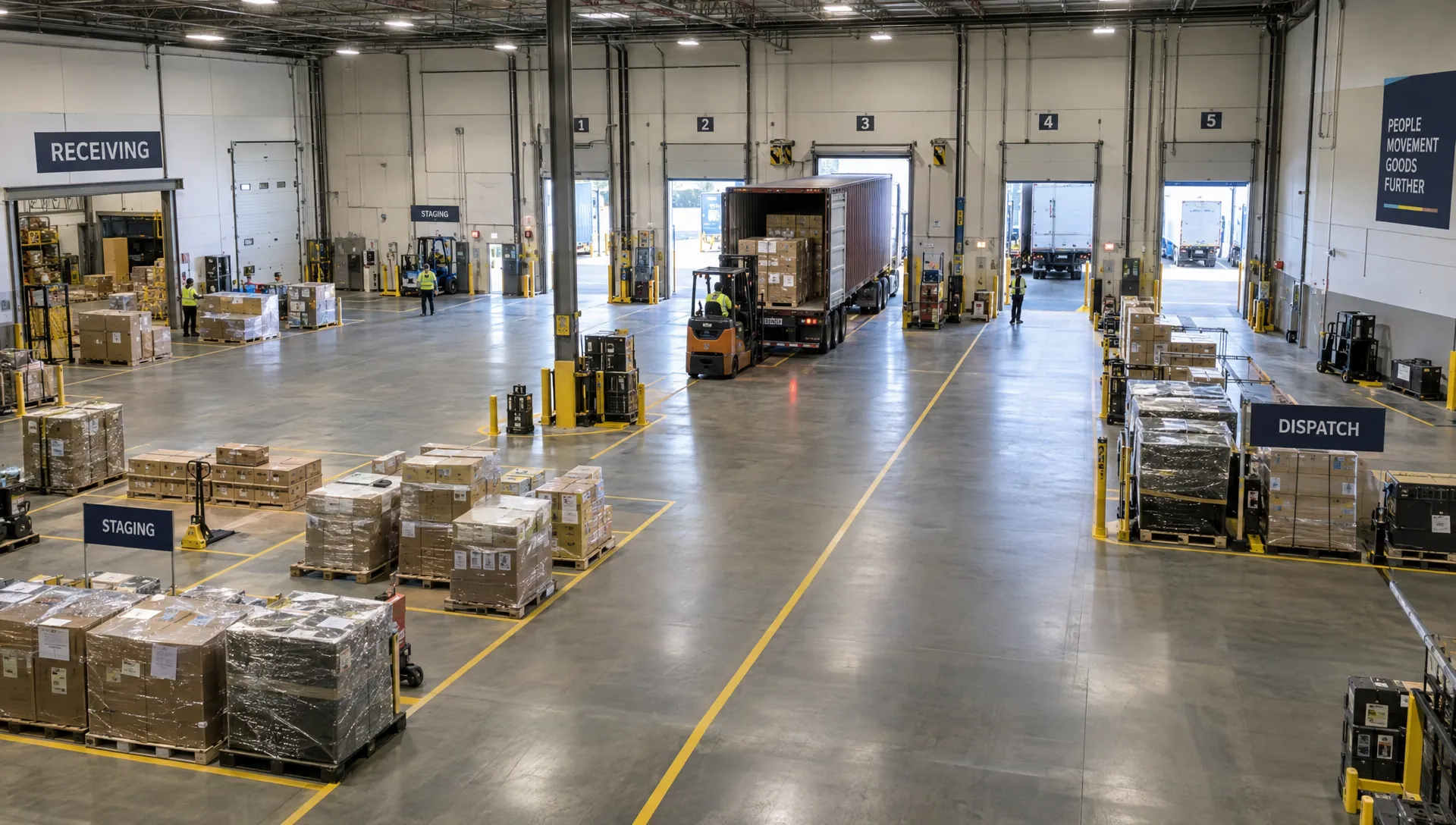
Once the container is available, the drayage carrier pulls the full ocean container from the marine terminal and moves it to a nearby logistics center. The best facilities for this work are close enough to support fast turns but operationally robust enough to handle high-volume unloading, sorting, palletizing, labeling, staging, and outbound loading. Location matters, but it is not the only factor. Gate patterns, local traffic, yard design, dock availability, labor planning, and empty return options can matter just as much as miles from the terminal. For a deeper look at facility selection near major gateways, SHIPIT’s guide to choosing the right warehouse site for fast drayage explains why the fastest site is not always the closest one.
From container unloading to domestic reload
At the warehouse, the container is received under a controlled process. The seal is verified, cargo condition is checked, exceptions are documented, and the container is stripped. Cartons or units can be sorted by SKU, purchase order, consignee, retail routing guide, project site, or final distribution center. The freight is then palletized, stretch-wrapped, labeled, staged, and loaded into outbound domestic equipment.
For many importers, the outbound mode is a 53-foot dry van trailer. For longer lanes, the cargo may be loaded into domestic rail cars or domestic intermodal equipment when rail service offers the right balance of capacity, transit, and cost. If only part of the freight is urgent, the warehouse can help split the load, sending priority product by truck while routing less urgent volume through a lower-cost inland option.
The empty ocean container is then returned quickly, which reduces exposure to equipment per diem or detention charges. Meanwhile, the cargo has already moved forward in a domestic network that is typically more flexible than a port terminal.
Step | Operational action | Velocity benefit |
Pre-arrival planning | Confirm release, appointments, warehouse labor, and outbound capacity | Reduces idle time after discharge |
Port drayage | Pull the full container from the marine terminal | Moves freight out of the highest-risk congestion point |
Transloading | Strip cargo, inspect, sort, palletize, and stage | Converts import freight into domestic-ready inventory |
Domestic reload | Load into 53-foot trailers, rail cars, or intermodal equipment | Improves routing flexibility and inland cost control |
Empty return | Return ocean equipment promptly | Reduces per diem and equipment exposure |
Avoiding demurrage, detention, and per diem exposure
Demurrage, detention, and per diem fees are not just accounting irritants. They are symptoms of lost control. Demurrage generally relates to containers remaining at the terminal beyond allowed free time. Detention or per diem generally relates to using carrier equipment beyond the allowed period after pickup, though terminology and billing practices vary by ocean carrier, terminal, and contract.
These costs can become astronomical during congestion because they compound quickly. A late pickup may create terminal storage charges. A missed empty return may create equipment charges. A delayed warehouse appointment may keep the container on wheels longer than planned. A chassis shortage may introduce additional rental or accessorial costs. By the time the freight reaches the final distribution center, the invoice trail can include charges that did not move the cargo one additional mile.
Separating cargo movement from container usage
Transloading changes the economics of warehouse distribution by separating cargo movement from ocean container usage. Once the cargo is stripped and transferred into domestic equipment, the importer is no longer dependent on keeping the international container in the domestic network. That matters because ocean containers are designed for international equipment circulation, not for acting as low-cost storage units in an importer’s inland supply chain.
A port-adjacent transload model can also help bypass the worst effects of terminal congestion. Rather than waiting for inland rail loading, final DC receiving capacity, or long-haul truck availability while the container remains exposed to port and equipment clocks, the importer can remove the cargo from that environment quickly. The cargo can then be staged, consolidated, and released in the sequence that best supports customer demand.
SHIPIT has covered the fee-reduction side of this model in more depth in its article on how transloading cuts dwell and fees, but the strategic point is broader: transloading turns a reactive import recovery process into a planned flow-through operation.
The 3-to-2 consolidation advantage
One of the most compelling reasons to transload imports is equipment optimization. A standard 40-foot or 40-foot high-cube ocean container is not the same as a domestic 53-foot trailer. The domestic trailer usually provides more usable cube for inland transportation, especially when cargo can be palletized or floor-loaded efficiently.
In the right freight profile, three ocean containers can be consolidated into two 53-foot domestic trailers. That means fewer inland truckloads, fewer delivery appointments, fewer receiving events, and less linehaul cost. For importers moving repeated container volumes into inland distribution centers, this can produce meaningful warehouse distribution savings across an annual transportation budget.
The math is not automatic. Weight, product dimensions, stackability, pallet height, packaging strength, hazmat rules, delivery routing, and state highway weight limits all matter. Dense commodities may hit legal weight before cube. Fragile goods may require more space. Retail-compliant pallet builds may reduce theoretical trailer utilization. But when the freight is suitable, the 3-to-2 model is one of the clearest examples of how transloading reduces inland freight cost without slowing the supply chain.
Import routing model | Typical inland equipment need | Cost and capacity impact |
Move intact ocean containers inland | Three ocean containers remain three inland container moves | Higher equipment dependency and more delivery events |
Transload to domestic trailers | Three ocean containers may become two 53-foot trailers | Fewer inland linehauls and better domestic cube utilization |
Transload to rail equipment | Cargo is reloaded for domestic rail or intermodal movement | Can improve cost on long-haul lanes when transit fits |
Turning consolidation into a freight design strategy
This is where transloading becomes more than a port recovery tactic. It becomes a freight design strategy. The importer is no longer asking only how to get containers off the pier. The better question is how to convert international freight into the most efficient domestic move as early as possible.
When transloading is the better import strategy
Transloading is not necessary for every import shipment. If a container is heavy, cleanly destined to one nearby facility, and can be received immediately, direct drayage to the final consignee may be the most efficient option. The value of transloading increases when the importer needs speed, consolidation, flexibility, or protection from port-related cost exposure.
High-volume importers should evaluate transloading when several conditions are present. The freight is moving to inland destinations far from the port. Multiple containers are arriving within a tight window. The cargo is floor-loaded and can be reconfigured into domestic equipment. The final distribution center has appointment constraints. Retail orders require labeling, segregation, or routing guide compliance. The importer wants to allocate inventory before it reaches the final warehouse. The port is experiencing congestion or unpredictable dwell.
A transload operation is also useful when purchase orders need to be split across customers or regions. Instead of sending an intact container to one DC, the importer can use the port warehouse as a flow-through decision point for warehouse distribution. Fast-moving SKUs can go straight to priority markets. Slower-moving inventory can be consolidated for truckload or rail. Partial orders can be routed as LTL when the economics make sense.
For importers that use both ocean and air freight, the same principle applies. Air freight often handles urgent replenishment, product launches, samples, or high-value exceptions. Ocean freight handles the bulk flow. A coordinated logistics provider can help align air recovery, ocean transloading, port drayage, warehousing, and trucking so the importer is not managing each mode in isolation.
Specialized warehousing makes or breaks the model
A port-adjacent building with dock doors is not automatically a strong transload facility. The warehouse must be designed and managed for speed. In a high-volume import program, warehouse distribution capabilities determine whether the drayage savings translate into real supply chain performance.
The facility needs enough yard capacity to receive containers without creating bottlenecks. It needs labor planning that matches vessel arrival patterns, not just normal business hours. It needs floor discipline so freight can be stripped, counted, segregated, staged, and reloaded without excessive touches. It needs a process for exception management, including overages, shortages, damages, seal discrepancies, and SKU mismatches.
Technology integration also matters. Importers need visibility into what arrived, what was stripped, what was damaged, what was reworked, what was loaded outbound, and when the empty container was returned. Data quality is especially important for BCOs with retail chargeback exposure, multi-DC allocation plans, or investor pressure to improve working capital performance.
Connecting warehouse operations to the transportation plan
The best transload warehouses operate as an extension of the importer’s transportation plan. They do not simply unload containers and wait for instructions. They help maintain flow. That may include pallet configuration, carton labeling, load sequencing, staging by destination, coordinating truckload pickups, arranging LTL, or preparing freight for rail handoff.
Financial teams should also connect these operational choices to landed cost, inventory carrying cost, and entity-level reporting. Importers with operations in Australia, for example, may need local guidance from tax and accounting services in Australia when evaluating how logistics costs, inventory value, and cross-border financial reporting interact across markets.
Building a faster import playbook
The strongest drayage and transloading programs are designed before cargo arrives. Importers should treat the port as a high-velocity transfer point, not as a storage buffer. That requires clear operating rules and a provider that can coordinate international freight, drayage, warehousing, and inland transportation.
A practical warehouse distribution playbook should answer several questions before the container becomes available. Which containers are candidates for direct delivery, and which should transload? Which SKUs or customers require priority handling? Can three import containers be converted into two domestic trailers on this lane? Is the limiting factor cube, weight, labor, appointment availability, or final-mile capacity? What is the escalation plan if the terminal, chassis pool, or receiving warehouse becomes constrained?
This is also where trucking strategy matters. A transload plan should not end at the warehouse dock. It must connect to the right inland mode, including truckload, LTL, flatbed or specialized equipment when needed, domestic rail, and final delivery. SHIPIT’s overview of trucking services that fit port, rail, and final delivery is useful for importers comparing how each trucking option supports different freight profiles.
The importer’s internal teams should be aligned as well. Procurement may be focused on origin bookings. Finance may be focused on landed cost. Operations may be focused on DC receiving. Sales may be focused on customer availability. A good transload strategy brings those goals together by improving the speed and predictability of inland inventory flow.
End-to-end control, or targeted drayage and transload support
Some importers need a full origin-to-door logistics solution. Others already control ocean procurement and only need help at the port. Both models can work if the handoffs are clean.
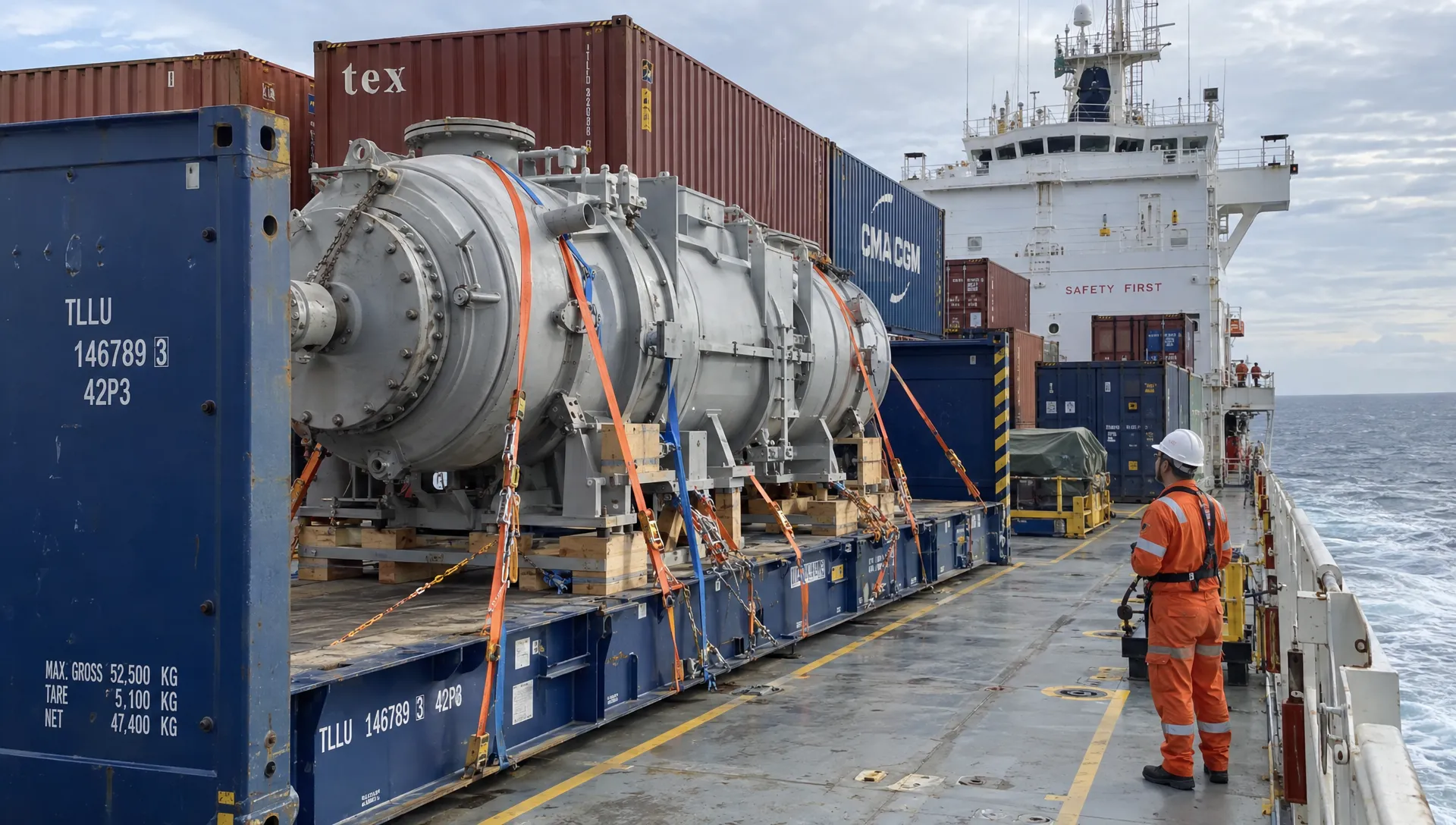
An end-to-end provider can coordinate international ocean or air freight, customs brokerage arrangement, port drayage, transloading, warehousing, truckload, LTL, rail options, cargo insurance, and specialized transportation when cargo requires flatbed, step deck, double drop, oversized, out-of-gauge, project, or heavy lift handling. This integrated approach reduces the number of parties the importer must chase when the vessel is early, the terminal is congested, the customer changes priority, or the final DC appointment moves.
At the same time, many importers only need a targeted port solution. In that case, a provider can support import drayage and transload services only, then hand the freight back to the importer’s preferred carrier network for warehouse distribution. For exporters, a similar model can work in reverse, with export cargo consolidated, loaded, and drayed to the port for vessel departure.
The key is not whether the solution is full-service or modular. The key is whether the provider can protect velocity at the handoff points. Port drayage, transloading, warehousing, and inland trucking are separate functions on paper, but in a live import environment they behave like one continuous operation.
KPIs importers should track
A faster import program needs measurable controls. Without data, transloading can be treated as an extra handling cost rather than a strategy for reducing total landed expense and improving service.
Useful warehouse distribution KPIs include container availability to pickup time, terminal dwell, drayage turn time, container strip time, empty return time, outbound trailer utilization, 3-to-2 conversion rate, cost per inland unit, accessorial cost per container, on-time delivery to final DC, OS&D rate, and inventory availability date. Importers should also compare total cost per delivered unit, not just the transload invoice.
That last point is critical. A transload move may add warehouse handling, but it can reduce demurrage, per diem, chassis exposure, inland linehaul cost, missed appointment fees, and inventory delay. The right comparison is not transload cost versus no transload cost. It is total import flow cost and speed under each routing model.
Frequently asked questions
Is port drayage the same as transloading? No. Port drayage is the truck move that pulls the ocean container from the marine terminal. Transloading is the warehouse process of unloading that container and reloading the cargo into domestic trailers, rail equipment, or other outbound modes.
How does transloading help avoid demurrage and per diem? It helps by moving the container out of the terminal quickly, stripping the cargo at a nearby facility, and returning the empty ocean container sooner. This reduces exposure to terminal storage and ocean equipment usage charges.
Can three ocean containers always fit into two 53-foot trailers? No. The 3-to-2 model depends on cube, weight, packaging, stackability, pallet requirements, and route limits. It is common for suitable cargo profiles, but each program should be engineered before execution. Direct container delivery may be better when the final destination can receive immediately, the freight is heavy or not suitable for consolidation, the inland move is short, or the container is already routed efficiently by rail.
Is transloading only useful near congested ports? Congestion makes the value easier to see, but transloading can also reduce inland freight cost, improve allocation flexibility, support retail compliance, and speed inventory availability even during normal port conditions. It can also support importers using ocean freight for volume and air freight for urgent replenishment. A coordinated logistics provider can align both flows with drayage, warehousing, and inland distribution priorities.
For high-volume importers, faster inland movement starts with tighter control at the port. SHIPIT Logistics can help coordinate rapid port drayage, transloading, warehousing, truckload, LTL, rail options, and broader international freight solutions, whether you need an end-to-end import program or a targeted drayage and transload service at a US gateway.