Automate Warehousing Without Breaking Transload Throughput

Updated: Oct 1
Automation initiatives usually enter transload warehouses through the wrong door. A storage DC can justify automation around pick density, slotting discipline and predictable replenishment. A transload operation has a different constraint: freight has to move through the building fast enough to satisfy terminal free time, airport recovery windows, export cutoffs, carrier appointments and customer delivery commitments.
If the mandate is to automate warehousing inside a port, airport, or inland transload operation, the first design question is not which robot, conveyor, scanner, or WMS module to buy. It is what must never slow down. For many BCOs, importers, exporters, forwarders and brokers, that answer is transload throughput.
The risk is familiar to operators. A new control point improves inventory accuracy but adds minutes to every pallet. A conveyor reduces travel distance but cannot accept odd-size cartons, damaged freight, mixed SKU floorloads, drums, crates, rolled goods, or out of gauge pieces. A WMS rule prevents misloads but holds freight that should have been staged for a driver appointment 45 minutes ago.
Automation can absolutely improve a transload warehouse. It just has to be designed around flow, exception velocity and modal handoffs rather than a pure storage model.
Transload throughput is governed by clocks, not storage density
In a conventional warehouse, inventory can sit in a location until demand pulls it forward. In transload, dwell is usually a symptom, not a strategy. The building is a conversion point between transport modes, document states, equipment types and delivery plans.
That means throughput is constrained by several clocks at once: container last free days, chassis availability, SSL or NVO documentation, customs release status, airport cargo availability, export cutoff times, appointment windows, consignee receiving capacity and driver hours. Warehouse automation that ignores these clocks may produce clean internal transactions while the outside network continues to degrade.
Little's Law is a useful operating lens here: work in process equals throughput multiplied by cycle time. In a transload facility, every additional inspection hold, scan queue, staging search, system approval, or forklift trip increases cycle time. If volume stays constant, work in process grows. That growth shows up as blocked dock doors, overflow staging, longer driver turns and missed outbound appointments.
The goal is not to remove controls. The goal is to place controls where they shorten the total clock, not where they make the warehouse look orderly while freight waits.
Where automation commonly breaks transload flow
Most failed warehouse automation projects in transload environments do not fail because the technology is bad. They fail because the operating profile was modeled like a stable fulfillment building.
Common failure modes include:
Storage-first slotting applied to freight that should not be stored: System-directed putaway can create unnecessary touches when import freight only needs strip, segregate, inspect, relabel and reload.
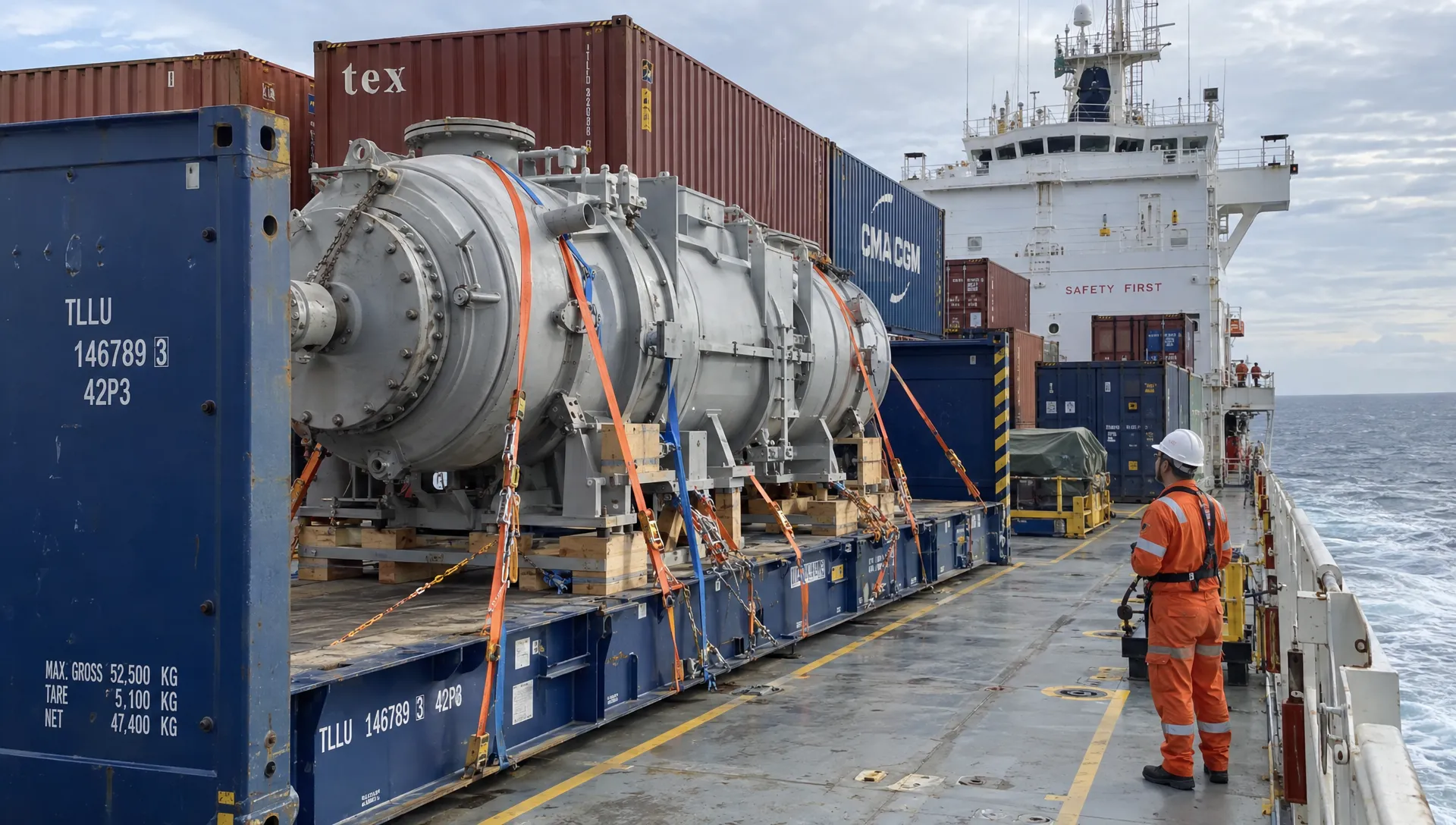
Fixed material handling paths for irregular cargo: Conveyors and sorters are efficient for repeatable cartons, but they can become bypass factories when freight includes long pieces, overpacks, mixed pallets, machinery, crates, floorloaded cartons, textiles, furniture, retail displays, kitted orders, or project cargo.
Clean ASN assumptions in dirty import reality: International freight often arrives with discrepancies between commercial documents, packing lists, container load plans and actual piece counts. Automation has to absorb variance without freezing the floor.
Exception queues with no operational owner: A system can flag damage, overage, shortage, hold status, missing marks, bad labels, or appointment conflicts, but throughput only improves if those exceptions are routed to someone who can resolve them fast.
Warehouse systems disconnected from yard and dispatch: If dock door plans, trailer availability, driver appointments and empty return priorities live outside the warehouse control process, automation only optimizes one part of the chain.
For exception-heavy freight profiles, SHIPIT has covered the broader technology angle in its article on warehouse automation solutions for exception-heavy freight flows. The more specific point for transload is this: exception handling is not a side process. It is part of the production line.
Automate decision latency before handling latency
In many transload operations, the slowest part of the process is not forklift travel. It is decision latency. Operators wait for release status, routing instructions, consignee priorities, delivery appointments, revised load plans, claim decisions, customs updates, or carrier confirmation. Automating material movement before automating these decisions can simply move freight faster into the wrong queue.
A more resilient sequence is to automate identity, status and priority first. That means pre-arrival data normalization, container and shipment matching, dock appointment visibility, scan capture at strip and build points, automated exception assignment, staged freight status and release logic that reflects the actual transport plan.
For U.S. imports, customs and admissibility status cannot be treated as back-office noise. CBP's Automated Commercial Environment supports electronic trade processing, but the warehouse still needs operational rules that define what can be stripped, segregated, held, loaded, delivered, exported, or released based on customer instructions and regulatory status.
When data automation works, floor supervisors spend less time asking what freight is, where it goes and whether it can move. They spend more time protecting dock velocity.
How to automate warehousing around the constraint
The controlling constraint in a transload building is often one of four things: strip capacity, staging space, dock doors, or outbound equipment availability. Automation should protect that constraint from starvation and blockage.
If strip crews are the constraint, the facility needs automated prioritization before the container hits the door. Which box strips first depends on free time, downstream appointment risk, customer priority, cargo complexity and empty return requirements. If staging space is the constraint, the system should meter freight into lanes instead of pushing everything out of containers as fast as possible. If dock doors are the constraint, door schedules need to reflect strip time, build time, driver ETA and trailer compatibility. If outbound trailers are the constraint, the operation needs earlier escalation to dispatch or carrier partners, not a faster putaway routine.
The practical rule is simple: automate the flow of information into the constraint and the release of work out of it. Do not automate a process that feeds the bottleneck faster than the bottleneck can clear.
Automation controls by transload area
Transload area | Automation that usually helps | Throughput risk if overdone | Control to keep in place |
Container strip or air recovery | Mobile scanning, photo capture, dock door assignment, piece count validation | Long verification routines that keep crews waiting at the door | Fast exception coding with supervisor override |
Sort and segregation | Directed staging, label print, shipment matching, customer or route grouping | Excessive location moves before outbound plan is confirmed | Temporary lanes by cutoff, route, appointment, or hold status |
Quality and exception handling | Damage photos, OS&D workflow, automated alerts, document attachment | Exception queues that lack priority or ownership | Aging by shipment clock, not only by entry time |
Outbound build | Load confirmation, trailer assignment, seal capture, BOL packet generation | Blocking loads until every noncritical data field is perfect | Positive release logic for acceptable variances |
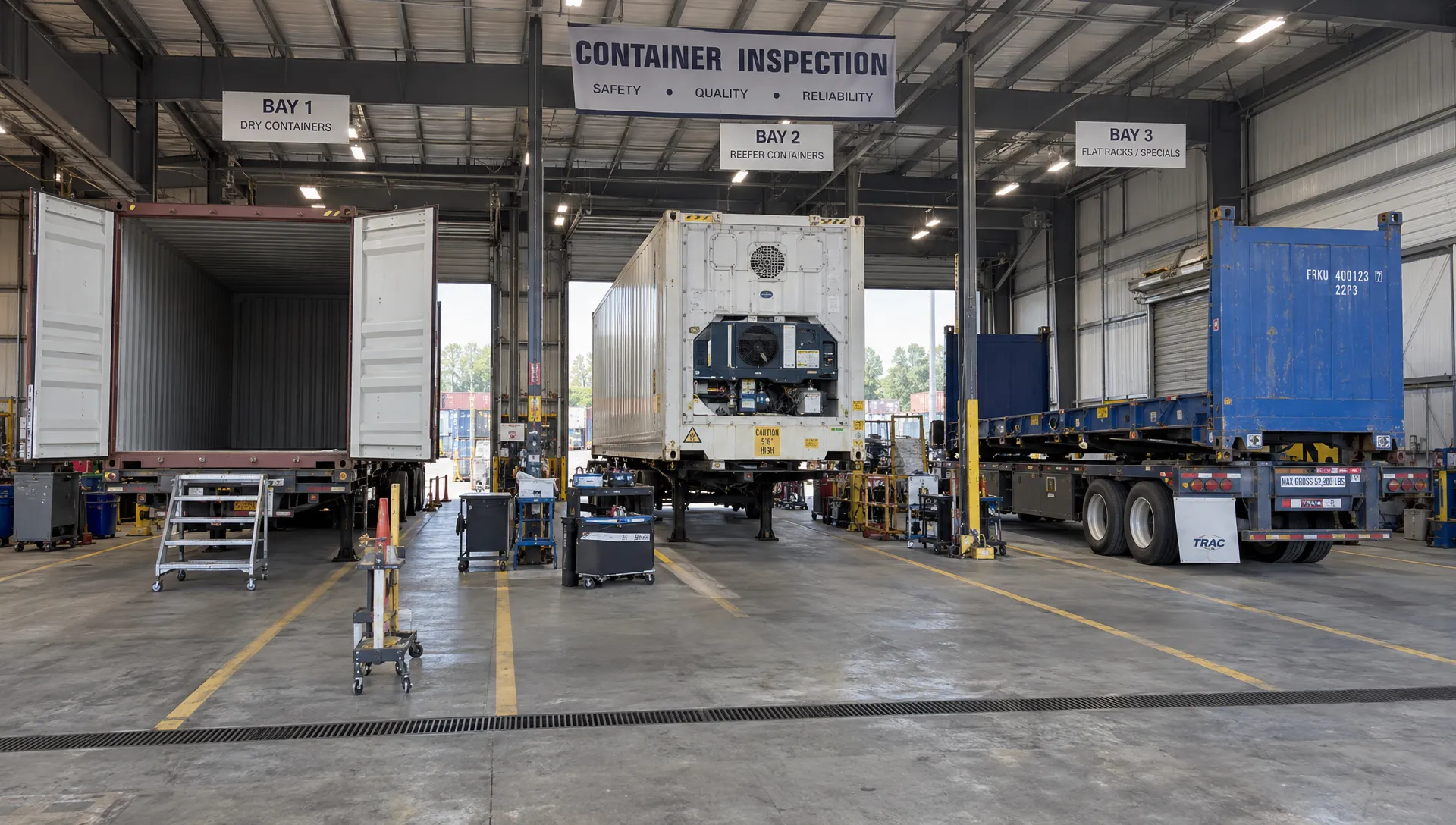
Yard and dispatch interface | Trailer status, gate events, appointment visibility, empty return tracking | Warehouse plan that ignores chassis, driver, or equipment reality | Shared view of yard, dock and dispatch priorities |
Ocean, air and trucking flows need different automation thresholds
A transload facility serving multiple modes should not apply one automation standard across every freight stream. Ocean import transload, air freight recovery, export consolidation and domestic trucking support each have different tolerance for delay.
Ocean import transload
Ocean import automation should focus on container priority, strip sequencing, piece-level visibility where it matters and rapid conversion to domestic equipment. For BCOs and importers managing high-volume flows, the warehouse is often the point where container dwell risk is either absorbed or amplified.
A port-adjacent or inland transload plan can reduce terminal exposure only if drayage, dock capacity and outbound trucking are coordinated before the box is pulled. The operational chain described in port drayage and transloading for faster imports depends on that coordination. Automation should therefore connect the container record to door plan, strip status, staging lane, outbound trailer and empty return clock.
For mixed containers, automation should also distinguish between freight that can be immediately loaded and freight that needs inspection, relabeling, segregation, pallet exchange, rework, or hold handling. Treating the entire container as one status can create unnecessary dwell for clean freight.
Air freight recovery and cross-dock
Air freight has less patience for elaborate warehouse routines. Recovery operations often deal with split arrivals, short freight, tender windows, rapid delivery requirements and high communication load. The highest value automation is usually proof of recovery, condition documentation, piece count confirmation, delivery priority and driver dispatch visibility.
Physical automation is useful when the cargo profile is repetitive, but many air recovery operations benefit more from mobile scan discipline and exception visibility than from fixed systems. A delayed decision on short cargo or delivery routing can cost more than a few extra forklift minutes.
Export consolidation and cutoff-driven staging
Export transload and consolidation have a different failure mode: freight arrives from multiple origins and has to be staged against vessel, flight, cut, booking, load plan, hazardous status, equipment type, or customer instruction. Automation should preserve cutoff integrity and reduce mis-staging.
Directed staging by booking, cutoff and load sequence can help, especially when freight is consolidated from LTL, truckload, flatbed, step deck, double drop, or specialized pickup flows. The danger is premature finalization. Export plans change. A good system lets supervisors reassign lanes, revise load builds and maintain an audit trail without forcing the floor through a complete reset.
Domestic trucking and final delivery
Once freight leaves the transload building, the automation program has to respect equipment reality. A system that says load ready is not enough. The outbound plan needs to know whether freight is palletized, floorloaded, oversized, fragile, stackable, appointment constrained, or tied to a specific trailer type.
For freight brokers, forwarders and shipping managers, the warehouse-to-trucking handoff is where service failures often become visible to the customer. Automated load confirmation, seal capture, BOL packets and photo documentation reduce ambiguity, but the system should still allow controlled exception release when the transport plan and customer instructions support it.
Space design is part of the automation design
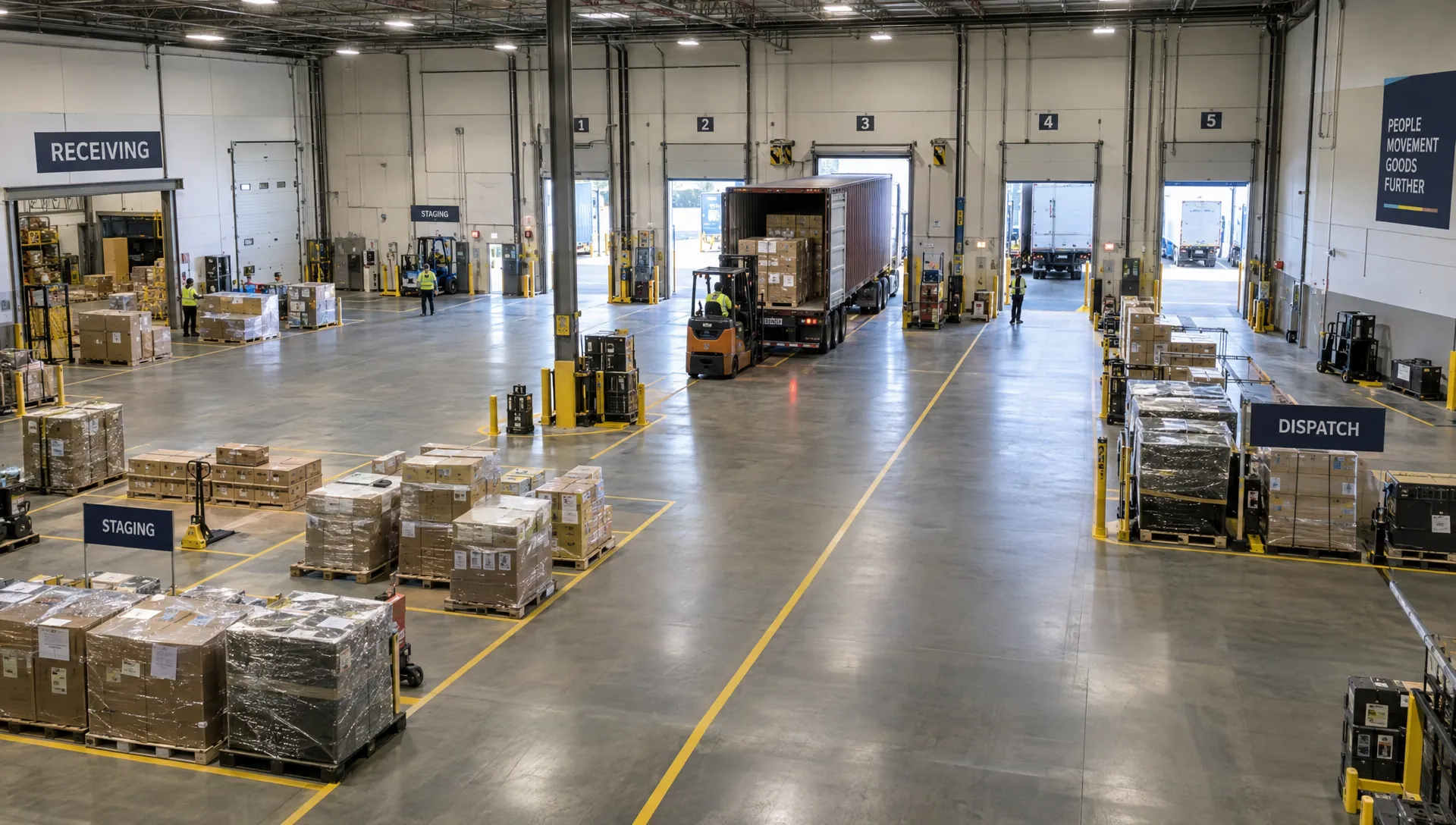
You cannot automate warehousing for transload throughput if the layout forces freight into storage behavior. The physical plan determines whether automated instructions are executable.
High-velocity import flow needs short travel paths, flexible staging geometry and enough surge capacity to absorb uneven container arrivals. Static racking may help with true storage, but it can hurt if it encourages operators to bury freight that should stay visible and accessible. Floor lanes, temporary overflow positions, inspection zones and outbound build areas may produce more throughput than dense storage in the wrong place.
The deeper space planning considerations are covered in SHIPIT's article on warehouse space optimization for high-velocity import flows. From an automation standpoint, the key is to define which areas are velocity zones and which are inventory zones. Velocity zones need fast identification, staging discipline and release control. Inventory zones need accuracy, location control and cycle count logic. Mixing the two creates confusion.
Dimensioning and weight capture can improve load planning, cube utilization and carrier selection, especially when inbound data is unreliable. But dimensioning stations should be placed where they do not create a line that backs into strip doors. If every piece must visit one measurement point before staging, the automation has become a choke point.
Throughput guardrails to set before go-live
Automation vendors and warehouse teams often focus on functional go-live: users can scan, labels print, orders release and reports populate. Transload operations need a different go-live standard. The system must prove that it can sustain the freight clock under imperfect conditions.
That requires guardrails that measure flow rather than only transaction quality.
Guardrail | What it protects | Early warning signal |
Container or unit strip cycle time | Door capacity and drayage plan | Average strip time improves, but variation widens sharply |
Staging lane saturation | Floor flow and outbound access | Lanes exceed practical capacity before peak outbound wave |
Exception aging by cutoff | Shipment priority and customer service | Oldest exception is not the most urgent exception |
Door turn time | Driver productivity and appointment reliability | Trucks wait while freight is system-ready but not physically ready |
Manual bypass rate | Resilience and process fit | Operators bypass the system to keep freight moving |
Empty return and equipment clock | Demurrage, detention and chassis utilization | Warehouse is complete, but equipment recovery is late |
Load departure adherence | End-to-end service | Internal productivity rises while departures miss plan |
Manual bypass deserves special attention. A bypass is not automatically a failure. In transload, controlled bypass can be a safety valve during damaged freight, late documentation, system downtime, customer escalation, or urgent recovery. The failure is bypass without audit trail. The system should capture who bypassed, why, what freight moved and what follow-up is required.
A phased roadmap that protects live operations
The cleanest way to automate warehousing in a transload environment is to avoid a big-bang conversion of every process. Start where the operation loses time without changing the physics of the floor.
Phase 1: Map the actual bottleneck by clock
Do not rely on average dwell alone. Break performance down by container type, customer, lane, dock door, carrier, freight profile, day of week and appointment pattern. A facility may look stable on weekly throughput while failing every Tuesday afternoon because drayage arrivals and outbound pickups collide.
The output of this phase should be a constraint map. It should show where freight waits, who is waiting for whom and which clock is being consumed.
Phase 2: Clean up pre-arrival and release logic
Before investing in physical automation, tighten the data path. Match containers, house bills, customer references, SKUs, piece counts, release status and outbound instructions as early as possible. Where data is incomplete, define exception codes that create action instead of ambiguity.
This is where many operations gain the fastest improvement. Fewer unknowns at the dock mean less rework on the floor.
Phase 3: Add scan discipline and directed staging
Once identity and priority are stable, scan events can create real visibility. The highest value events are usually arrival at door, strip complete, exception created, staged, released to load, loaded, sealed and departed.
Directed staging should be flexible. Transload freight may need to be grouped by route, customer, cutoff, hold status, appointment, temperature requirement, equipment type, or special handling profile. The system must support operational grouping, not only storage locations.
Phase 4: Select physical automation only where repeatability is proven
After the operation has enough data, physical automation decisions become more defensible. Conveyors, sortation, automated wrapping, dimensioning, print-and-apply, lift assists, pallet handling systems, or AMRs may fit specific lanes or customers. They should be deployed where freight characteristics, volume and exception rates justify them.
The best automation footprint in a transload building is often selective. A controlled, semi-automated process for repeatable retail cartons can coexist with flexible forklift and floor staging for oversized cargo, project freight and inconsistent import loads.
Procurement questions for logistics teams
When evaluating automation for a transload warehouse, the buying committee should pressure-test vendors and internal teams on operational edge cases. Ask how the process handles short freight, overages, damaged cartons, missing labels, customs holds, late delivery appointments, driver no-shows, container priority changes, partial releases and system downtime.
Also ask whether the automation can separate physical readiness from documentary readiness. Freight may be stripped and staged but not released. It may be released but missing a delivery appointment. It may be clean but waiting on specialized equipment. Treating all of those as one status creates false confidence.
The strongest automation design gives managers a live hierarchy of constraints: what must move now, what can wait, what cannot move yet and what needs human intervention. That is the difference between a system that records throughput and a system that protects it.
Frequently Asked Questions
What should be automated first in a transload warehouse? Automate identity, priority and exception routing before heavy material handling. Pre-arrival data, dock plans, mobile scanning, directed staging and release visibility usually remove more friction than physical automation added too early.
Can conveyors work in transload operations? Yes, but only for freight profiles with enough repeatability. Conveyors can be effective for consistent cartons or parcels, but irregular cargo, floorloads, crates, long pieces and damaged freight need bypass paths that do not disrupt the main flow.
How do you automate warehousing when import data is incomplete? Build exception workflows that keep freight moving when safe and compliant. The system should flag incomplete data, assign ownership, preserve an audit trail and allow supervisors to release clean portions of a shipment when customer and regulatory requirements allow.
How does automation affect drayage and outbound trucking? Good automation gives dispatch and warehouse teams a shared view of container priority, door status, staged freight, trailer readiness, appointments, seal capture and departure status. Poor automation stops at the warehouse wall and leaves drayage or trucking teams reacting late.
For transload programs that need automation without slowing containers, SHIPIT Logistics can support end-to-end freight flow across international forwarding, drayage, warehousing, transloading and trucking, or provide targeted import or export drayage and transload services where that is the gap. Contact SHIPIT to align facility design, partner routing and outbound execution before your next volume surge.