Overweight Container Drayage in Los Angeles and Axle Limits

Updated: 3 days ago
An “overweight container drayage los angeles” quote is only useful when it identifies the approved route, axle configuration and permit responsibility. A container can satisfy its ocean carriage requirements yet overload a highway axle, exceed a bridge restriction or fall outside a port-area overweight corridor.
For BCOs, procurement teams and industrial logistics managers, the objective is a documented, executable movement from terminal pickup through unloading and equipment return. That requires checking actual weights against the specific tractor, chassis, road network and receiving operation before dispatch.
Start With Gross Weight, Axle Groups and Bridge Limits
Use the following as screening benchmarks, not as permission to move a particular load. The Federal Highway Administration’s truck size and weight guidance explains federal Interstate limits and the role of bridge-formula requirements.
Weight check | Common federal Interstate baseline | Dispatch implication |
Gross combination weight | 80,000 lb | Include the loaded container, chassis and tractor |
Single axle | 20,000 lb | Tire capacity, equipment ratings or other restrictions can impose a lower limit |
Tandem axle group | 34,000 lb | An acceptable gross weight does not establish tandem compliance |
Bridge-formula compliance | Depends on axle count and spacing | Check applicable axle groups, not just total vehicle weight |
Route-specific restrictions | Determined by the applicable authority | Posted bridges, local roads and permit conditions may restrict the movement further |
California requirements, applicable exceptions and equipment ratings must also be checked. A permit does not override a manufacturer's rating or authorize travel beyond its stated conditions.
For overweight container drayage in Los Angeles, cargo weight alone is not an adequate dispatch input. Verified Gross Mass, or VGM, covers the packed container, including its tare. It does not include the chassis and tractor. Reconcile the shipper’s packing data, container tare and actual equipment weights before selecting the transportation plan.
A Container Can Be Under Gross and Over on One Tandem
Consider this illustrative combination, not a loading recommendation:
Component | Example weight |
Cargo, packaging and dunnage | 42,000 lb |
Container tare | 8,500 lb |
Chassis | 9,000 lb |
Tractor | 18,000 lb |
Total combination | 77,500 lb |
A scale ticket showing 12,000 lb on the steer axle, 30,000 lb on the drive tandem and 35,500 lb on the chassis tandem totals 77,500 lb. It still exceeds the ordinary 34,000 lb tandem benchmark on the chassis group.
The corrective action depends on the equipment and cargo. Repositioning a sliding assembly may help, but only within its approved settings and applicable dimensional restrictions. Concentrated cargo, such as a machinery skid or dense mineral shipment, may require reloading rather than adjustment.
Obtain axle-group readings from a suitable scale. A terminal weight record or VGM declaration does not establish highway axle distribution.
Overweight Container Drayage Los Angeles: Approve the Entire Route
Los Angeles and Long Beach have designated heavy-container corridor arrangements, but proximity to the ports does not make every surrounding street an authorized overweight route. Confirm the current program rules, approved streets, eligible cargo, equipment conditions and permit requirements with the responsible authorities.
Map the complete loaded movement: terminal exit, local streets, any state-highway segment, warehouse driveway and receiving location. A nearby warehouse may be operationally unusable if the final approach leaves the approved network.
A local corridor authorization does not automatically authorize an overweight movement on I-710, State Route 47 or another state facility. Conversely, a state permit does not automatically cover city streets. Use Caltrans Transportation Permits to establish the applicable state process, then resolve local permissions separately.
Also establish whether the cargo is divisible. Ordinary overweight permitting generally addresses qualifying nondivisible loads. Divisible cargo requires a specific legal exception or eligible corridor program, not simply a request for a heavier permit.
Pro-Tip: Require the carrier to identify the issuing authority, approved route and permit holder in writing. “We run heavy containers every day” is not evidence that your destination is covered.
Select the Chassis Against the Load Plan
A tri-axle chassis can improve weight distribution, but it does not independently authorize higher gross weight. Axle spacing, suspension configuration, tire ratings and the relevant legal or permitted limits still control.
For overweight container drayage in Los Angeles, request the proposed equipment configuration before accepting the rate. Specify container size, actual tare, cargo center of gravity where available and any concentrated floor loading. More axles also add equipment tare, which can reduce cargo allowance under an unchanged gross limit.
Dense 20-foot containers deserve particular attention because the available geometry can constrain distribution. A 40-foot, 45-foot or reefer container requires its own assessment rather than a borrowed payload assumption. Reefer equipment and operating requirements also affect the plan.
Confirm terminal acceptance, chassis availability and loaded-container compatibility. A nominal reservation is not enough if the required equipment cannot be released for the appointment. When supply is tight, planning around chassis availability should include equipment release and empty-return arrangements, not just the pickup leg.
Tie Terminal Release to a Receiving and Recovery Plan
Release the dispatch only after the ocean carrier, terminal, customs and any examination holds have been checked. Then align the pickup appointment with permit validity, equipment availability and the receiver’s unloading window.
The warehouse must confirm more than an address and appointment. It needs a suitable entrance, legal access, adequate maneuvering space and equipment capable of handling the cargo. A forklift’s rated capacity alone may not establish that it can safely unload a heavy skid at the required load center.
For overweight container drayage in Los Angeles, pre-pull and overnight staging require particular scrutiny. The proposed yard must be legally accessible by the loaded combination and able to accept that weight. An unapproved staging location is not a valid contingency.
Set a recovery process for an unexpected axle reading or equipment substitution. The driver needs an approved instruction path, not an expectation to improvise a public-road detour or unload wherever space is available.
Document delivery, unloading, chassis release and the ocean carrier’s current empty-return instruction. Demurrage, detention, terminal storage and chassis rental can have different billing terms and clocks; verify each rather than relying on a single “free time” figure.
Use Transloading Only When It Solves the Route Constraint
Transloading can separate a legally authorized heavy port movement from a conventional inland truckload movement. It is useful only if the loaded container can lawfully reach the transload facility and the facility can safely handle its contents.
Before approval, establish the receiving sequence, unloading method, outgoing trailer configuration and cargo-securement plan. Dense products may reach road weight limits before filling the outbound trailer’s available space. Do not assume a fixed container-to-trailer consolidation ratio.
When overweight container drayage in Los Angeles ends at a warehouse, distinguish immediate cross-docking from inventory storage. Storage adds handling, space and release-control requirements; temperature-sensitive or hazardous cargo can add further acceptance conditions.
For facility selection, prioritize port-area warehouse access and operating fit over mileage alone. A slightly longer authorized route can be more executable than a short route with an unusable final approach.
Keep the Weight Decision Connected to the Wider Freight Plan
The drayage solution should protect the delivery schedule without creating a new problem upstream or downstream. Evaluate each mode against the cargo it can realistically carry and the operational constraint it addresses.
Service component | Relevant planning decision |
Ocean freight, FCL and LCL | For FCL, establish payload and distribution before origin stuffing. For LCL, confirm CFS deconsolidation and the weight of each released shipment. Dense cargo, reefer requirements and buyer’s consolidation plans need to be reconciled with destination road limits, not just container capacity. |
Air freight, US imports and exports | Separate urgent, air-eligible components when justified by a line-down or commissioning deadline. Imports require US entry and airport-to-site coordination. Exports require applicable TSA/IAC security procedures, EEI/AES filing and destination arrangements. Apply dangerous-goods requirements in either direction; air is not a blanket substitute for dense ocean cargo. |
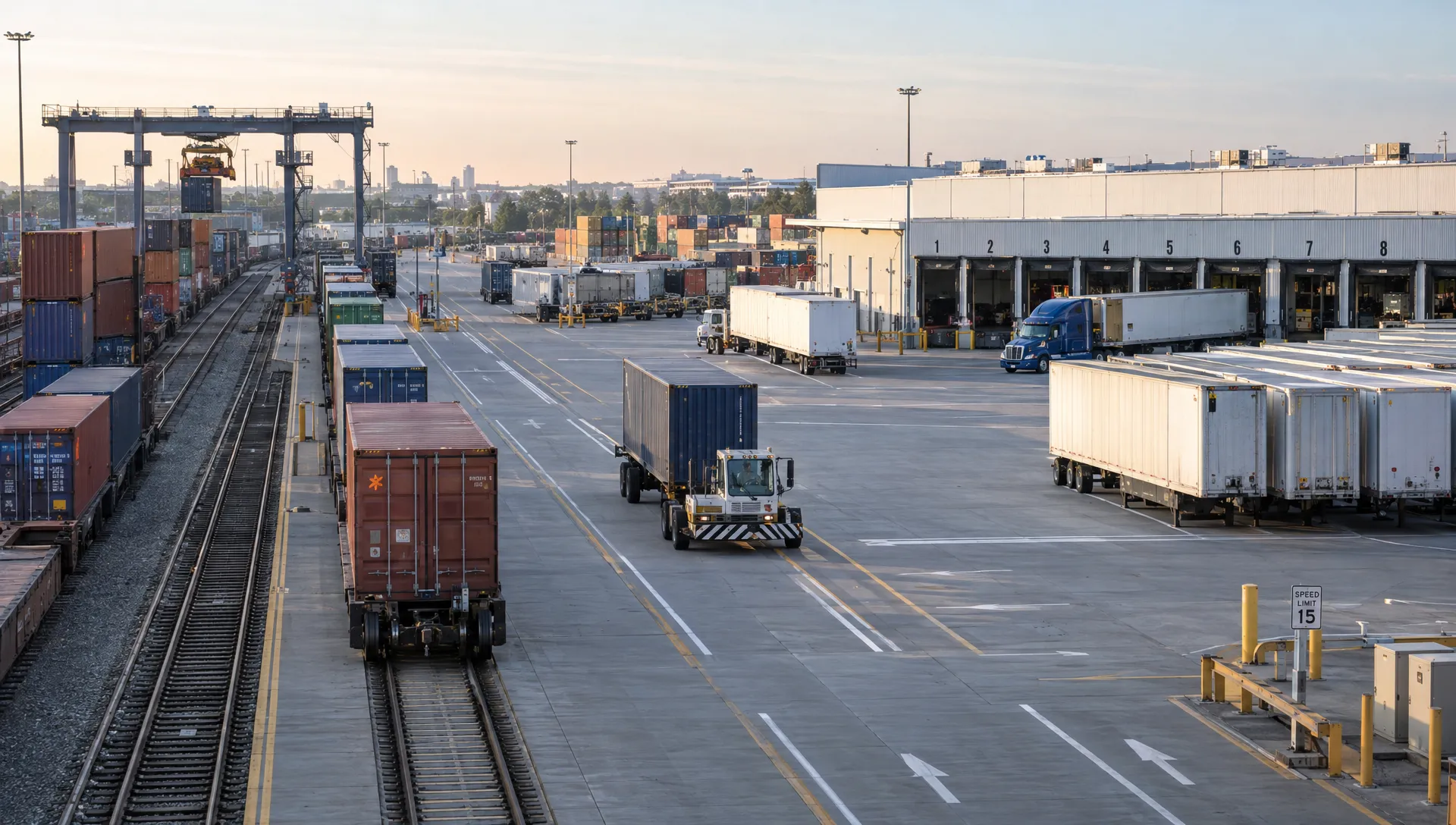
Port drayage | Match the loaded container to a documented route, suitable chassis and available receiving slot. Maintain contingency instructions for axle discrepancies, appointment changes and equipment substitution. The port release should trigger an executable delivery sequence rather than an unresolved weight assessment. |
Cross-dock transloading and warehousing | Use handling or buffer storage when it resolves a road-weight, receiving or inventory constraint. Validate floor loading, lifting capacity, packaging protection and outbound distribution. Unnecessary handling can add damage exposure without improving the route or delivery schedule. |
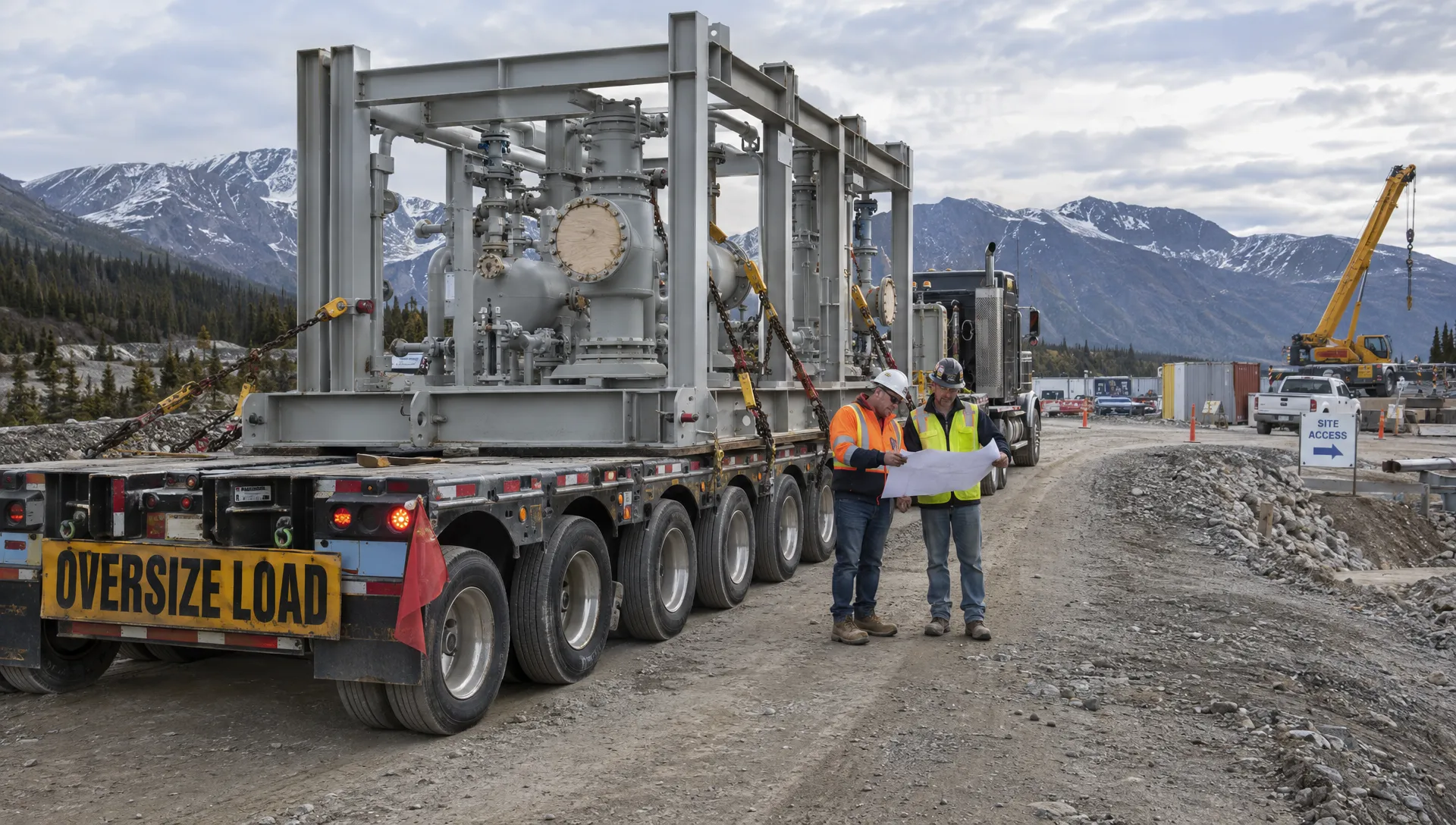
Project cargo and heavy haul | If a machinery unit is genuinely nondivisible, evaluate engineered heavy-haul equipment, route surveys and permitting. Oversized machinery may warrant a different ocean configuration upstream. Do not treat a standard container drayage arrangement as a substitute for a project-specific transport assessment. |
SHIPIT Logistics provides these services as coordinated end-to-end execution or standalone assignments. A drayage-only or transload-only scope still needs clear handoff responsibilities, especially when another provider controls the ocean booking, customs release or final delivery.
Build a Quote Package That Carriers Can Actually Price
Comparable quotes for overweight container drayage in Los Angeles start with a common operating basis. Send the same shipment data and service boundaries to every bidder, then require exceptions to be stated explicitly.
Include the following information:
Shipment and terminal: Container number when available, size/type, steamship line, terminal, availability, last free day and release or hold status.
Weight and cargo: Packed-container gross weight, container tare, packing list, piece weights, dimensions and loading diagram where concentrated weight is involved.
Route and receiver: Full delivery address, proposed staging or transload location, operating hours, appointment requirements and unloading method.
Special conditions: Hazardous-material classification when applicable, reefer needs, cargo value, security requirements and handling restrictions.
Scope and responsibility: Drayage-only versus transload or final delivery, permit applicant, equipment provider, scale procedure and empty-return obligations.
Ask each carrier to identify whether its price assumes ordinary legal weight, an eligible heavy-container corridor or a separately authorized nondivisible movement. Those are different operating cases and should not be compared as interchangeable rates.
Pro-Tip: Put the proposed tractor/chassis configuration, route basis and accessorial assumptions beside the rate in your bid comparison. Otherwise, the lowest quote may simply exclude the work needed to make the move executable.
Establish Change-Control Triggers
Revalidation should be mandatory when the container, weight, equipment or destination changes. A different tractor can change tare and axle loading; a substitute warehouse can invalidate the approved route.
Set explicit stop points for missing weight data, expired authorizations, an unacceptable axle reading or an inaccessible receiver. Assign one person to authorize the revised plan and document who communicates it to dispatch, the warehouse and the cargo owner.
For recurring overweight container drayage in Los Angeles, retain the approved configuration and scale records by shipment. Prior successful moves are useful planning references, but they are not standing authorization for a different container or combination.
Evaluate Total Exposure, Not Just the Heavy-Container Surcharge
A commercially useful rate identifies what is included and what can change. Potential charges include specialized chassis rental, permit administration, weighing, additional mileage, terminal waiting, pre-pull, storage, rehandling and unsuccessful delivery. Escorts or traffic-control costs belong in the estimate only when the actual permit or route requires them.
Request the billing trigger and rate basis for each material accessorial. Clarify whether permit costs are pass-through charges, whether chassis rental continues during warehouse delay and who pays for a second movement after an inaccurate weight declaration.
For overweight container drayage in Los Angeles, carrier qualification should cover operating authority where required, insurance, relevant heavy-container experience and current terminal-access eligibility. Confirm applicable TWIC, port registration and California emissions requirements for the assigned operation.
Distinguish motor-carrier liability coverage from cargo insurance. Review limits, deductibles, exclusions and subcontracting arrangements against the commodity and declared value. A certificate of insurance does not establish that every loss scenario is covered.
Finally, require evidence of execution: equipment identification, axle-weight verification, delivery receipt and empty-return confirmation. These records support cost review and claims handling while making the next comparable shipment easier to plan.
Frequently Asked Questions
Can a tri-axle chassis make an overweight container legal in Los Angeles? Not by itself. It may improve axle distribution, but gross weight, axle spacing, equipment ratings and route authorization still apply. Approve the actual tractor/chassis combination against the loaded container before dispatch.
Does a port overweight corridor permit cover delivery to any Los Angeles warehouse? No. Authorization is limited by the applicable program and permit conditions. Check every loaded segment, including the warehouse approach. A destination outside the authorized network may require a different facility, transloading or another lawful transport plan.
Who should obtain the overweight permit? Identify the applicant, permit holder and compliance responsibilities in the transport agreement. The carrier must operate within the authorization, while the cargo owner must provide accurate shipment data. Do not assume a terminal appointment or freight quote includes permitting.
When is transloading the better option? Consider it when the heavy container can legally reach a capable facility but cannot continue inland in that configuration. Confirm the outbound payload, handling method, securement and total cost before committing. Transloading does not legalize an unauthorized inbound move.
Send your terminal, packed-container weight, cargo details and delivery address to SHIPIT Logistics to discuss overweight drayage planning, standalone transloading or an integrated ocean-to-final-delivery solution.