Rail to Truck Transload Controls for Dust-Sensitive Cargo

Dust-sensitive cargo can turn a low-cost rail move into an expensive quality hold. A successful rail to truck transload requires more than available track, a conveyor and outbound trailers. The transfer must preserve product specifications while controlling airborne contamination, moisture, worker exposure and potentially combustible dust.
For procurement and logistics teams, the decision is whether a specific facility can execute a documented transfer within the receiving plant’s acceptance limits. That requires clear release authority, qualified equipment and an operating plan that survives late rail service, changing weather and rejected trucks. Evaluate those controls before comparing handling rates.
Establish acceptance gates before awarding the lane
Separate two risks: dust entering the cargo and dust escaping from it. Packaged electrical equipment may need protection from neighboring aggregate operations. A dry industrial powder may require containment to prevent product loss, cross-contamination and employee exposure. Some shipments face both problems.
For each rail to truck transload, translate the purchase specification into observable acceptance gates. Define permitted prior cargoes, cleaning evidence, moisture limits, packaging condition and any particle-size or contamination criteria. Identify which limits require laboratory testing and which can be checked at the loading position.
Specify who can release the railcar for unloading, authorize a change in transfer method and approve the outbound load. The terminal operator should not have to interpret an unfamiliar manufacturing specification while trucks queue outside.
Record the consequence of failure as well. A failed trailer inspection should trigger replacement equipment, not an improvised liner or reduced inspection standard. Suspected product contamination should trigger segregation and quality review rather than automatic blending with acceptable stock.
Pro-Tip: Attach the receiving plant’s acceptance criteria to the transload scope of work. A generic requirement for “clean, dry equipment” leaves too much room for disagreement after a rejection.
Classify the commodity and its exposure pathways
“Dust-sensitive” is not a complete handling specification. Product form, packaging integrity, chemical properties and downstream use determine the controls.
Cargo profile | Primary exposure pathway | Control to validate |
Dry mineral or battery-material intermediate | Prior-product residue, moisture or incompatible contact surfaces | Approved equipment materials, cleaning verification and protected connections |
Bagged additives or polymer feedstock | Torn packaging, dirty forks and airborne warehouse dust | Package inspection, clean handling equipment and segregated staging |
Crated electrical or automation equipment | Dust entering vents, seals or damaged protective wrapping | Intact barriers, protected transfer area and receiving inspection |
Dust-generating bulk solids | Release at hatches, conveyor transitions or truck loading points | Suitable containment, extraction and hazard-specific safeguards |
A rail to truck transload involving powder also needs a hazard review independent of the commercial quality review. Consult the safety data sheet, then resolve missing information about toxicity, reactivity and combustible-dust properties. Do not assume that a material is noncombustible because it is described as a mineral or industrial feedstock.
OSHA’s combustible dust resources explain the fire and explosion hazard. Qualified personnel should determine the appropriate controls for the actual material, process and equipment. Dangerous-goods classification, where applicable, creates additional transportation obligations; it does not replace the facility’s process-safety assessment.
Qualify the facility beyond its rail connection
Start with actual railroad service, spotting arrangements and usable unloading positions. A facility served by the right carrier can still be unsuitable if switching frequency, track capacity or operating restrictions prevent reliable access to the required handling bay.
Then inspect the transfer environment. Determine whether protection comes from an enclosed building, a canopy or only favorable weather. Check neighboring commodities, vehicle traffic, pavement condition and how doors or ventilation systems affect airborne dust. Outdoor storage next to an open aggregate pile is not equivalent to a protected staging area.
Facility qualification for a rail to truck transload should follow the cargo path, including temporary positions used during congestion. Confirm that a supposedly segregated product does not pass through shared hoppers, residual material piles or contaminated truck lanes.
Examine operational capacity at the constrained step: protected unloading positions, cleaning turnaround, sampling release or truck loading. Nominal tons per hour are not useful if only one approved trailer can be processed at a time.
The same capacity discipline applies to rail transloader design and equipment turns, but sensitive cargo adds quality-release constraints. Ask the operator to demonstrate those constraints during a realistic peak-day scenario, including a late railcar and an unavailable outbound truck.
Match transfer equipment to the product specification
Mechanical and pneumatic systems create different risks. Conveyors can introduce residue at belts, buckets and transitions. Pneumatic transfer can affect particle integrity, generate static or expose cargo to unsuitable conveying air. Neither method is automatically cleaner.
Specify product-contact materials, seal compatibility and acceptable lubricant exposure. Confirm whether the product tolerates the proposed transfer velocity, drop height and number of handling stages. Excessive attrition may produce fines that change downstream processing behavior even when total weight remains correct.
Equipment approval for a rail to truck transload should include hoses, gaskets, adapters, receivers and temporary fittings, not just the principal machine. A dedicated conveyor offers limited protection if its discharge hose previously handled an incompatible material.
Where conveying air contacts the product, define filtration and moisture requirements appropriate to the specification. Validate dust extraction under the planned operating conditions, including the effect of clogged filters or changing airflow. Extraction must control emissions without unintentionally removing valuable product fractions.
Maintenance and cleaning also need safe isolation procedures. OSHA’s hazardous energy control standard addresses applicable lockout/tagout requirements. Railcar securement and switching protection must be coordinated separately with the serving railroad and facility procedures before personnel begin work.
Build the pre-arrival packet around executable decisions
Send the facility more than a bill of lading. The operating packet should identify product grade, lot numbers, quantity, railcar configuration, outlet details, approved transfer method and receiving specifications. Include current safety information and escalation contacts with authority to stop or release the move.
For a rail to truck transload, require confirmation that connections and discharge geometry match the equipment on site. A railcar arriving with an unexpected outlet can create pressure to use unapproved adapters, extra handling or an exposed transfer arrangement.
Reconcile inbound quantity with the truck plan before arrival. Confirm legal payload by vehicle configuration and route, along with axle distribution, trailer volume and any permit requirements. Dense cargo can reach weight limits before a trailer is full; low-density material can exhaust available volume first.
Stage appointments against realistic spotting and unloading windows rather than the rail ETA alone. Define how the team will respond if a quality hold extends beyond the booked truck capacity. Verify destination receiving hours, unloading equipment and any appointment tolerance before releasing trucks toward the terminal.
Pro-Tip: Obtain written approval for the backup transfer method before the shipment moves. An alternate terminal or conveyor is not a valid contingency until its contamination controls and product compatibility have been reviewed.
Execute the transfer through documented hold points
Begin with railcar identity, seal condition and a visual condition check conducted under approved access procedures. Photograph relevant discrepancies before opening. Record damaged covers, evidence of water intrusion or residue that conflicts with the shipping documents.
Keep safety release separate from quality release. Confirm railcar protection and personnel readiness first, then verify equipment cleanliness and product identity. These checks should occur before connecting hoses or exposing cargo, not after the first material reaches the trailer.
During the rail to truck transload, maintain a traceable relationship between inbound lots, transfer equipment and outbound truckloads. If one railcar supplies several trucks, record the allocation. If multiple inbound lots feed a single outbound load, obtain approval for commingling beforehand and preserve the resulting genealogy.
Control emissions at each opening and transition. Select housekeeping methods appropriate to the material and hazard assessment. Avoid compressed-air cleaning or dry sweeping where they disperse hazardous dust. A standard shop vacuum is not a substitute for equipment suitable for the assessed dust hazard.
Capture operating interruptions, spills, filter alarms and departures from the approved setup. A brief loss of containment may require inspection or segregation even when production resumes quickly. Stop-work authority should be explicit, with a named escalation route and no requirement to wait for a commercial manager before securing an unsafe operation.
Protect the truck interface and outbound release
Inspect the actual trailer assigned to the load. Review prior-cargo information where required, then check floors, walls, roof, seals and discharge equipment for residue, odor, moisture or damage. Cleaning paperwork supports inspection; it does not replace it.
The truck side of a rail to truck transload needs its own contamination controls. Protect open receiving points, avoid placing caps or hose ends on the ground and prevent dirty exterior equipment from contacting product surfaces. Liners must be suitable for the commodity and handling method, not treated as a universal remedy for an unsuitable trailer.
Use the approved sampling plan rather than an improvised scoop from the most accessible location. Define sample timing, representative collection method, identification, retention conditions and custody. Specify whether laboratory results are required before departure or whether a documented conditional release is permitted.
Reconcile weights using equipment suitable for the commercial and regulatory purpose. Record unexplained discrepancies for investigation rather than assigning every variance to dust loss. The outbound release package should connect quantity, condition, sample status, seals and vehicle identity, with the receiver told about any approved deviation before arrival. Apply compatible cargo securement without compromising protective packaging or blocking inspection points.
Plan exceptions without sacrificing containment
Weather and service variability should be operating inputs, not surprises. Define stop conditions for precipitation, wind-driven contamination or environmental conditions outside the product’s approved limits. Set those limits from the commodity requirements and facility design rather than a generic terminal policy.
A delayed rail to truck transload can create competing pressures: railcar demurrage, truck detention and an approaching plant appointment. Pre-agree who decides whether to hold the railcar, use approved protected storage or reschedule the truck. Moving exposed cargo merely to stop an accessorial clock can increase total loss.
After a suspected contamination event, isolate the affected quantity and preserve evidence. Record the last acceptable inspection, equipment configuration, operating conditions and trucks already dispatched. Notify the cargo owner’s quality contact before making disposal, rework or blending decisions.
Resumption should require a documented cause assessment and corrective action appropriate to the event. Changing a filter may address airflow but not material already exposed to contamination.
For recurring lanes, keep a capacity-backed recovery option. Confirm the alternate facility’s railroad access, cleaning capability, compatible equipment and available truck routes. A nearby terminal with open space is not necessarily a qualified substitute, especially when it handles incompatible commodities or cannot preserve lot segregation.
Compare total rail to truck transload cost
Evaluate cost per accepted delivered unit, not the terminal’s handling charge alone. Include rail linehaul, switching, handling, cleaning, sampling, testing, storage, truck delivery and applicable accessorials. Add the cost of inventory tied up during transit and quality release where material to the decision.
The following is an illustrative comparison, not a market quote. Assume an approved 90-short-ton shipment splits into four legal truckloads of 22.5 short tons each.
Cost component | Illustrative amount |
Rail linehaul | $3,600 |
Switching | $400 |
Transload handling | $900 |
Sampling and testing | $200 |
Four truck deliveries at $650 | $2,600 |
Protected storage | $300 |
Total | $8,000 |
At $8,000, the delivered cost is approximately $88.89 per short ton. If equivalent direct trucking costs $8,600, the apparent advantage is $600. An additional $700 quality hold reverses that comparison before any production impact is counted.
A rail to truck transload business case should therefore test delayed switching, rejected trailers and extended release times. Confirm which charges are included, when free time expires and whose tariff or contract governs each event. Do not assume one clock covers railcar demurrage, terminal storage and truck detention. Assign responsibility for providing the timestamps needed to challenge disputed charges.
Keep ocean freight and port drayage aligned
For ocean-connected supply chains, decide where cargo should leave its international transport equipment. FCL shipments in standard 20-, 40- or 45-foot equipment, where available and suitable for the lane, and LCL shipments moving through a container freight station have different custody and handling interfaces. Reefers also require continuity of temperature control. None should be opened simply because transloading capacity exists.
Where port drayage precedes the inland move, coordinate terminal availability, appointments, chassis and container return deadlines. Dust-sensitive cargo needs a confirmed protected receiving position before a container is pulled, particularly when inspection or customs status restricts handling.
A rail to truck transload downstream must preserve the original lot identity through any earlier deconsolidation or warehouse transfer. The coordination principles behind port drayage and transloading remain relevant, but container demurrage and detention must be tracked separately from inland rail and terminal charges. Avoid reducing one fee by creating an unapproved exposure elsewhere.
Use air freight selectively for exceptions
Air freight can protect production when only a small replenishment quantity is urgent. For US imports, confirm foreign-origin pickup, international uplift, customs clearance coordination, airport transfer and final delivery, including temperature or security requirements where applicable.
For US exports, work backward from overseas delivery through factory pickup, applicable TSA-compliant screening arrangements, EEI/AES filing requirements and export controls. Validate airline acceptance and IATA/ICAO dangerous-goods requirements where applicable in either direction.
Do not route emergency air cargo through a dusty rail facility unless there is a specific operational need and a qualified handling environment. Keep the emergency replenishment plan separate from the bulk recovery plan, while reconciling quantities to prevent duplicate procurement or an unexpected inventory surplus. Compare the expedited shipment’s landed cost with the production exposure it is intended to reduce.
Coordinate project cargo and protected storage separately
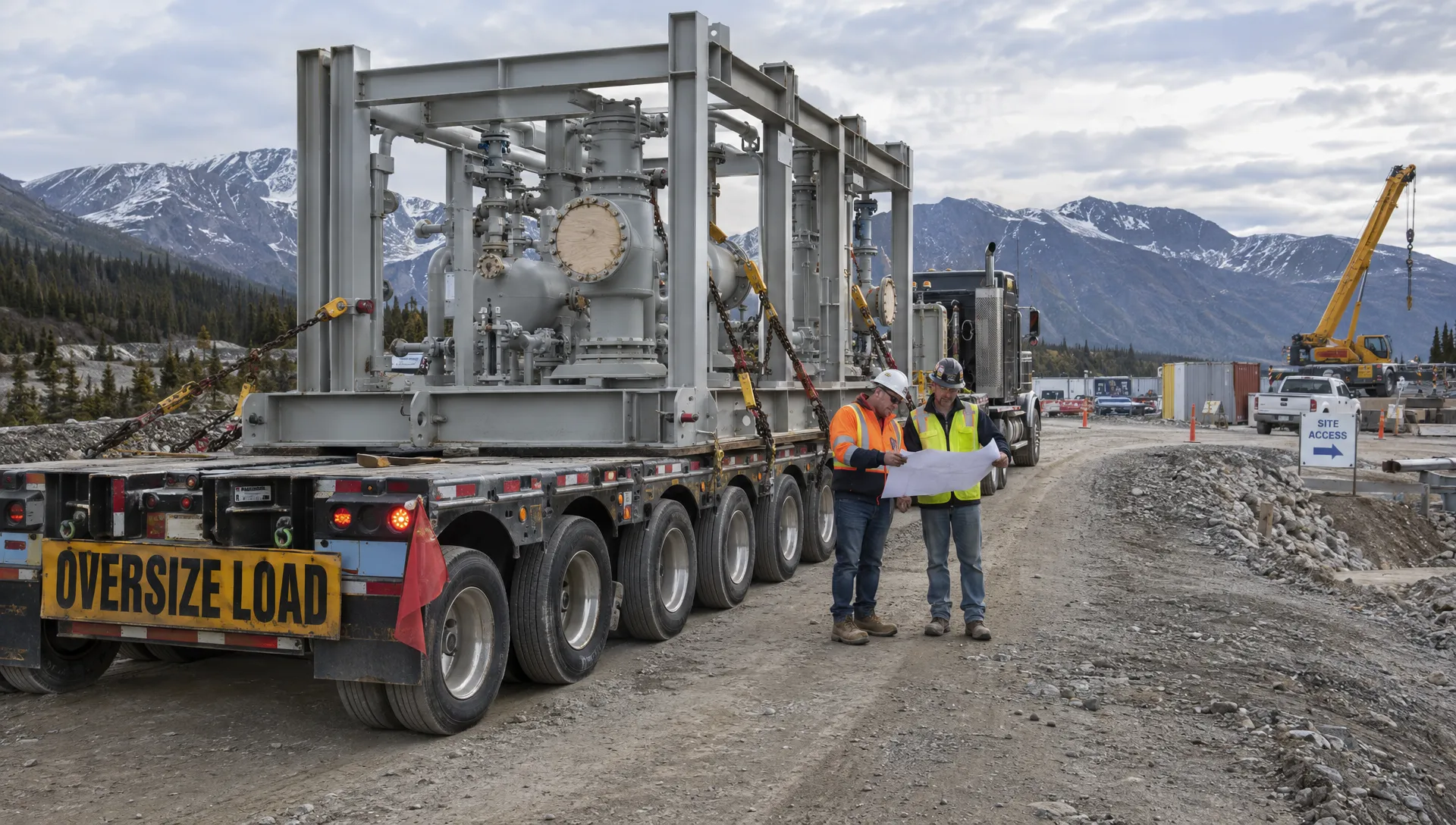
Heavy machinery and project cargo may require rail delivery followed by crane transfer, heavy haul or specialized final-mile transport. Dust controls must coexist with lifting plans, engineered support points, route surveys and site unloading capacity.
A rail to truck transload involving crated switchgear or process skids should preserve protective barriers during rigging and securement. The planning discipline used for heavy machinery hauling and transload controls is relevant, although each rail interface requires its own assessment.
Use buffer warehousing only when it solves a defined timing or inventory problem. Confirm segregation, environmental conditions and reinspection requirements before storage. SHIPIT Logistics can support end-to-end coordination or standalone services such as drayage, transloading and final-mile transport. Specialized dust-control capabilities must still be verified for the selected facility and cargo rather than assumed from a general service description.
Measure control performance alongside throughput
Track first-pass trailer acceptance, transfer-related quality holds, unexplained weight variance and contamination events alongside unloading time. Distinguish railroad arrival, placement, unloading start, quality release and final departure so that dwell has an attributable cause.
For recurring rail to truck transload programs, review performance by commodity and equipment configuration. An average across clean packaged freight and difficult bulk powders can conceal a failing process. Include sampling turnaround and trailer replacement time when determining realistic daily capacity.
Use the findings to revise appointment buffers, cleaning intervals and equipment assignments. Commercial reviews should address the cost of exceptions and recovery, not reward fast unloading when it produces rejected deliveries. A useful lane scorecard shows both operational speed and the percentage of cargo accepted without corrective handling.
Frequently asked questions
Can dust-sensitive cargo move through an outdoor transload facility? Sometimes, if the cargo remains protected and the validated transfer arrangement meets its specifications. A canopy alone does not establish control over windblown dust, moisture or neighboring operations.
When should transfer equipment be dedicated? Dedication is appropriate when prior-product residues create unacceptable quality or safety risks and cleaning cannot be reliably validated. Assess the complete product-contact path, including hoses, adapters and receivers.
Who should release cargo after a contamination concern? The party designated in the operating agreement, typically the cargo owner’s authorized quality function, should decide product disposition. The terminal should stop, isolate and document the event rather than independently approve questionable material.
Discuss your commodity, receiving specifications and delivery constraints with SHIPIT Logistics. Scope the rail interface, transload controls and outbound transport as an integrated program or request standalone support where your operation needs it.