Warehousing and Logistics Services for Reefer Port Holds

For reefer port holds, warehousing and logistics services are useful only when they change an executable recovery decision: preserve temperature, move cargo under the correct authority or remove a downstream delivery constraint. Booking cold storage before confirming those conditions can add handling costs without shortening the hold. The operating priority is to establish who controls release, where the container can legally move and how refrigeration will remain supported through every handoff.
Confirm the hold before dispatching equipment
A container can be commercially released but still unavailable for pickup. It can also leave a terminal under an authorized movement without being cleared for distribution or use. Treat these as separate statuses.
Constraint | Evidence to obtain | Dispatch implication |
Government hold or examination | Current agency instructions, broker confirmation and any movement authorization | Do not assume an ordinary warehouse can receive the cargo |
Carrier release restriction | Confirmation that documentation and payment requirements are satisfied | Customs release alone does not establish carrier release |
Terminal restriction | Availability, examination location, appointment status and applicable pickup requirements | A truck appointment does not override another restriction |
Consignee quality hold | Written disposition instructions from the cargo owner's quality authority | Physical delivery does not authorize consumption, processing or sale |
Record the status, timestamp and responsible party for each restriction. A generic milestone labeled “released” is insufficient when different organizations control movement and product disposition.
When warehousing and logistics services can support recovery
Off-port storage becomes useful when the container can legally leave, a qualified facility can receive it and the move resolves a specific constraint. Examples include a receiver that cannot accept delivery, a documented sampling arrangement or an inventory buffer that protects a production schedule.
An examination transfer is different. Follow the designated examination process and obtain the required approvals rather than routing the container to a convenient commercial facility. Likewise, an FDA-related restriction requires attention to the actual agency instructions. FDA import alerts can identify products subject to detention without physical examination, but the shipment's disposition still depends on its case-specific status.
Maintain two explicit authorizations: permission to move and permission to use or distribute. The controls described in managing customs and quality holds separately become relevant after an authorized receiving location is established.
Keeping the reefer powered at the terminal may remain the least disruptive choice if release is imminent and off-port handling introduces more risk than it removes.
Assign each freight modality a specific recovery job
Ocean freight: protect the held lot and the next booking
For FCL reefers, confirm carrier instructions, temperature settings, equipment condition and terminal power arrangements before planning removal. For temperature-sensitive LCL, verify the consolidation and deconsolidation environment; ordinary CFS handling should not be assumed suitable.
Use warehousing and logistics services to support an approved recovery plan, not to compensate for an unsuitable ocean service. Review the next shipment's routing, documentation and receiving window separately. Buyer's consolidation can reduce fragmented arrivals, but only when cargo compatibility and temperature requirements permit it.
Air freight: replace critical supply in either direction
For US imports, evaluate a separate replacement shipment from foreign pickup through international uplift, US customs clearance coordination, airport transfer and final-mile delivery. NFO or AOG-style urgency does not eliminate screening, dangerous-goods acceptance or temperature-control requirements.
For US exports, build the reverse chain: factory or warehouse pickup, TSA-compliant handling and screening through the applicable IAC/carrier program, EEI filing in AES when required, international uplift and destination clearance and delivery.
Compare both options against production downtime and remaining shelf life. Apply the relevant IATA/ICAO dangerous-goods requirements on either trade lane. A held ocean lot cannot simply be diverted to air without the necessary movement and export permissions.
Port drayage: make pickup conditional on receiving readiness
For the inland move, warehousing and logistics services must connect terminal availability with an executable truck-and-dock plan. Confirm release status, a suitable chassis, legal operating weight, refrigeration power and an accepted receiving appointment before dispatch.
Specify a functioning genset where required, fuel sufficiency, monitoring responsibilities and the response to a missed appointment. The handoffs covered in matching trucking services to port and final delivery matter particularly when a driver cannot safely wait through an unplanned receiving delay.
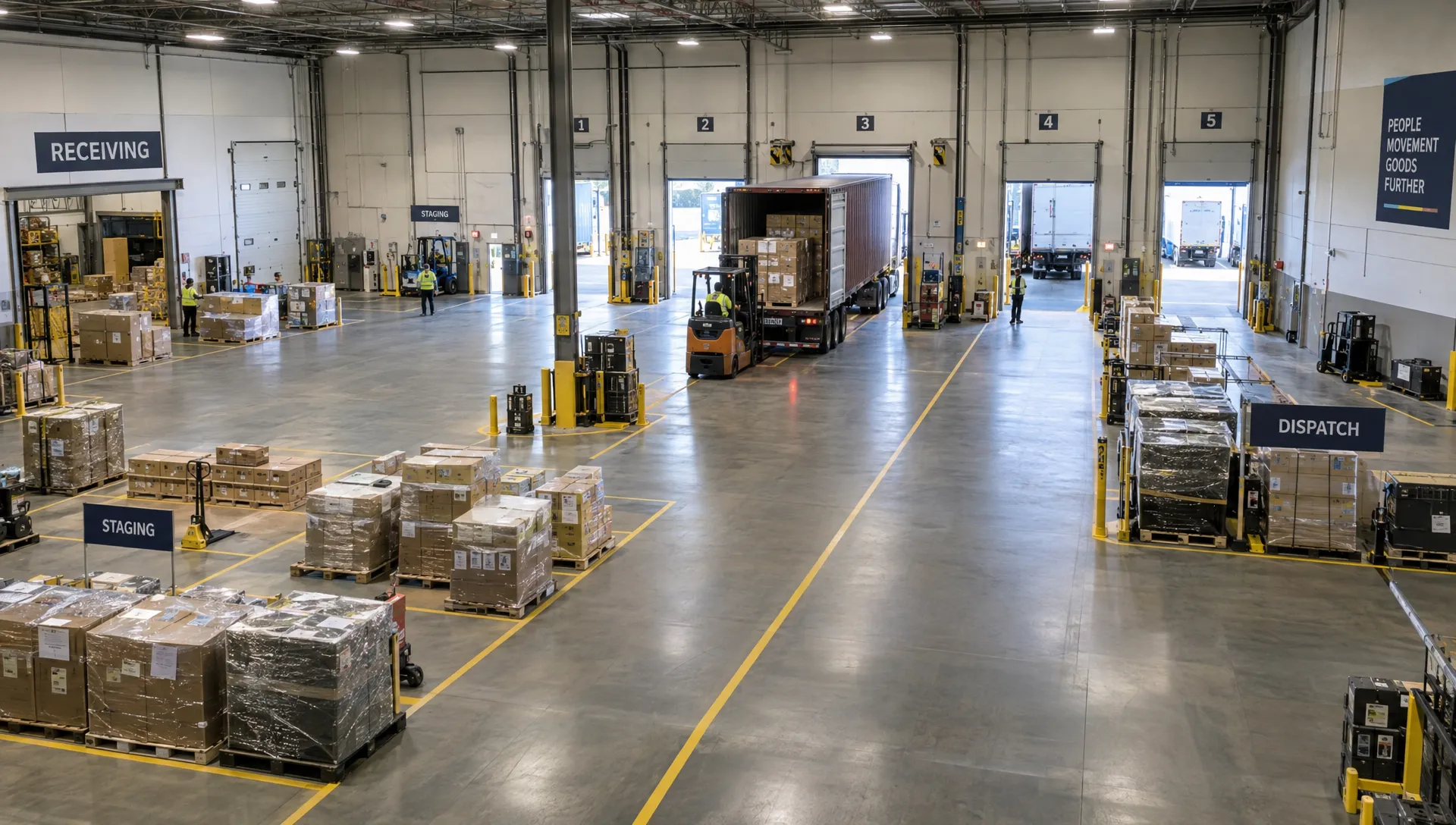
Cross-docking and warehousing: choose dwell deliberately
Cross-docking fits cargo that is authorized to move onward and has a confirmed outbound vehicle. It is a poor substitute for storage when sampling, consignee capacity or quality disposition remains unresolved.
Buffer warehousing requires a defined temperature range, compatible handling environment, segregation controls and a release process. Assess pallet positions, packaging condition, dock exposure and backup arrangements before acceptance. Do not apply a standard container-to-trailer consolidation ratio to reefer cargo without checking pallet geometry, weight, airflow and product compatibility.
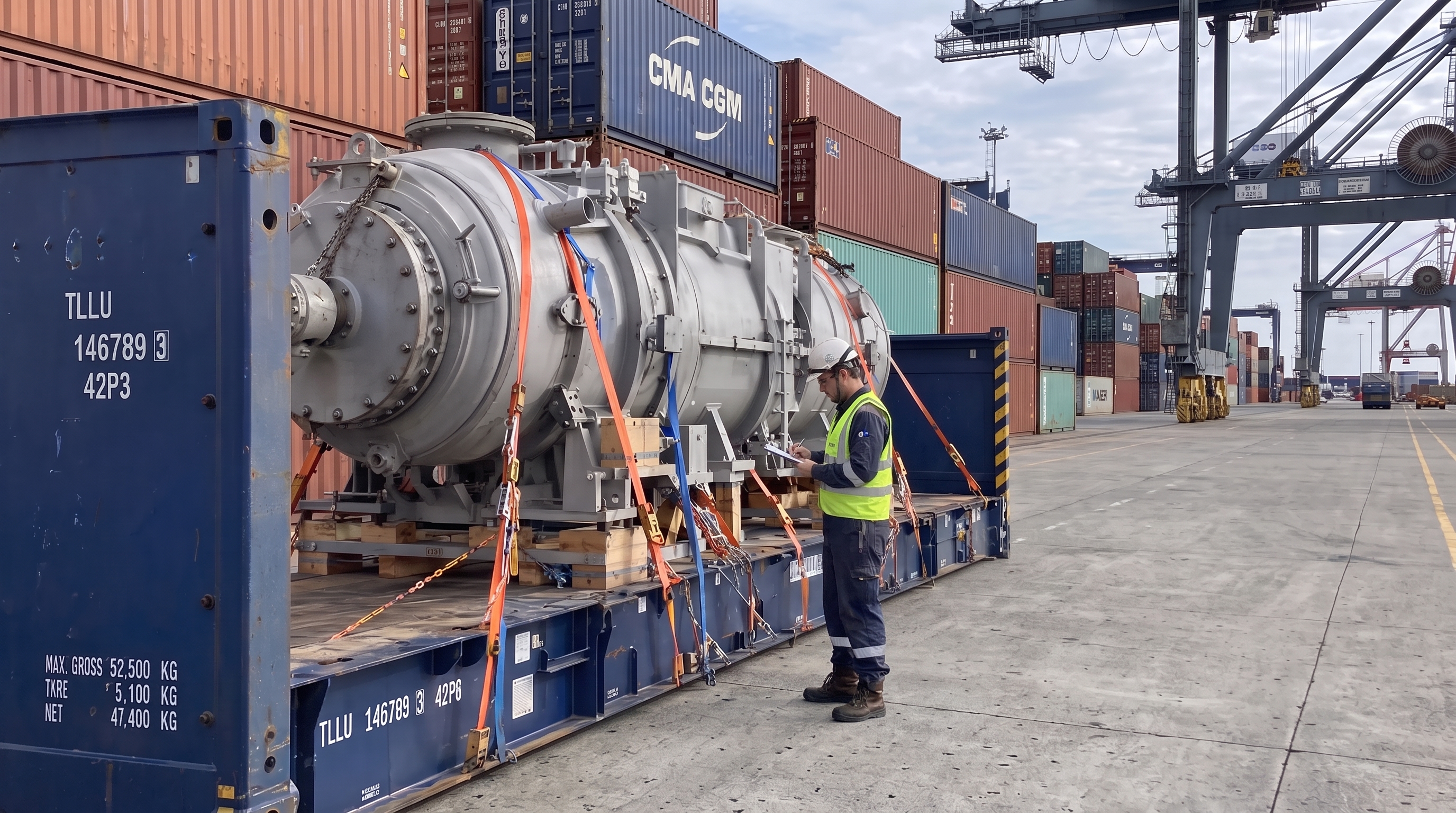
Project cargo and heavy haul: remove the facility constraint
A delayed refrigeration skid, generator or power module may be the reason a receiving site cannot accept reefer inventory. In that case, the recovery plan has two workstreams: protect the temperature-sensitive goods and deliver the enabling equipment.
OOG ocean or breakbulk routing, heavy-haul permits, route surveys, lifting arrangements and installation sequencing belong on that second workstream. Expediting a component by air may help commissioning, but it does not replace the engineering needed to deliver and position the larger equipment.
Engineer a power-to-power handoff
The critical transfer is not simply terminal-to-truck or truck-to-warehouse. It is the transition between verified temperature-control arrangements.
Before terminal departure, capture the container number, seal number, required setpoint, available alarm information and accessible temperature records. Confirm who is authorized to change settings. A difference between supply-air and return-air readings is not, by itself, permission to adjust the unit.
During transit, define power continuity, monitoring ownership and the escalation contact. A genset reservation is not evidence that the equipment is operating correctly. Establish how the driver verifies operation and what happens if the receiving appointment fails.
At destination, warehousing and logistics services should preserve the evidence needed for a defensible receiving decision. Record arrival time, seal condition, visible damage, available logger data and the transition into controlled storage. Product probing, sampling or package opening should follow the cargo owner's approved procedure.
Reefer controller data describes equipment conditions, not necessarily product core temperature. Where a potential excursion exists, preserve the records and obtain a quality disposition rather than allowing an operating team to infer product acceptability.
Compare avoidable costs, not headline storage rates
A cold-storage rate can look attractive while the complete recovery move costs more than continued terminal dwell. Compare costs over the expected remaining delay, then test a longer-delay scenario.
Include terminal storage or demurrage, reefer electricity charges where applicable, drayage, genset use, handling, external storage, detention, examination-related transport and empty return. Confirm which charges continue after gate-out. Moving a loaded container does not automatically stop equipment detention.
Illustrative calculation, not a market quote: Assume avoidable terminal costs are $650 per day, external storage is $200 per day and incremental drayage, genset, handling and return costs total $1,450. The simplified break-even point is $1,450 ÷ ($650 minus $200), or approximately 3.2 days. At four days, the modeled costs are $2,600 at the terminal versus $2,250 off-port.
That calculation excludes detention, examinations, testing and quality risk. Add each where it applies, account for minimum charges and use actual billing increments. If a required authority has not approved movement, the cheaper option is not executable.
Procure warehousing and logistics services against this complete cost comparison. Preserve tariffs, availability records, invoices and communications for billing review; a government hold does not automatically waive charges. The FMC's demurrage and detention billing requirements provide the regulatory framework for covered invoices and dispute procedures.
Issue one release-to-dispatch record
The broker, carrier, terminal, trucker, warehouse and consignee should work from one controlled instruction set. Keep operational authority visible without treating an email chain as the only record.
The dispatch record should contain:
Movement authority: Current government, carrier and terminal statuses, approved destination and any restrictions on diversion or unloading.
Temperature requirements: Approved range or setpoint, monitoring method, power arrangements and the escalation procedure.
Physical execution: Container and seal identifiers, chassis and genset requirements, appointments, receiving contact and empty-return instructions.
Disposition controls: Hold status at receipt, sampling authority, segregation requirements and the party authorized to release inventory.
Commercial approval: Authorized spend, accessorial approval rules and responsibility for documenting exceptions.
Use explicit cancellation triggers. A renewed hold, missed receiving window, failed genset check or destination change should stop dispatch until the relevant instruction is revalidated.
When scoping warehousing and logistics services, distinguish the accountable coordinator from the party performing each task. A forwarder may coordinate customs brokerage, a motor carrier may control transit power and the cargo owner may retain sole authority over product disposition. Those responsibilities should not disappear behind a single service-order number.
Escalate against cargo tolerance and operating deadlines
Set escalation points using the shipment's actual constraints, not a generic daily status call. Relevant triggers include a reefer alarm, loss of power, missing temperature records, an approaching pickup cutoff or a receiving appointment that no longer matches the release forecast.
For pharmaceutical inputs, involve the designated quality authority when the approved temperature envelope may have been exceeded. For chilled industrial materials, use the manufacturer's documented handling limits. Do not assume that restoring the setpoint resolves an earlier exposure.
Escalation should produce a decision: continue powered terminal dwell, execute an authorized transfer, arrange replacement supply or revise the receiving plan. Assign an owner and deadline to that decision.
The scope of warehousing and logistics services can then remain modular. A shipper may need drayage only, an approved transload, buffer storage or coordinated end-to-end execution. Confirm the required temperature capability, facility suitability and operating responsibilities before awarding any scope; general warehousing availability does not establish reefer suitability.
Frequently Asked Questions
Can a reefer move to cold storage while a customs or agency hold remains open? Sometimes, but only through an authorized movement to an acceptable destination under the applicable conditions. Obtain shipment-specific confirmation from the broker and relevant authority. Permission to move does not necessarily permit unloading, distribution or use.
Does moving a reefer off-port stop demurrage and detention? Gate-out may end some terminal-related charges, while equipment detention can continue until the container is returned under the applicable terms. Verify each charge's trigger, free-time allowance and stopping event rather than treating all port costs as one clock.
Can air freight protect production while the ocean shipment remains held? A separately compliant replacement shipment may protect production. Scope US air imports or US air exports according to origin, screening, customs, dangerous-goods and delivery requirements. The replacement does not resolve the held lot's release or quality disposition.
Discuss the hold status, cargo tolerance, remaining free time and receiving constraints with Shipit Logistics. Request a scoped recovery plan covering the required standalone service or coordinated ocean, air, drayage, warehousing and project-cargo workstreams, with temperature-control requirements and execution responsibilities confirmed before dispatch.