Supply Chain Warehouses That Improve Port Flow

Updated: Oct 1
Port congestion is often discussed as a terminal problem, but supply chain warehouses are part of the freight-flow picture too. Cargo rarely slows down at the port for one reason only. A container may be available, but the drayage appointment is missed. A truck may be ready, but the receiving warehouse has no labor. A shipment may be urgent, but the cargo still needs to be stripped, sorted, inspected, repacked, and routed before it can move inland.
That is where supply chain warehouses become strategic. The right warehouse is not just a place to store inventory. It is a pressure-relief point that helps cargo leave the port, frees equipment, improves appointment reliability, and gives importers, exporters, forwarders, and brokers more control over freight flow.
In a tighter logistics environment, the best warehouses near ports are designed around motion. They connect drayage, transloading, storage, trucking, ocean freight, air freight, customs coordination, and final delivery into one operating plan.
What makes a warehouse improve port flow?
A warehouse improves port flow when it helps freight move out of constrained nodes faster and with fewer exceptions. This sounds simple, but it requires more than available square footage.
A port-flow warehouse must answer practical operational questions every day. Can containers be received at the right time? Can the team unload quickly enough to return empties before deadlines? Can cargo be sorted by purchase order, SKU, destination, or mode? Can outbound trailers be staged before the freight is even stripped? Can updates move fast enough for logistics managers to make decisions before delays become fees?
In other words, the warehouse acts as a control point between international transportation and domestic distribution. When it is well run, it reduces friction between the marine terminal, airport, rail ramp, drayage carrier, transload crew, truckload carrier, LTL network, and consignee.
The U.S. Bureau of Transportation Statistics tracks port capacity and performance through its Port Performance Freight Statistics Program, which reflects how important port throughput is to the wider freight system. But for an individual shipper, throughput is not just a national metric. It shows up as container dwell, chassis availability, warehouse appointment availability, empty return timing, and delivery reliability.
The difference between storage space and flow space
Many warehouses can hold freight. Far fewer are designed to accelerate it.
A storage-first facility is useful when inventory needs to sit for days, weeks, or months. A flow-first facility is built to move cargo through a time-sensitive sequence, often within hours or a small number of days. For port cargo, that difference matters.
Warehouse function | Best use case | How it affects port flow |
Transload warehouse | Moving cargo from import containers into domestic trailers, pallets, or other equipment | Helps return ocean containers faster and reduces reliance on scarce port equipment |
Cross dock facility | Rapid transfer from inbound to outbound transportation with minimal storage | Shortens handling time when cargo is already allocated and ready to route |
Centralized warehouse | Consolidating receiving, inventory, and outbound planning in one location | Reduces fragmented decision-making and improves carrier coordination |
Export consolidation site | Staging domestic freight before ocean or air export | Helps meet port cutoffs and avoids last-minute cargo misses |
Project cargo staging facility | Holding oversized, heavy lift, or specialized freight before coordinated transport | Allows permits, equipment, labor, and delivery windows to align before movement |
Strong supply chain warehouses may support more than one of these functions, but the operating model must be clear. If a facility is being used for transloading, it should have the labor, doors, yard process, appointment discipline, and outbound carrier plan to support fast turns. If it is being used for inventory, it should have the systems and controls to maintain accuracy.
For shippers comparing models, the distinction between general storage and fast freight movement is important. SHIPIT Logistics covers this operational difference in more detail in its guide to general warehousing vs transload space.
How transloading creates better port velocity
Transloading is one of the most effective ways supply chain warehouses can improve port flow, especially for import containers arriving through busy gateways.
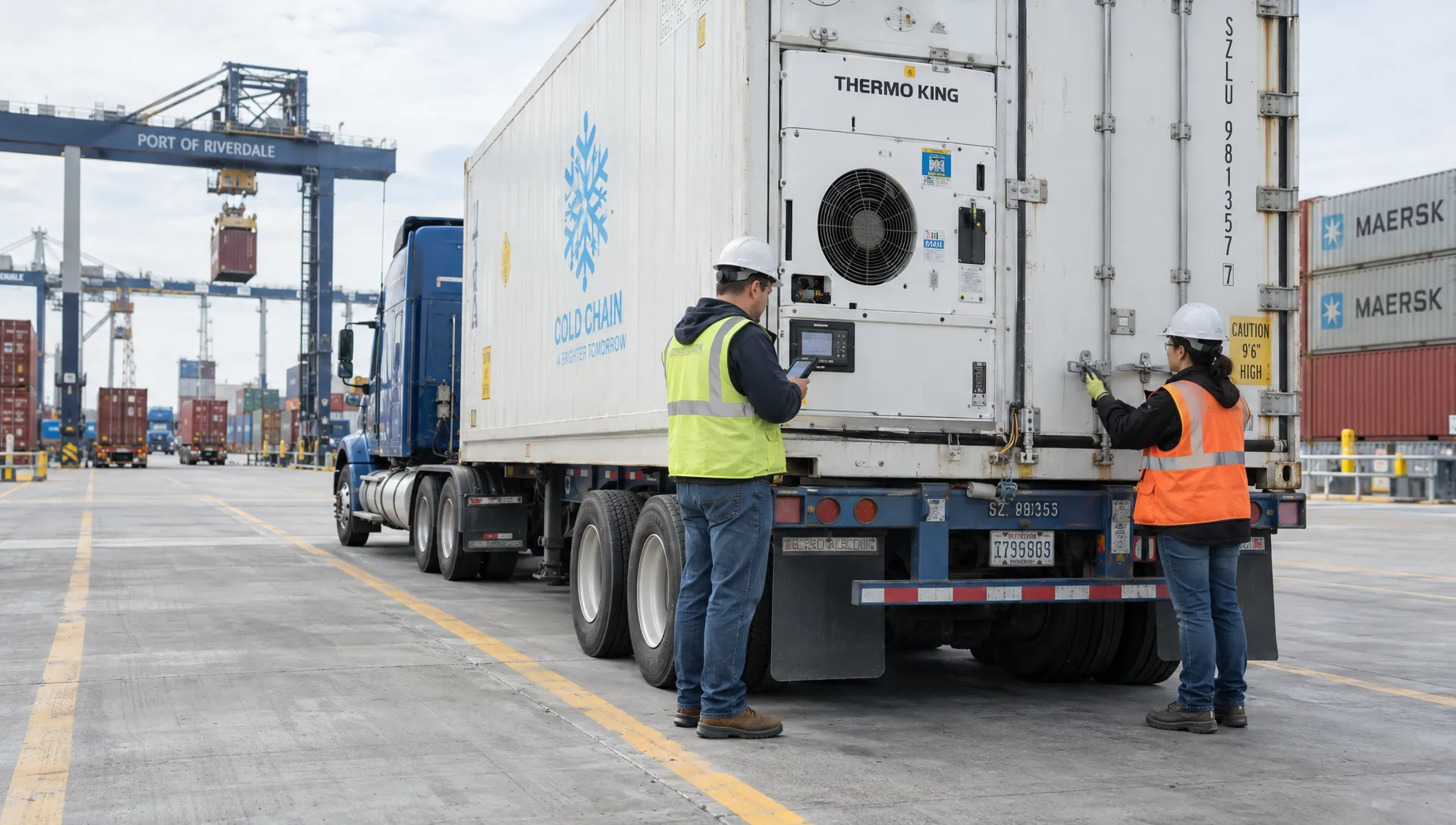
The basic process is straightforward. A container is pulled from the terminal by a drayage carrier, delivered to a nearby warehouse, unloaded, and the cargo is transferred into the next mode. That next mode might be a 53-foot domestic trailer, an LTL shipment, a rail move, a flatbed, or staged inventory for later distribution.
The value comes from what transloading enables:
Faster empty container return when the warehouse can unload efficiently.
Better use of domestic equipment by converting international containers into trailers suited for inland distribution.
Destination-level routing when freight from one container needs to move to multiple warehouses, retailers, job sites, or fulfillment nodes.
Reduced terminal dependency because freight can leave the port area before all downstream decisions are final.
Improved exception handling when cargo needs inspection, labeling, palletizing, rework, or segregation.
Transloading does not remove the need for good drayage. It makes drayage more valuable by shortening the cycle between terminal pickup, warehouse unloading, and empty return. When drayage and transload teams operate separately, handoff gaps can create delay. When they are coordinated, the warehouse becomes part of the port recovery and velocity strategy.
For importers focused specifically on container movement, this is the reason port drayage and transloading work best as a combined process, not as disconnected services.
Where supply chain warehouses fit in ocean, air, drayage, and trucking
Port flow is not limited to ocean containers. Air freight also depends on warehouse execution, particularly when cargo is urgent, high value, consolidated, or moving to multiple destinations. A shipment may arrive by air to recover a production shortage, but if the receiving process is slow, the speed advantage disappears.
For ocean imports, a warehouse can receive FCL or LCL cargo, strip containers, sort freight, stage outbound loads, and coordinate truckload or LTL delivery. For air imports, it can support pickup, breakdown, short-term storage, repacking, and expedited delivery. For exports, it can consolidate cargo from multiple domestic origins before delivery to an ocean terminal, airport, or container freight station.
The best networks connect these modes rather than treating them as separate transactions. A BCO may need ocean FCL for steady replenishment, air freight for urgent exceptions, drayage for port pickup, transloading near the gateway, and truckload delivery to a distribution center. A freight forwarder may need a partner that can handle only the import drayage and transload portion for a customer shipment. A broker may need temporary port-adjacent capacity to protect a delivery appointment.
In each case, the warehouse is the physical point where the international leg becomes a domestic supply chain decision.
Warehouse capabilities that protect port flow
Supply chain warehouses that improve port flow usually have a different operating profile from a standard inventory building. Location matters, but it is not the only factor. A facility that is close to a port but slow at receiving can still create congestion. A facility slightly farther away but better coordinated may deliver a faster total cycle.
Key capabilities include:
Drayage coordination: The warehouse must align receiving capacity with terminal availability, driver hours, chassis status, and empty return options.
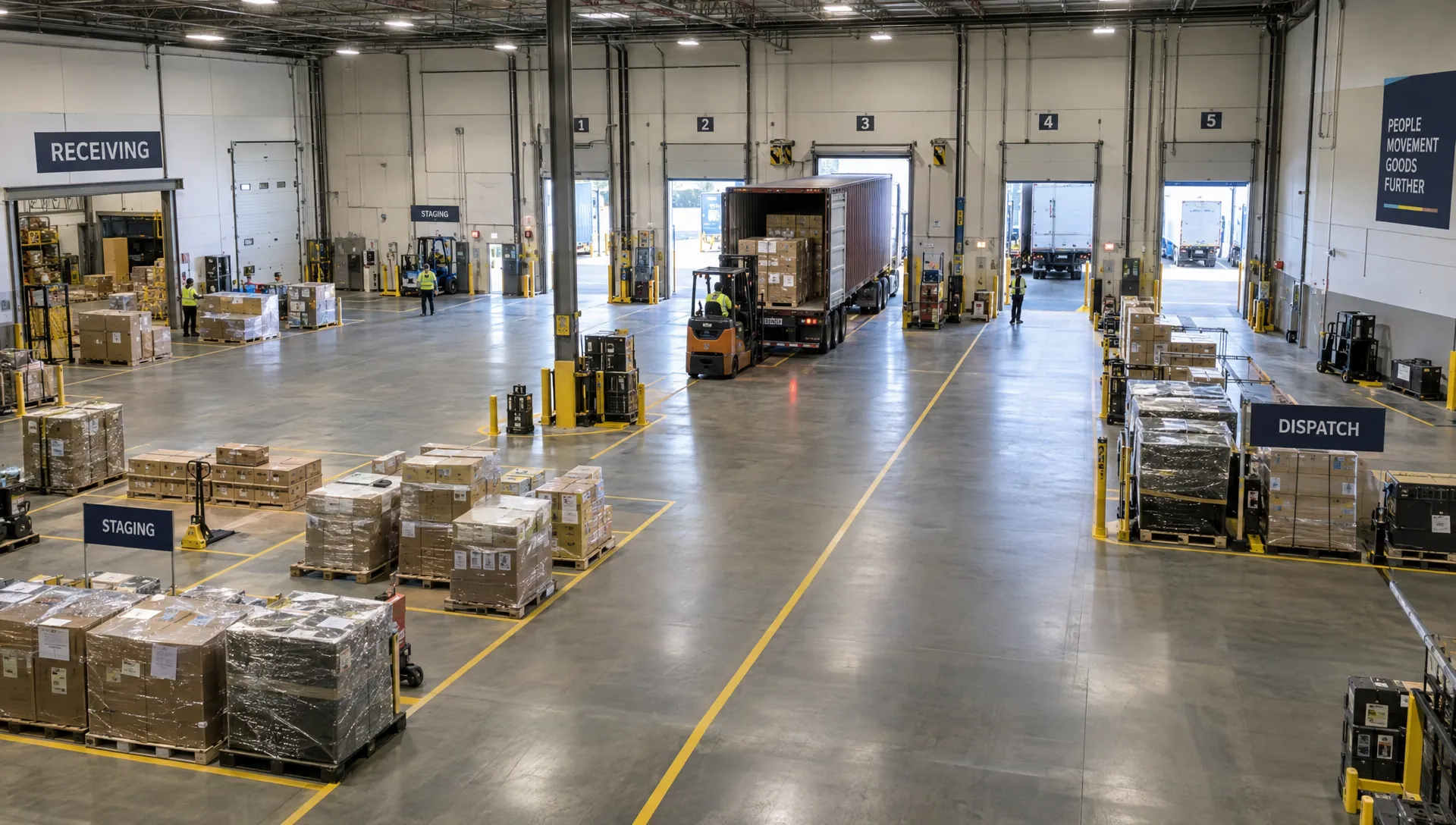
Fast unload and reload capacity: Labor, equipment, dock doors, and yard discipline must support container stripping and outbound loading without long queues.
Flexible cargo handling: The facility should be able to handle floor-loaded freight, palletized cargo, cartons, oversized pieces, project cargo, and special instructions when required.
Visibility and exception communication: Shippers need timely updates on container receipt, unload status, discrepancies, damages, outbound dispatch, and proof of delivery.
Outbound carrier access: The warehouse should connect cleanly to LTL, truckload, flatbed, step deck, specialized trucking, and final-mile delivery options.
Customs and documentation awareness: International cargo often involves release timing, holds, exams, insurance, packing lists, commercial documents, and compliance requirements.
This is also why warehouse selection should not be based on rent alone. The cheapest facility can become expensive if it increases detention, demurrage, missed delivery appointments, rework, or inventory uncertainty.
The Federal Maritime Commission’s demurrage and detention billing requirements have increased attention on billing clarity, timing, and dispute rights, but the operational goal remains the same for shippers: move cargo in a way that prevents avoidable charges in the first place.
Import flow: getting containers off the terminal faster
For importers, the warehouse decision often starts with one question: how quickly can we get cargo out of the terminal and into a controlled environment?
Supply chain warehouses help importers by creating a receiving plan before the vessel arrives. That plan should account for estimated time of arrival, free time, terminal appointment availability, drayage capacity, warehouse labor, consignee requirements, and outbound routing.
Once the container reaches the warehouse, the objective is to reduce idle time. If freight is already assigned to destinations, the team can transload directly to outbound trailers. If the cargo needs inspection, labeling, palletizing, or allocation, the warehouse can perform those steps while the ocean container is unloaded and returned.
This is especially valuable when importers need to rebalance inventory across regions. Instead of sending every container to a distant distribution center, a port-adjacent warehouse can break down the freight near the gateway and route it more precisely.
For Los Angeles and Long Beach cargo, site selection is particularly important because port proximity, freeway access, truck routes, yard capacity, and appointment reliability all affect cycle time. SHIPIT Logistics outlines these considerations in its guide to warehousing near the Los Angeles and Long Beach ports.
Export flow: staging freight before cutoffs
Exporters face a different version of the same problem. The warehouse must help freight arrive at the port or airport in the right condition, with the right documents, before cutoff.
Export-focused supply chain warehouses can receive cargo from multiple suppliers or plants, consolidate shipments, verify counts, prepare loads, stage containers, and coordinate delivery to the terminal. This is useful for manufacturers, agricultural exporters, industrial shippers, and project cargo teams that cannot risk a missed sailing or aircraft departure.
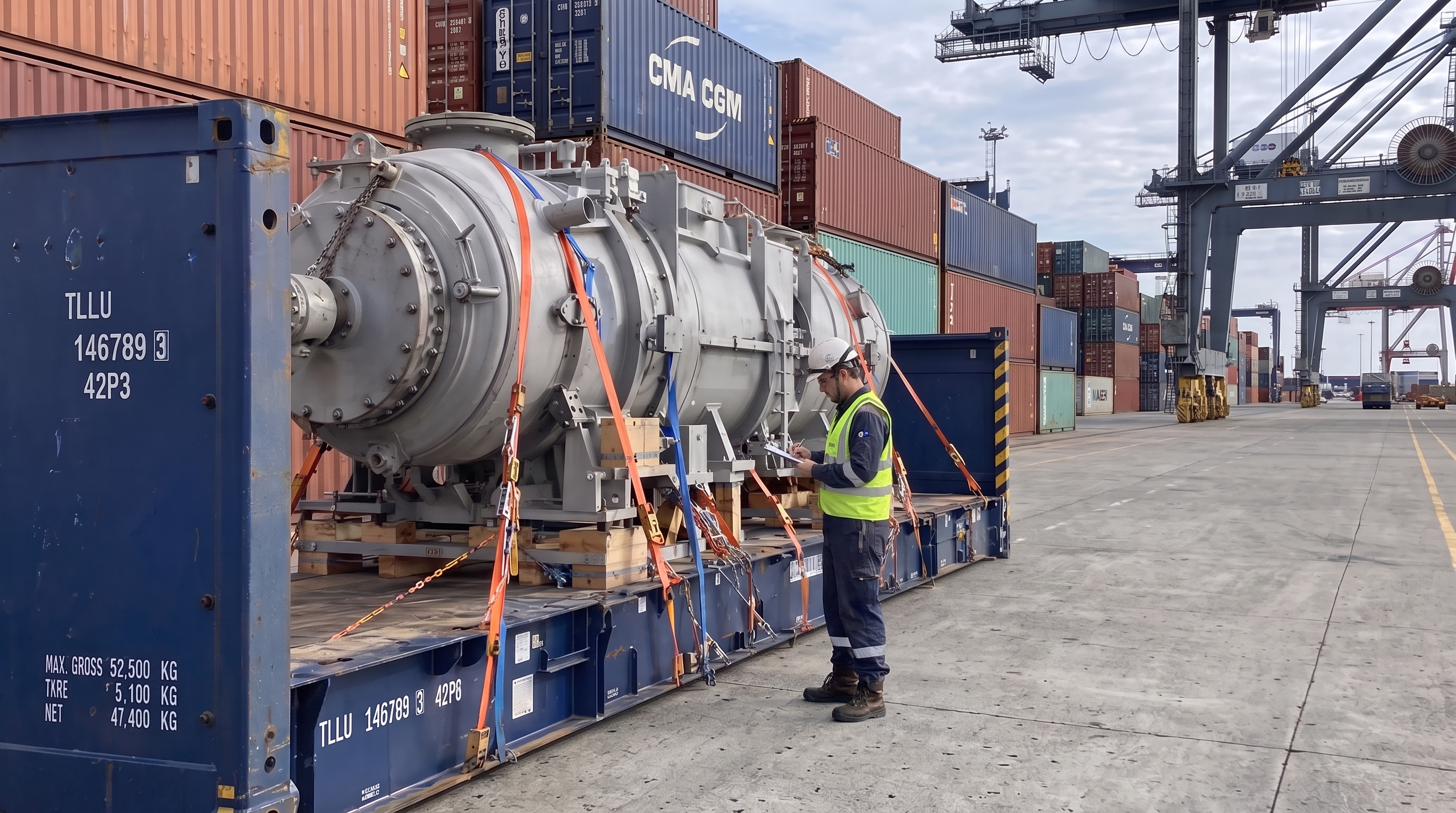
For heavier or specialized cargo, warehouse planning becomes even more important. Flatbed, step deck, double drop, oversized, and out-of-gauge movements require the timing of permits, equipment, cranes, escorts, and receiving crews. Staging the freight at the right facility helps prevent expensive waiting time and missed windows.
Export warehousing also supports ocean and air mode decisions. If a full container is ready, the cargo may move by ocean FCL. If the shipment is smaller, ocean LCL or air freight may fit better. If an urgent order needs to depart immediately while the balance follows by sea, the warehouse can help split and route the cargo accordingly.
Metrics that show whether a warehouse is improving flow
Supply chain warehouses should be measured by how they improve the movement of freight, not only by how much cargo they can hold. For logistics managers, brokers, forwarders, and BCOs, a few practical metrics can reveal whether the facility is helping or hurting port flow.
Metric | Why it matters | What good performance indicates |
Container dwell after availability | Shows how long cargo waits before terminal pickup | Drayage and appointment planning are aligned |
Warehouse turn time | Measures how quickly containers are received, unloaded, and released | Labor and dock capacity match inbound volume |
Empty return cycle | Tracks time from terminal pickup to empty return | Transload process is protecting equipment flow |
Outbound dispatch time | Measures how quickly cargo moves after unloading | Routing decisions and carrier capacity are ready |
Exception aging | Tracks how long discrepancies, holds, or damages remain unresolved | Communication and escalation processes are working |
Cost per routed unit | Connects warehousing cost to freight outcome | The warehouse is improving total landed cost, not just adding a handling fee |
These metrics are most useful when reviewed across the full chain. A warehouse can have a low storage rate but still create higher total cost if it slows empty returns or causes missed delivery appointments. Conversely, a slightly higher-cost transload operation may reduce total expense by cutting dwell, improving trailer utilization, and preventing downstream disruption.
How an integrated provider supports end-to-end flow
Many port delays happen in the gaps between vendors. The steamship line, terminal, drayage provider, warehouse, customs broker, freight forwarder, truckload carrier, and consignee may all be doing their individual jobs, but if no one owns the full sequence, the cargo can still stall.
An integrated logistics provider helps by coordinating the plan across modes and handoffs. For example, SHIPIT Logistics can support international freight forwarding, warehousing and fulfillment, transloading, air and ocean freight, ocean LCL and FCL, container drayage, pickup and delivery, LTL and truckload, specialized trucking, cargo insurance, customs brokerage arrangements, and industry-specific logistics needs.
That does not mean every shipper needs a full end-to-end program on every shipment. Sometimes the requirement is narrower: import drayage and transload only, export staging only, port-adjacent warehousing only, or trucking from the transload facility to the final consignee. The advantage of working with a provider that understands the full chain is that even a single service can be planned with the upstream and downstream constraints in mind.
For VC-backed product founders and importers scaling quickly, this can reduce operational blind spots. For freight forwarders and brokers, it can provide a reliable execution partner near key gateways. For shipping managers and supervisors, it can simplify daily escalation because fewer handoffs need to be chased separately.
Choosing the right supply chain warehouse strategy
The best warehouse strategy depends on cargo profile, velocity requirements, port gateway, customer commitments, and transportation mode. A consumer goods importer may need high-volume transloading and outbound truckload routing. A machinery exporter may need secure staging, specialized handling, and flatbed coordination. A forwarder may need overflow space during peak season. A broker may need a port recovery solution when a consignee cannot receive on schedule.
Before selecting a facility, ask these questions:
What problem are we solving: storage, speed, consolidation, exception handling, or port recovery?
How quickly must the container be unloaded and returned?
Is the cargo floor-loaded, palletized, oversized, fragile, hazardous, high value, or temperature sensitive?
Will freight move out by truckload, LTL, rail, flatbed, parcel, air, or another ocean move?
Who is responsible for appointment scheduling, drayage, warehouse labor, outbound routing, and documentation updates?
What visibility is required for internal teams, customers, brokers, and carriers?
A useful strategy for supply chain warehouses starts with the desired freight outcome, then works backward into the right facility, labor model, technology, and transportation plan. The goal is not simply to find space near a port. The goal is to create a controllable freight-flow point that helps the entire supply chain move with fewer delays.
Frequently Asked Questions
What are supply chain warehouses? Supply chain warehouses are facilities that support the movement, storage, handling, routing, and visibility of freight across a logistics network. Near ports, they often support drayage, transloading, staging, fulfillment, and outbound trucking.
How do warehouses improve port flow? They improve port flow by helping containers leave terminals faster, unloading cargo efficiently, returning empties sooner, staging outbound freight, and reducing delays between international and domestic transportation.
Is transloading the same as warehousing? No. Warehousing usually focuses on storing and managing inventory, while transloading focuses on transferring freight from one mode or equipment type to another, such as from an ocean container into a domestic trailer.
When should an importer use a port-adjacent warehouse? An importer should consider a port-adjacent warehouse when terminal dwell, empty return deadlines, long-haul distribution, inventory allocation, or delivery appointments make direct-to-DC movement inefficient or risky.
If you need a warehouse plan that connects port drayage, transloading, air or ocean freight, and outbound trucking, SHIPIT Logistics can help design the right flow for your cargo, whether you need a targeted import or export drayage and transload service or a broader end-to-end logistics solution.